LSTK: Three Enclosed Ground Flares Across Assam Gas Gathering Stations
LSTK delivery of three enclosed ground flares replacing atmospheric venting with enclosed combustion.
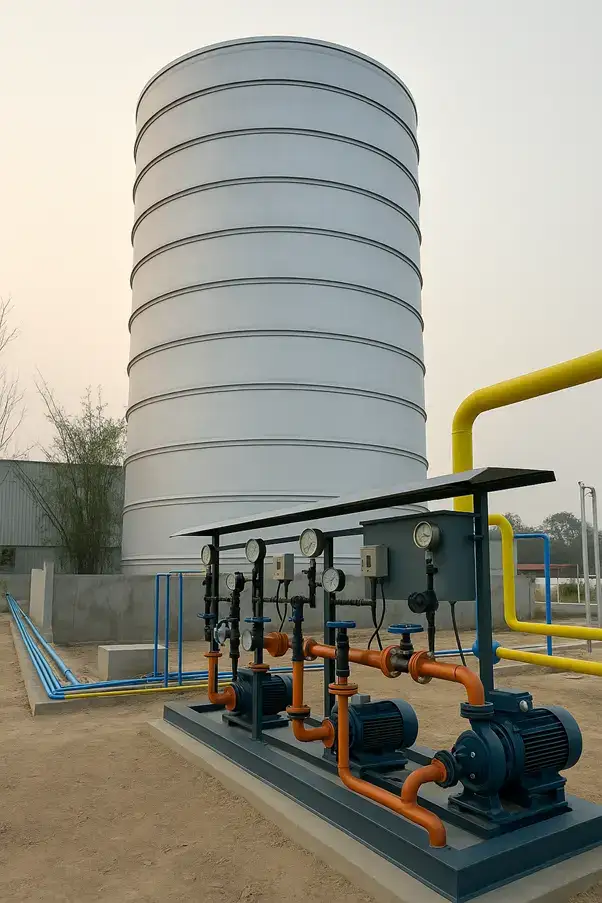
ONGC awarded CRA a Lump Sum Turnkey (LSTK) contract to replace the flare systems at three gas gathering stations in Assam with enclosed ground flares. The scope ran from design and engineering through supply, civil and mechanical construction, tie-ins and commissioning, all inside stations that stayed in production. The new flares keep the flame inside refractory-lined enclosures and replace atmospheric venting at these sites.
Replacing Legacy Flares at Three Operating Gas Gathering Stations
ONGC required the complete replacement of the existing flare systems at three geographically separate gas gathering stations to meet current safety and environmental standards. The stations had to stay in production while the work was carried out, which set the main constraints:
- Engineering, supply and construction coordinated across three remote sites in parallel
- Tie-ins to legacy piping that was not fully documented, needing site surveys and a custom tie-in design at each station
- Construction and hot work inside operating plants, within shutdown windows and under permit controls
One LSTK Contract from Engineering to Commissioning
CRA executed the contract from detailed engineering through to commissioning, covering civil, structural, mechanical, electrical and instrumentation works.
CRA's LSTK scope of work
- New flare systems: three high-capacity enclosed ground flares, complete with sub-header integration
- Vessels: supply and installation of catch pots, knock-out drums, seal drums and associated pumping systems
- Safety and utilities: pilot ignition network from the flame front generator and PLC panel, and all utility piping for pilot gas, service water and instrument air
- Ancillary works: PSV and PCV modifications, isolation upgrades for safer maintenance, and civil works including design simulations and in-situ concrete piles
- Compliance: QA/QC and documentation to OISD, DGMS and CPCB requirements
How the site constraints were handled
- Remote multi-site coordination: modular execution teams deployed at the stations in parallel
- Undocumented legacy piping: pre-bid surveys and as-existing validation before tie-in design
- Hot work in live plant: phased shutdown planning with strict safety permits and controlled tie-ins
- Different layouts at each station: tie-in and plot arrangements engineered station by station
Commissioning and 72-Hour Performance Test Runs at All Three Stations
Each flare was commissioned and then put through a 72-hour performance test run. CRA worked with the ONGC site teams at each station through the tie-ins, hot commissioning and test runs inside the operating plants. The test runs confirmed:
- Stable combustion of relief gas inside the enclosure
- Emissions within OISD and CPCB norms
- Mechanical integrity of the enclosures, burners and ignition systems under operating conditions
Multi-Site LSTK Delivery for Oil and Gas Infrastructure
The project covered the design, supply, construction and commissioning of three high-capacity enclosed ground flare systems at separate operating stations under one contract. The new flares replace atmospheric venting at these stations and bring flaring in line with OISD, DGMS and CPCB requirements.
Related Case Studies
See how we turn hard problems into high-performance infrastructure.