
Flame Front Generator Igniter
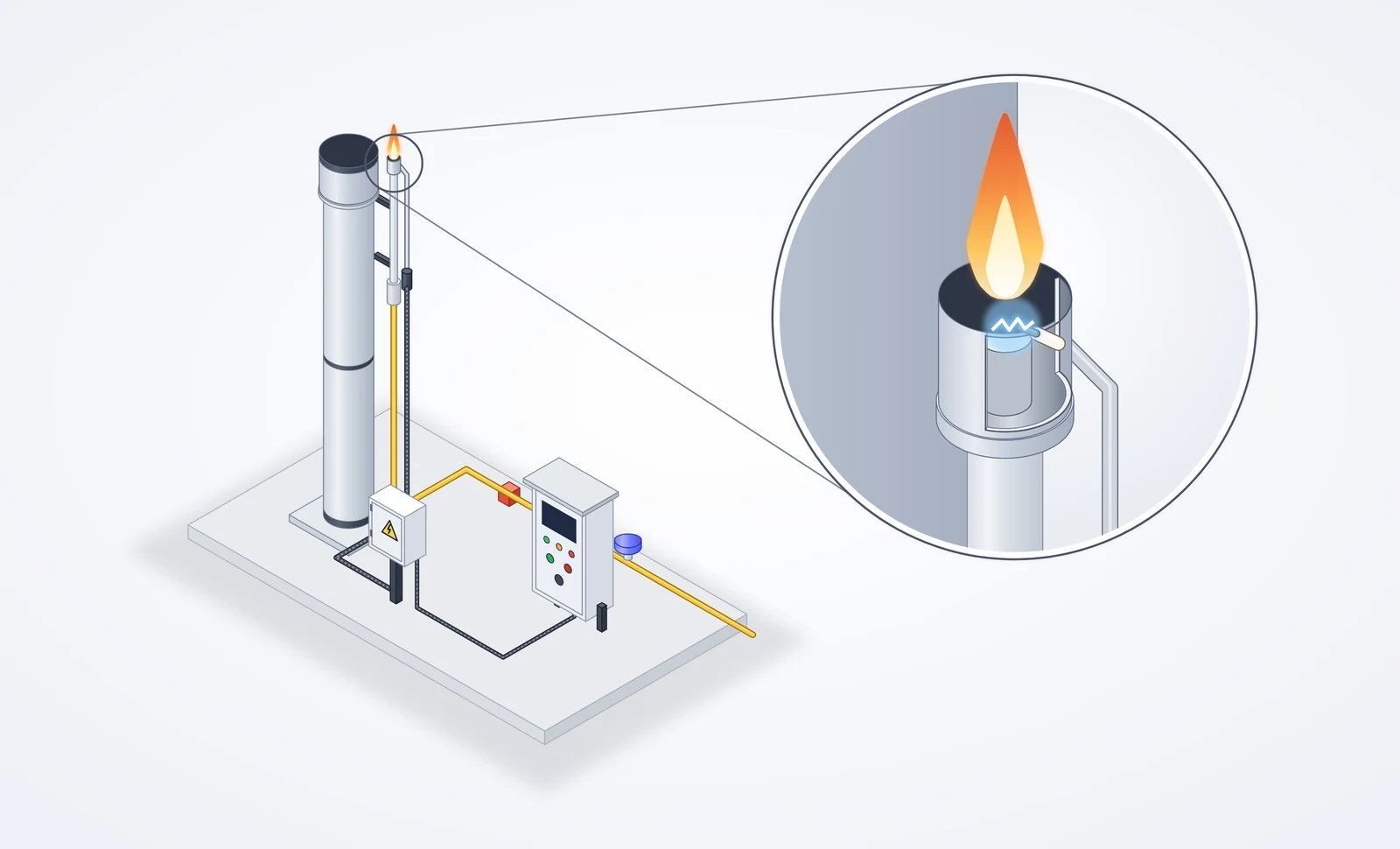
A flame front generator lights flare pilots from a panel at grade by sending a flame front up an ignition line to each pilot.
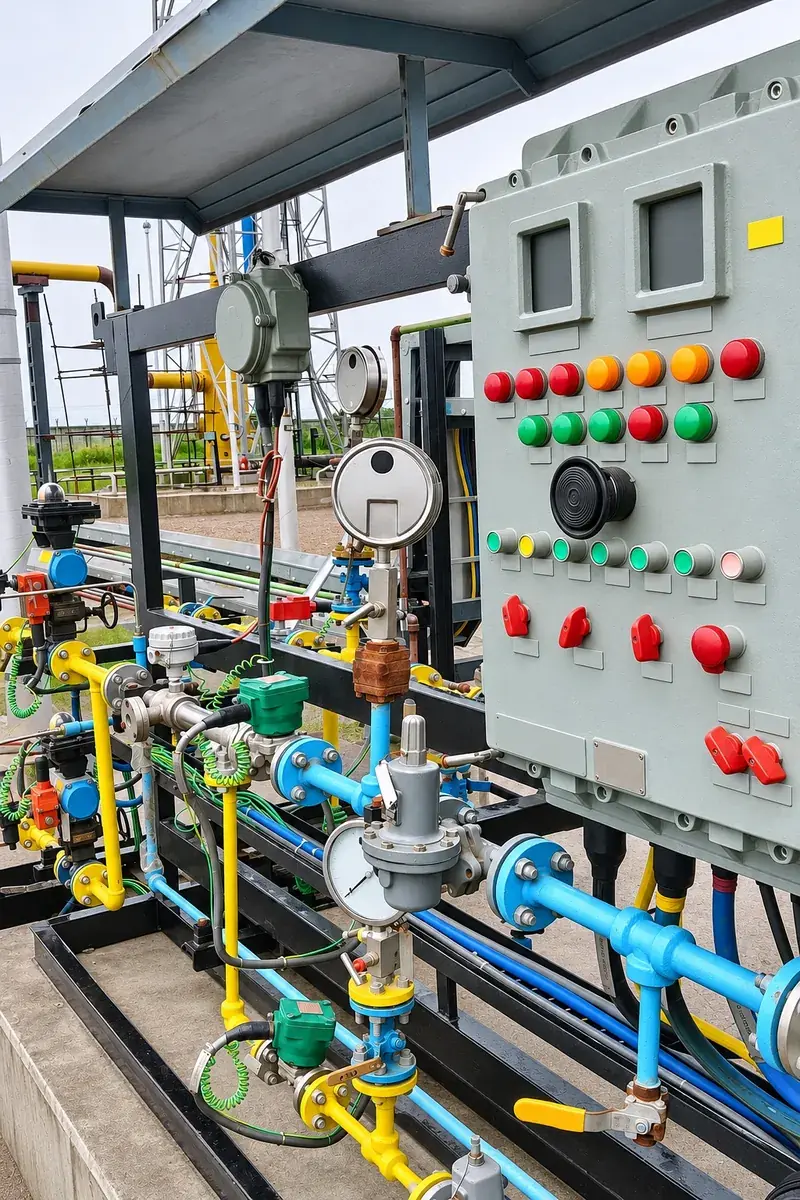

Reliable fireball ignition for flare pilots at distance
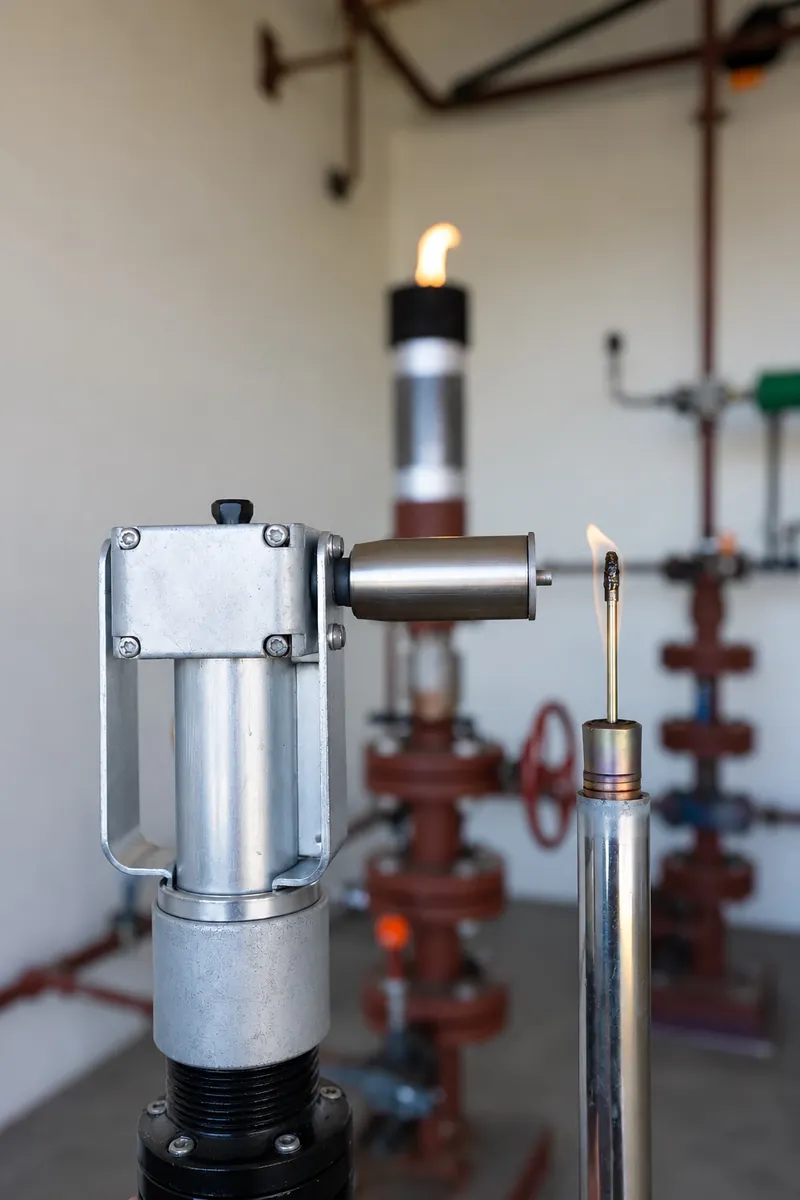
Our Flame Front Generator (FFG) igniters use fireball ignition to light flare pilots at distances of 100 metres and more. Designed for continuous service in harsh industrial environments, each system meters air and fuel to produce a stable, high-energy flame front. Available in fully automated or manual configurations, FFG units are custom-built for each installation and suit retrofits as well as new flares.
Ignition Range
100+ metres
Technology
Fireball propagation
Operation
Manual or automatic
Application
Flare pilot ignition
What is a Flame Front Generator FFG?
A flame front generator (FFG) is a fireball ignition system that produces a precisely metered, travelling flame front inside a fuel-air mixture, propagating it through a transfer line to ignite a flare pilot located 100 metres or more away.
How it works
A metered fuel-air mixture ignites inside a chamber and propagates as a flame front through a transfer tube to the pilot, covering distance that a direct spark could not reliably bridge.
A controlled fuel-air mixture is metered into an ignition chamber, with the ratio set to sustain stable flame front propagation across the full transfer line.
A spark or pilot source ignites the mixture inside the chamber.
The flame front travels through a dedicated transfer tube at high velocity, carrying enough energy to ignite the pilot despite distance, elevation change, or wind exposure.
Automated systems repeat the cycle on a timed or demand basis, while manual systems are triggered on operator command.
Key Benefits
Decades-proven ignition method enhanced for greater energy output and extended reach
Ignites pilots over 100+ metres away without spark degradation or delay
Tailored to site requirements for reliable flare ignition across the site's operating scenarios
Offered in manual or automatic setups with smooth integration into existing systems
Engineered to maintain ignition assurance through heat, vibration, and weather extremes
The CRA Edge
Over 30 years designing flare ignition systems for safety and reliability
Precision combustion metering and robust design support consistent ignition in harsh environments
Flare ignition systems installed in 25+ countries
Each FFG rig is tailored to site-specific fuel composition, flare setup, and operational needs
Applications

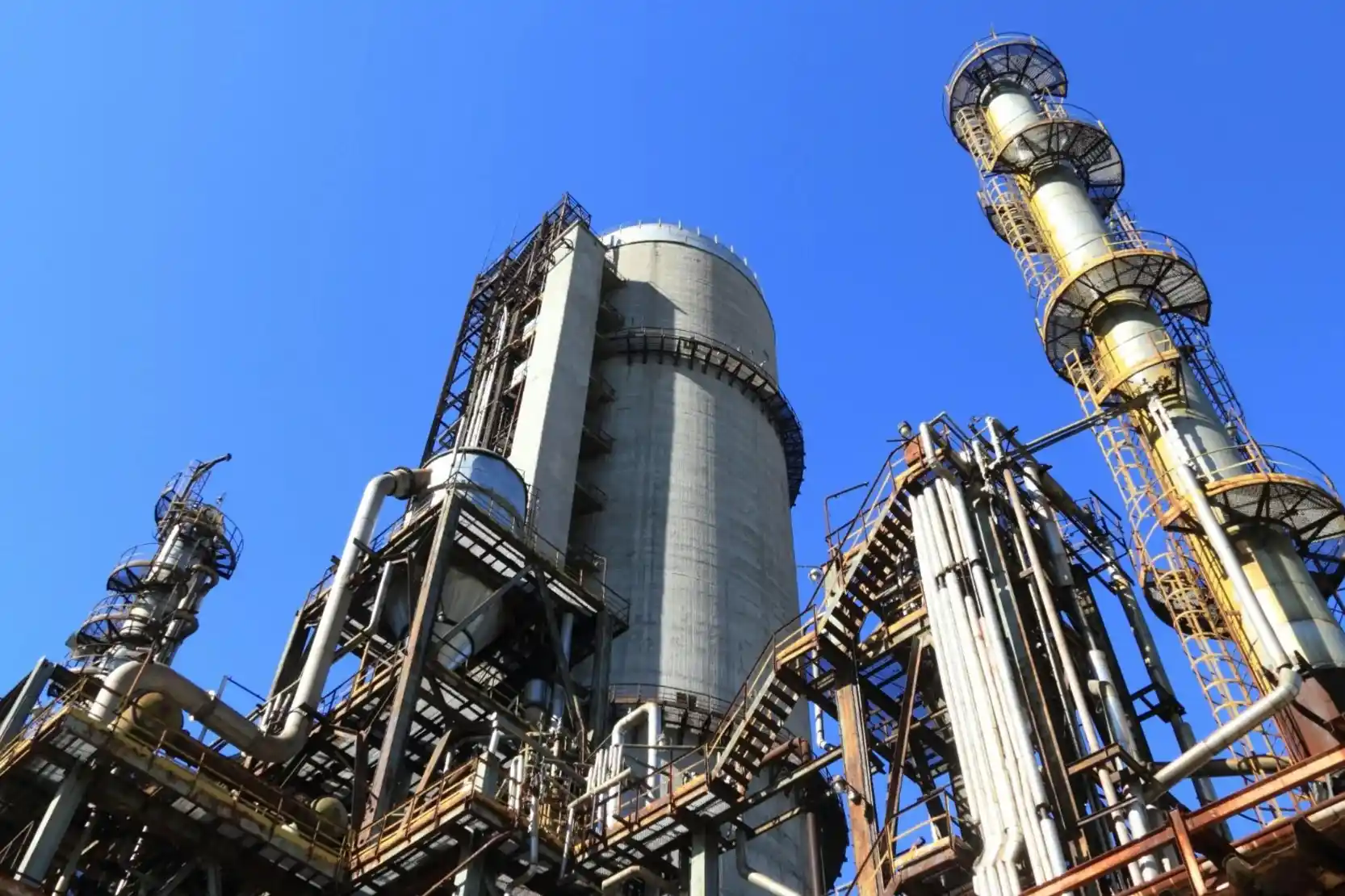
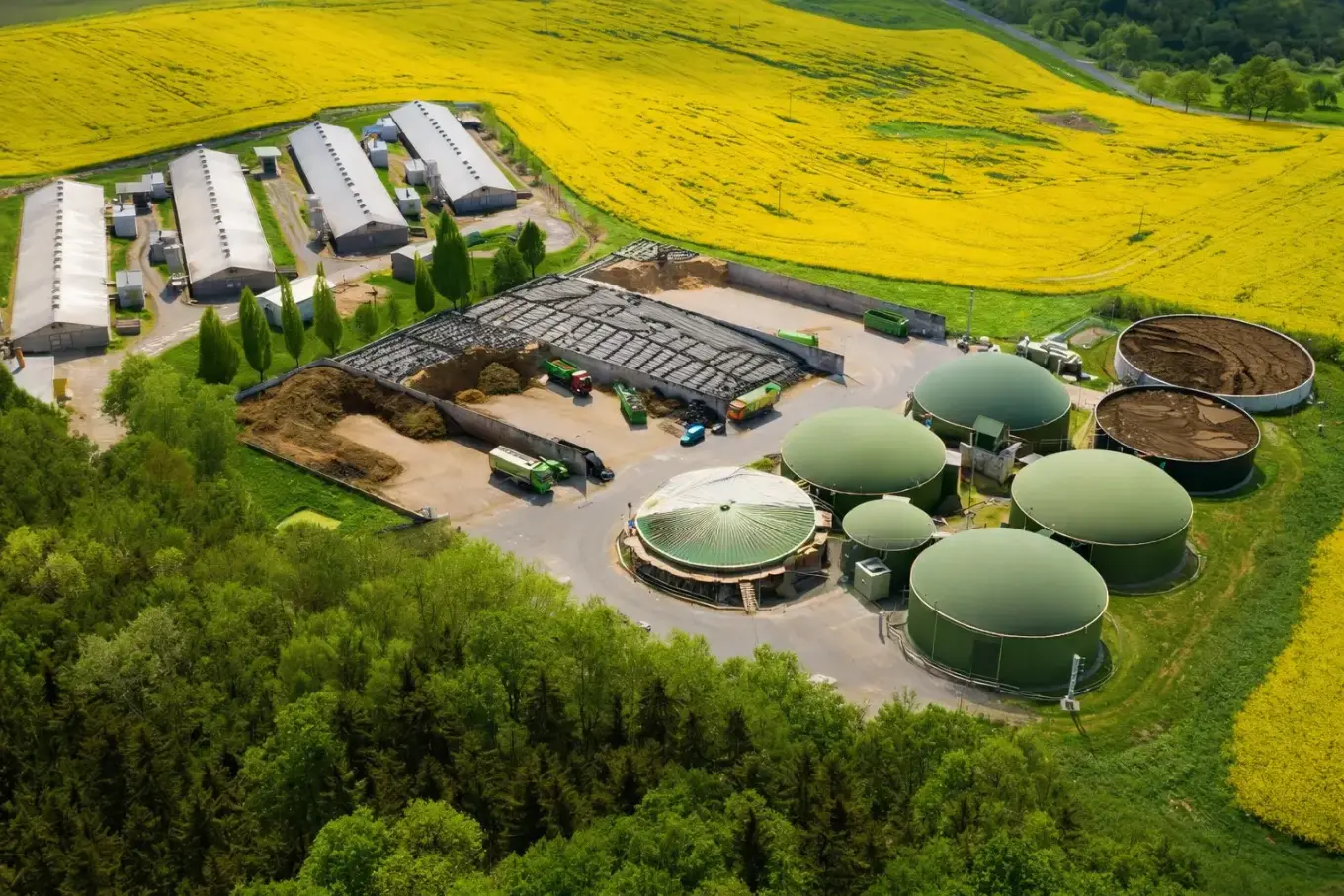
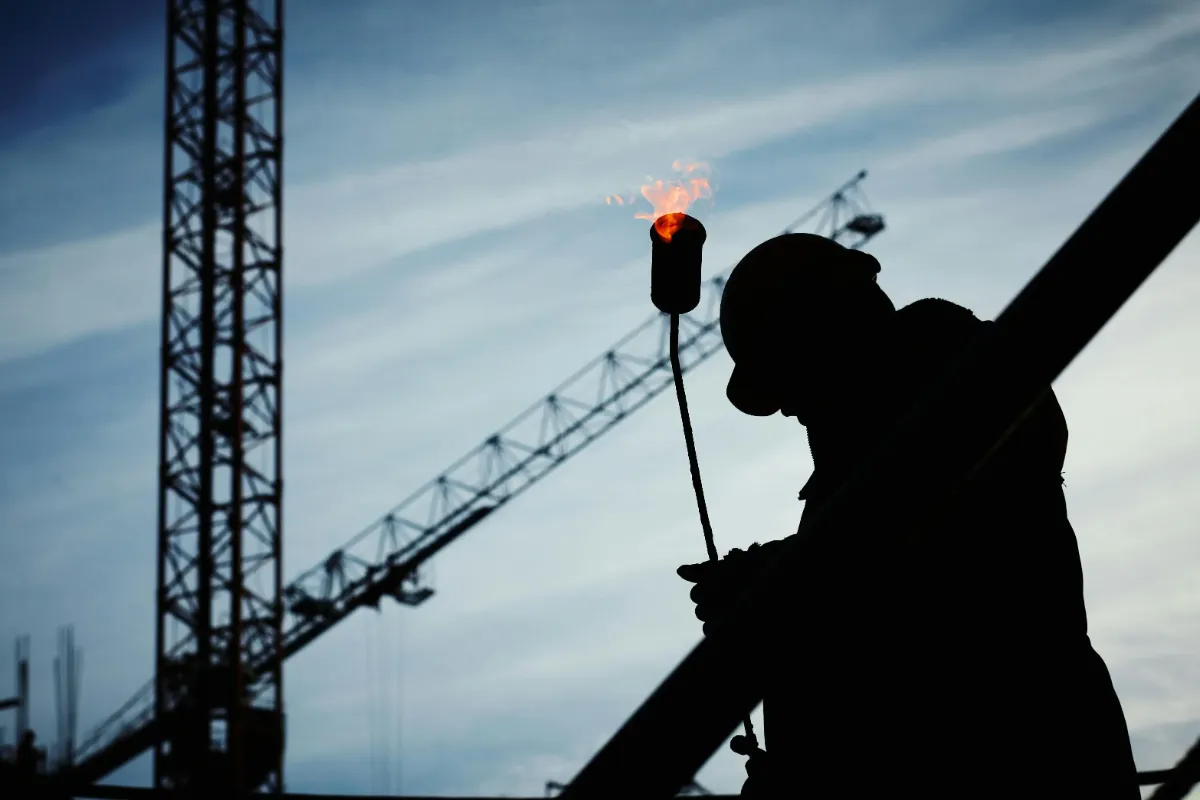
Frequently Asked Questions
What is a flame front generator and how does it ignite a flare pilot?
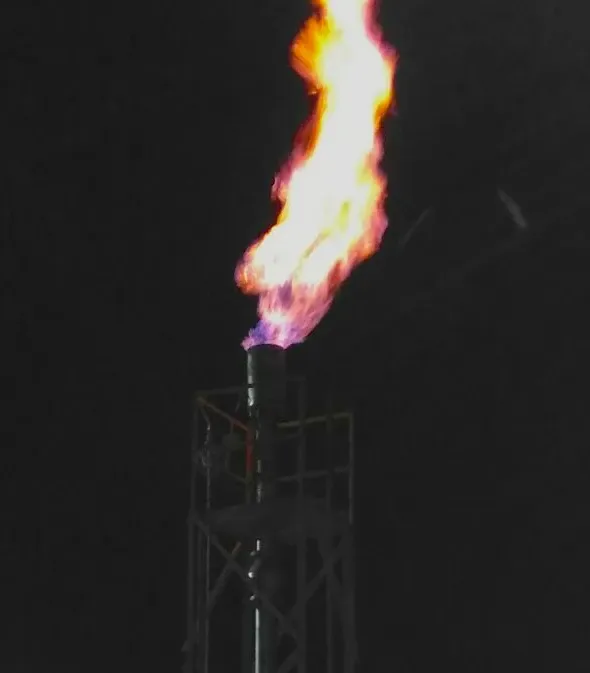
A flame front generator (FFG) ignites a flare pilot by sending a flame along a pipe from a safe location at grade to the pilot tip. The generator meters air and fuel gas into a mixing chamber, ignites the mixture with a spark, and the flame front travels through the ignition line to the pilot, where it lights the pilot burner. CRA's FFG igniters use exact air-fuel metering to produce a stable, high-energy flame front, and are supplied in fully automated or manual configurations as custom-built rigs for new flares and retrofits.
Over what distance can a flame front generator ignite a pilot?
CRA's flame front generators are designed to ignite flare pilots at distances exceeding 100 metres from the generator. The distance is set by the ignition line routing, the air-fuel metering and the energy of the flame front, so the line can run from a panel at grade to a pilot at the top of a tall elevated flare. CRA engineers each rig for the actual line length and route on site, so the flame front reaches the pilot without loss of energy or delay.
What is the difference between manual and automatic FFG operation?
A manual FFG is operated by a technician who opens the air and fuel valves, confirms the mixture and triggers the spark from the panel. An automatic FFG carries out the same sequence from the control system, either on a timer, on loss of pilot flame detected by the flame monitoring, or on an operator command from the control room. CRA offers both configurations and integrates the automatic version with the flare control panel, so a pilot loss triggers a relight attempt without anyone going to the flare base.
Can a flame front generator be retrofitted to an existing flare from another manufacturer?
Yes. CRA retrofits flame front generators to flares supplied by other manufacturers after a technical assessment of the existing pilot, ignition line and control arrangement. The retrofit design is based on the condition of the existing equipment, its materials, the controls in place and the operating history of the flare. A retrofit is the right route when the flare structure and tip remain sound and only the ignition reliability needs to improve, since it costs less and causes less disruption than replacing the flare.
Where are flame front generators used besides flare pilots?
Flame front generators are used wherever a burner must be lit reliably from a distance, including process burners, incinerators and reformers, heavy oil and viscous fuel ignition, and backup or emergency ignition systems in refineries, chemical plants and waste-to-energy facilities. The same principle applies: a metered air-fuel mixture is ignited at the generator and the flame front travels along a line to the burner. CRA has designed flare ignition systems for over 30 years and has installations in more than 25 countries, and each FFG rig is tailored to the fuel, burner arrangement and operating needs of the site.