Choosing Between DFTO, Recuperative, and Regenerative Thermal Oxidizers: What You Should Know

.svg)
Introduction
Selecting the right thermal oxidizer is key for cost control and emissions compliance. In this post, we compare Direct-Fired, Recuperative, and Regenerative thermal oxidizers using data from vendor literature, white papers, and regulatory sources. We outline where each type shines, what tradeoffs you must accept, and how to align your choice with your VOC load, flow, operational profile, and fuel cost.
What Are the Three Main Types
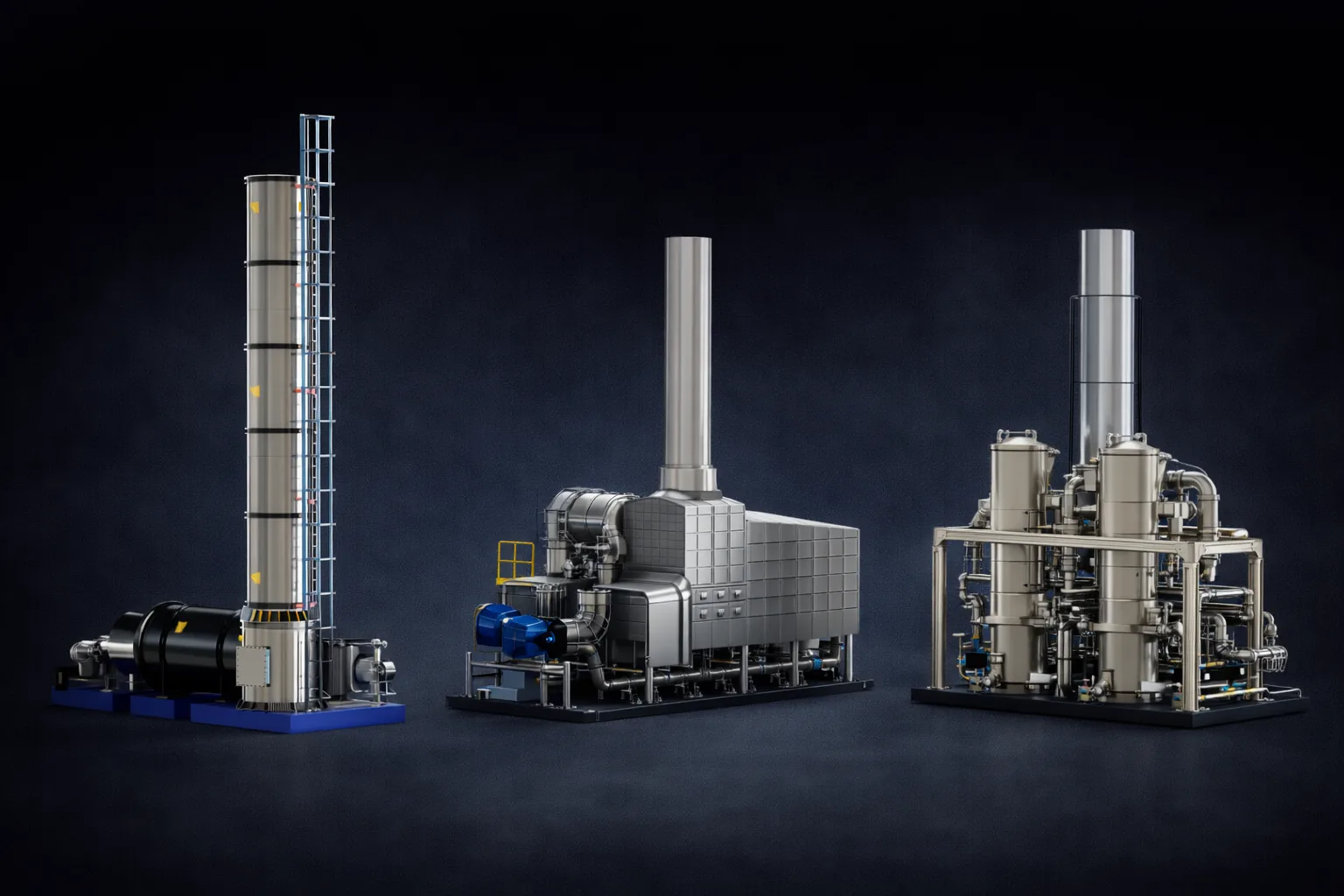
1. Direct-Fired Thermal Oxidizer (DFTO): A basic oxidizer design: burner + oxidizer chamber. No heat recovery. Best for high-VOC streams or intermittent use when simplicity and reliability are key. High fuel usage; minimal moving parts.
2. Recuperative Thermal Oxidizer: Adds metallic or otherwise conventional heat exchanger(s) to recover heat from exhaust and preheat process air. Medium CAPEX, reduced fuel cost, moderate complexity and maintenance.
3. Regenerative Thermal Oxidizer (RTO): Uses ceramic media beds and flow reversing damper valves to “store” heat and reuse it. High thermal recovery (often ~90-95%), lowest fuel consumption (for continuous duty), but higher CAPEX, more components, and higher maintenance demands.
Comparative Overview of DFTO, Recuperative, and RTO Systems
Practical Decision Checklist
If you have to decide among these systems, here are some criteria & steps:
- Measure your VOC concentration and flow rate (min, typical, max). Estimate hours of operation per year / duty cycle. Estimate fuel cost & availability in your region. Check regulatory or permit limits for emissions (CO, NOₓ, visible plume etc.).
- Evaluate maintenance capability, do you have staff & budget for more complex equipment? Consider lifecycle cost, not just CAPEX: fuel savings can compensate for higher CAPEX over time.
Example Comparisons
- A painting / coating operation running 16-24 hrs/day with moderate VOCs: RTO may offer payback in <2-3 years over DFTO or Recuperative.
- A facility that produces high VOCs but operates only a few hours a day (e.g. batch job): DFTO may be more cost-efficient despite higher fuel usage per hour.
- Dryers, ovens, chemical plants with high flow of low-VOC air: RTO almost certainly better long-term if fuel costs & emissions matter.
Conclusion
- DFTO: simplest, lowest investment; very high fuel consumption; best when VOC load is high or operate rates are low.
- Recuperative: medium path; good heat recovery; lower fuel cost; moderate complexity; best when usage is continuous.
- RTO: highest thermal efficiency; lowest fuel consumption; more complexity; higher capital & maintenance; best when long duty cycles, regulatory pressures, or sustainability are priorities
Choosing the right thermal oxidizer is about balancing fuel costs, VOC load & flow, operating hours, maintenance readiness, and regulatory / environmental constraints. If possible, run cost-of-ownership modelling (CAPEX + OPEX + maintenance + fuel + permitting) to find the best fit for your facility.