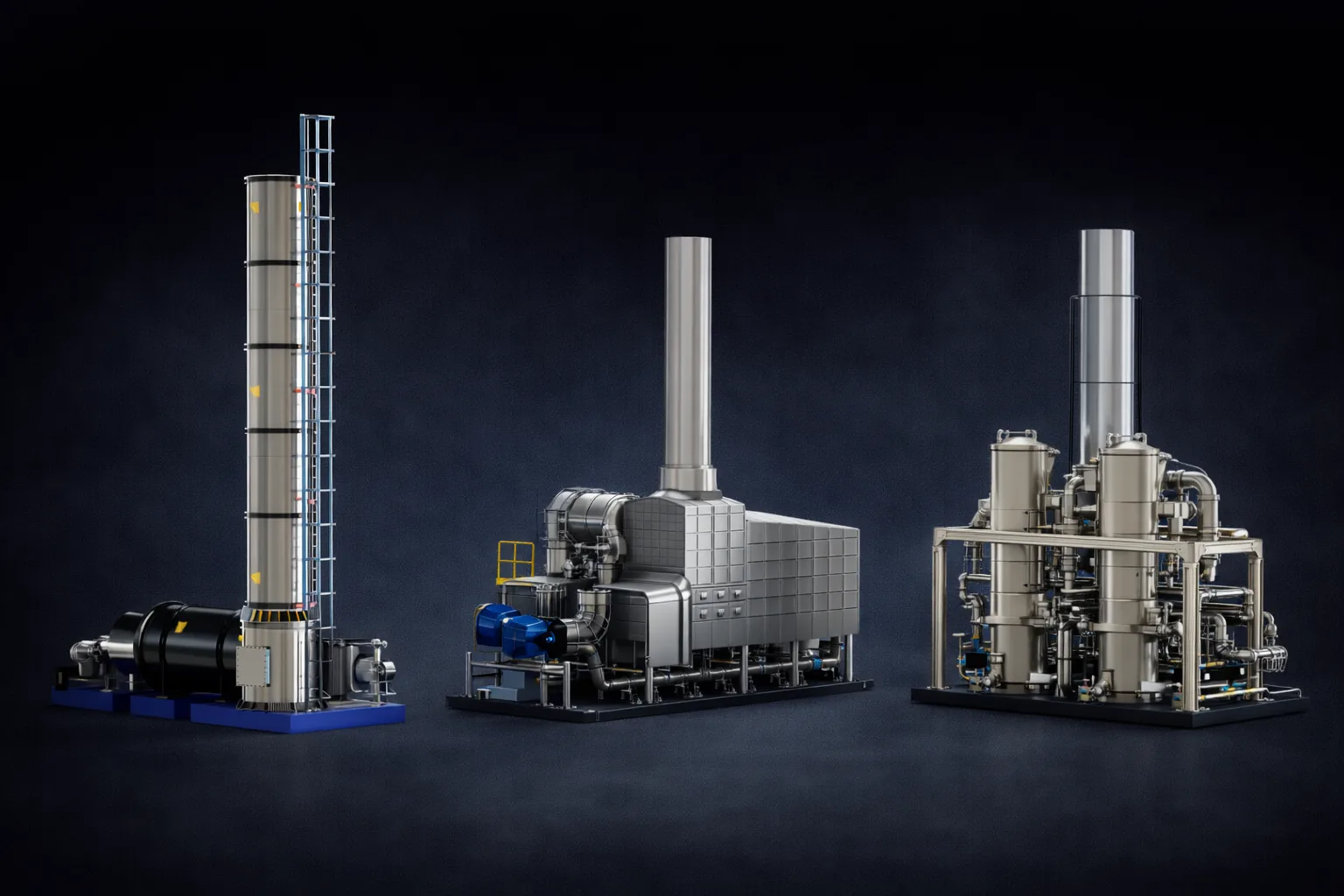
Which H₂S Scrubber Is Best for Your Application?

.svg)
Introduction
Hydrogen sulfide (H₂S) is a common contaminant in biogas and wastewater treatment, causing odor issues, corrosion, and catalyst poisoning if left untreated. Multiple technologies can remove H₂S effectively — each suited to different gas loads, costs, and site conditions. This guide explains the main scrubber types and helps you identify which one fits your application best.
Watch our video for a for more information
Chemical (NaOH) Scrubber
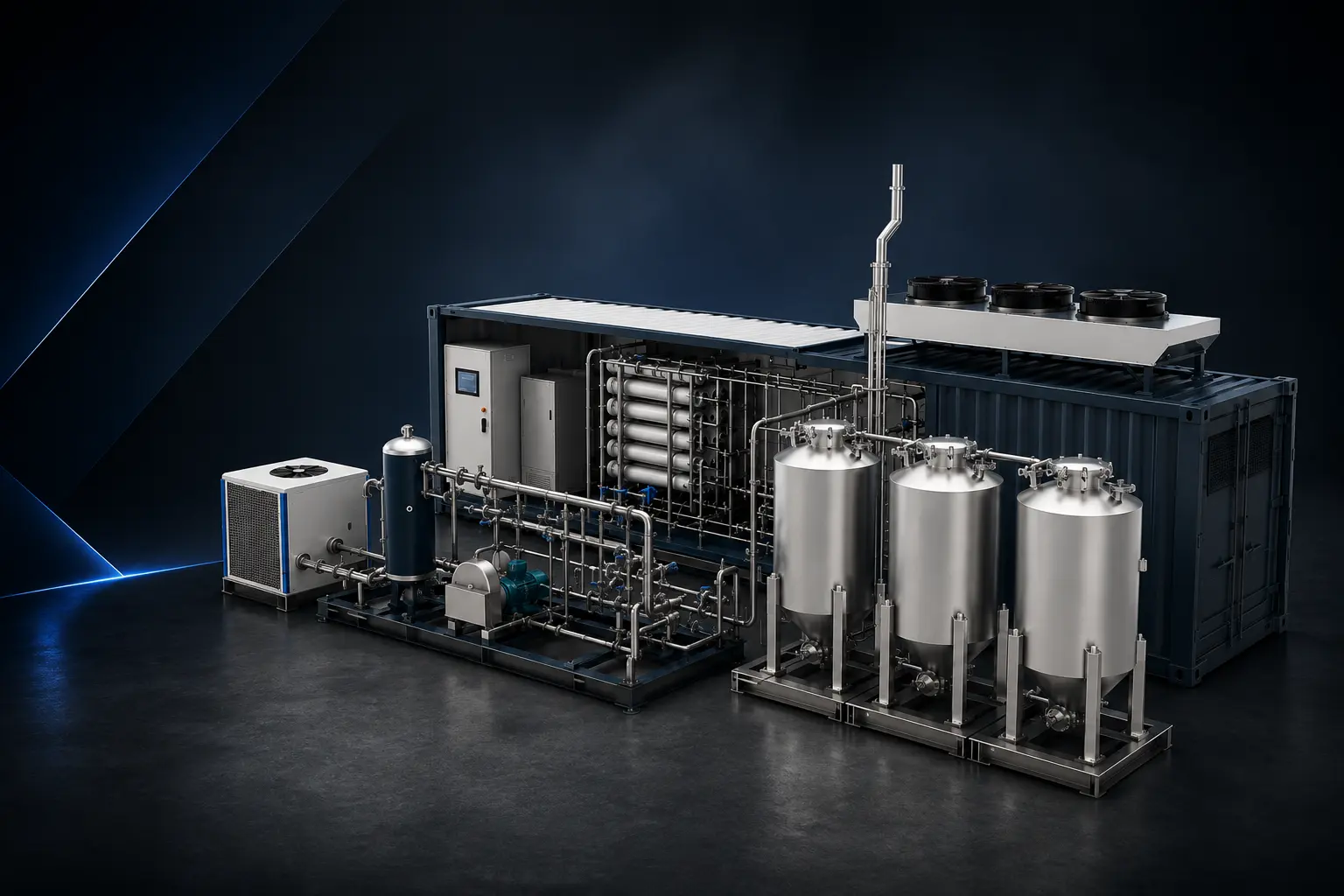
A wet caustic scrubber uses sodium hydroxide (NaOH) to neutralize H₂S, forming harmless sulfide salts. It’s reliable and achieves >99% removal, making it ideal for smaller systems or variable inlet conditions.
However, the chemical needs regular replacement, increasing operating costs and creating waste streams.
- Best for: Small-to-medium biogas plants or odor control systems where simplicity is key.
- Pros: Compact, quick startup, handles H₂S spikes well.
- Cons: High chemical use and waste disposal.
Biological Scrubber
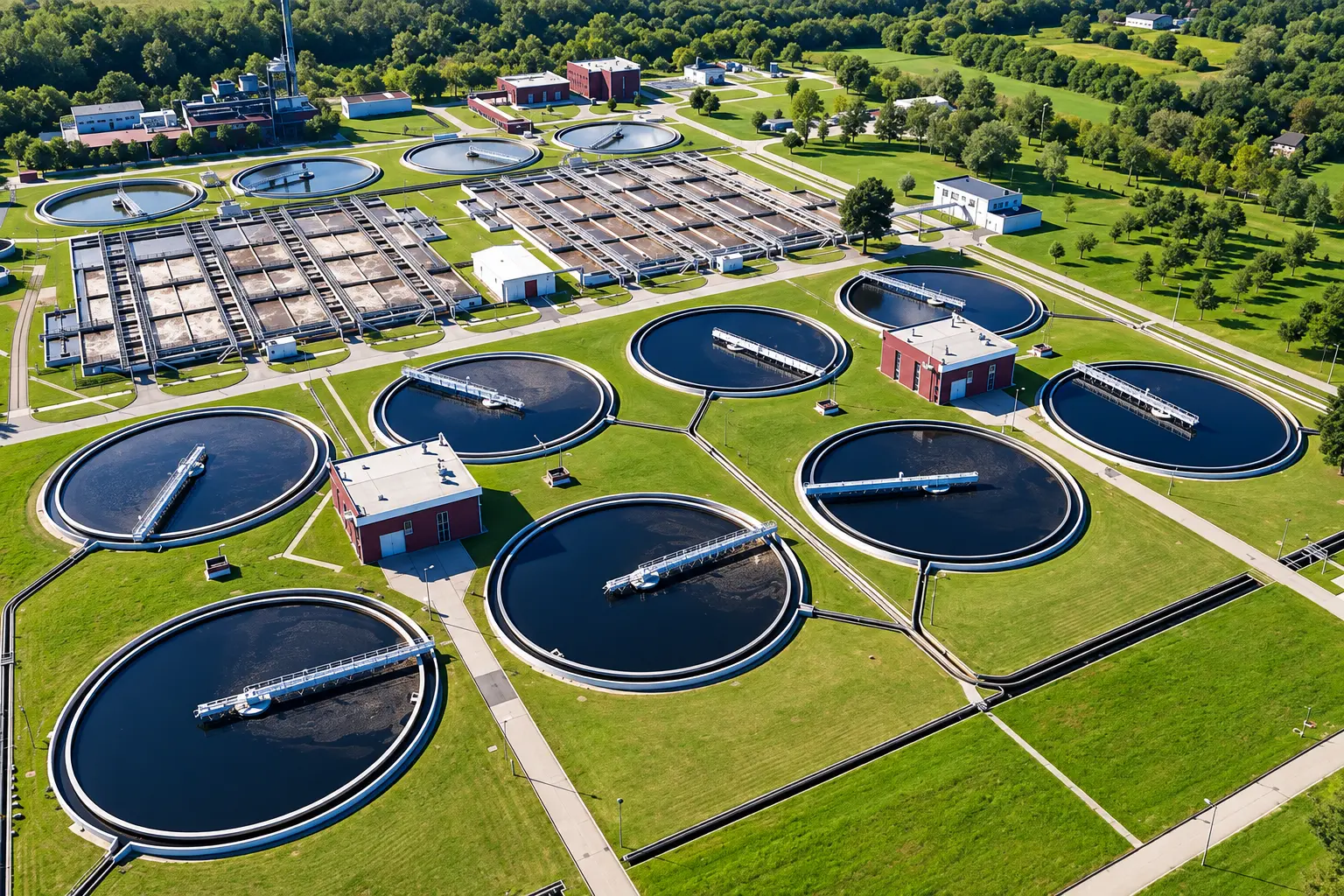
Bio-trickling filters use bacteria that naturally convert H₂S into sulfate. Once established, these systems remove 90–95% of H₂S consistently with almost no chemical input.
They’re environmentally friendly but require steady gas flow, humidity, and time for microbial growth.
- Best for: Wastewater treatment or stable biogas flows.
- Pros: Low operating cost, green technology.
- Cons: Larger footprint, sensitive to dry or fluctuating conditions.
Activated Carbon Filter
Activated carbon traps H₂S on its surface and can polish gas down to very low levels. It’s compact and simple, just replace the media once it’s saturated.
This makes it perfect as a final polishing step rather than a primary scrubber.
- Best for: Low-flow or low-H₂S polishing applications.
- Pros: Simple, small footprint, no liquids.
- Cons: Media replacement cost at high loads.
Bio-Regenerative Chemical Scrubber
Hybrid systems like combine chemical absorption with biological regeneration. H₂S is first absorbed in mild NaOH, then biologically converted into elemental sulfur.
This achieves >99% removal with low waste and regenerated alkali, an elegant solution for larger biogas projects.
- Best for: Medium-to-large biogas or digester gas systems needing high uptime.
- Pros: Clean operation, recoverable sulfur, low reagent use.
- Cons: Higher initial cost needs nutrient and pH control.
Quick Comparison
Conclusion
Choosing the right H₂S scrubber depends on your gas flow, sulfur load, operating budget, and sustainability goals.
- For small systems or intermittent use, a NaOH scrubber or activated carbon filter is ideal.
- For steady, high-H₂S streams, a regenerative or hybrid bio-chemical system delivers the best long-term value.
- For environmentally friendly, low-cost operation, biological scrubbers offer a natural solution.
Each technology has its place, the best choice ensures clean gas, regulatory compliance, and lower lifecycle costs.