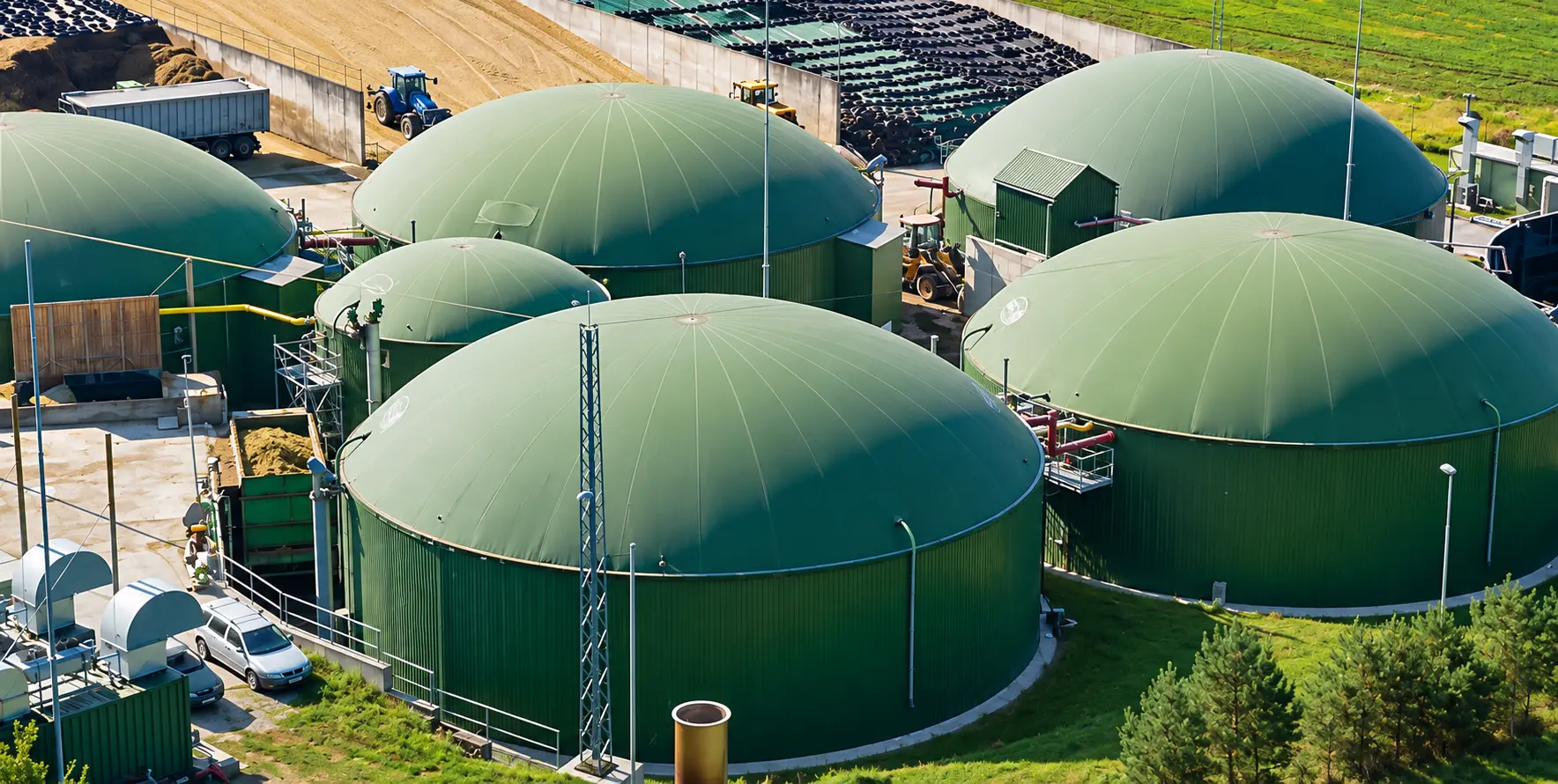
Biogas upgrading for CBG and RNG: why one gas-train partner beats a multi-vendor plant

.svg)
In compressed biogas and biomethane projects, the equipment is rarely what fails. The handovers between vendors are. Here is why single-point responsibility for the whole biogas upgrading train changes how a plant gets delivered and how it performs once it is running.
Most biogas upgrading plants are not held back by any single piece of equipment. The membranes separate CO₂ the way the datasheet says they will. The desulphurisation media removes hydrogen sulphide. The compressors deliver gas at pressure. What tends to go wrong sits in the spaces between these units, in the handovers from one vendor’s scope to the next, and in the question of who is actually accountable when the plant as a whole does not produce the renewable gas the project was financed to produce.
That question matters more here than in most process industries, because the person asking it is usually a developer whose loan repayments and offtake obligations began the moment the plant was meant to run. When a plant is stitched together from several suppliers, answering it can take months. This is the case for treating the biogas upgrading system as one scope, delivered by one partner, rather than as a shelf of separately procured boxes.
A quick note on terminology, since this decision looks the same in every market even though the product goes by different names. In India and much of Asia the purified, compressed product is called compressed biogas, or CBG, sometimes bio-CNG, sold under the SATAT scheme to meet IS 16087. In Europe it is called biomethane. In North America it is renewable natural gas, or RNG. The chemistry, the gas train, and the vendor-coordination problem are the same in all three. The rest of this article uses the terms as they fit.
A CBG or RNG plant is one gas train, not a collection of units
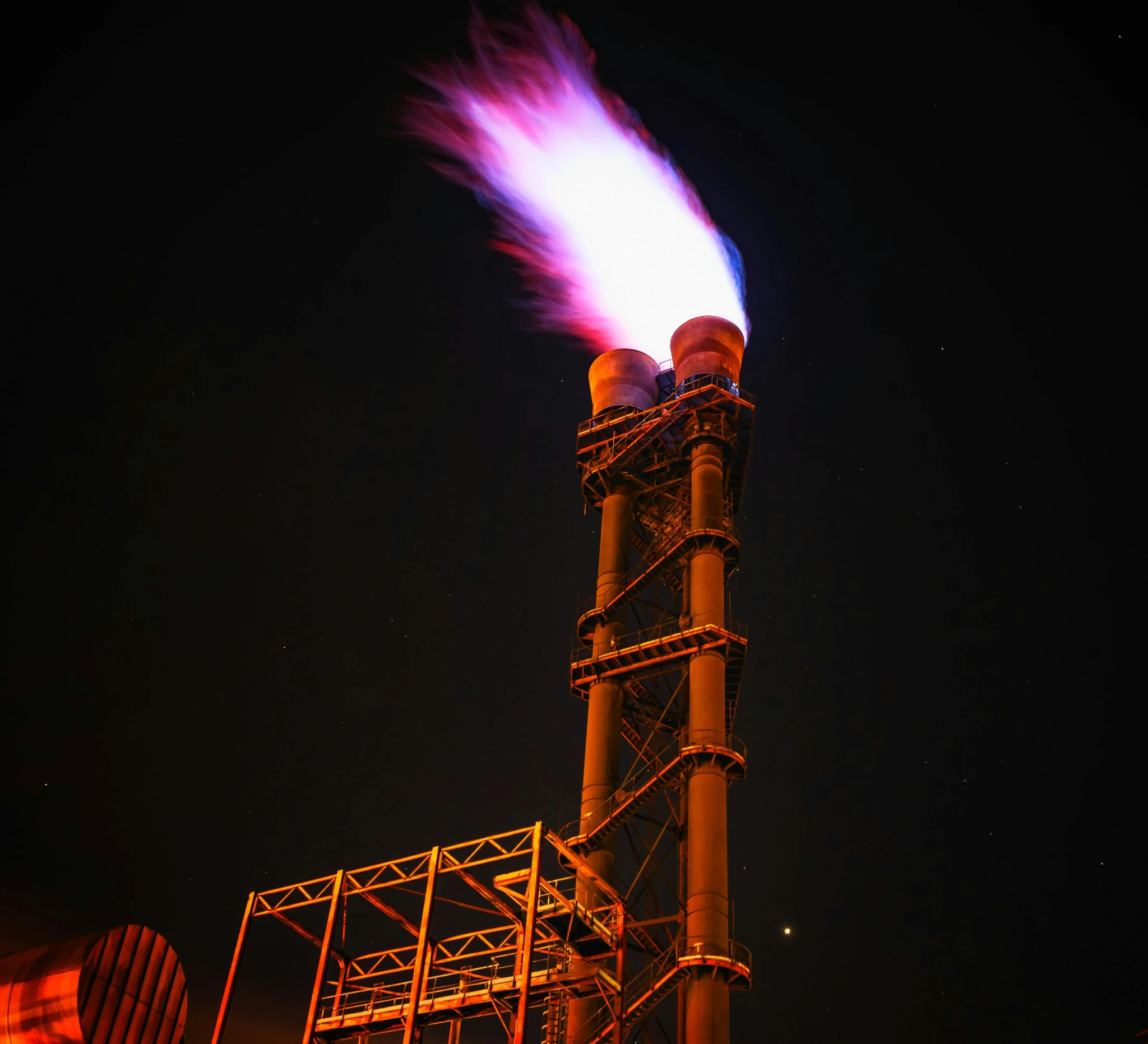
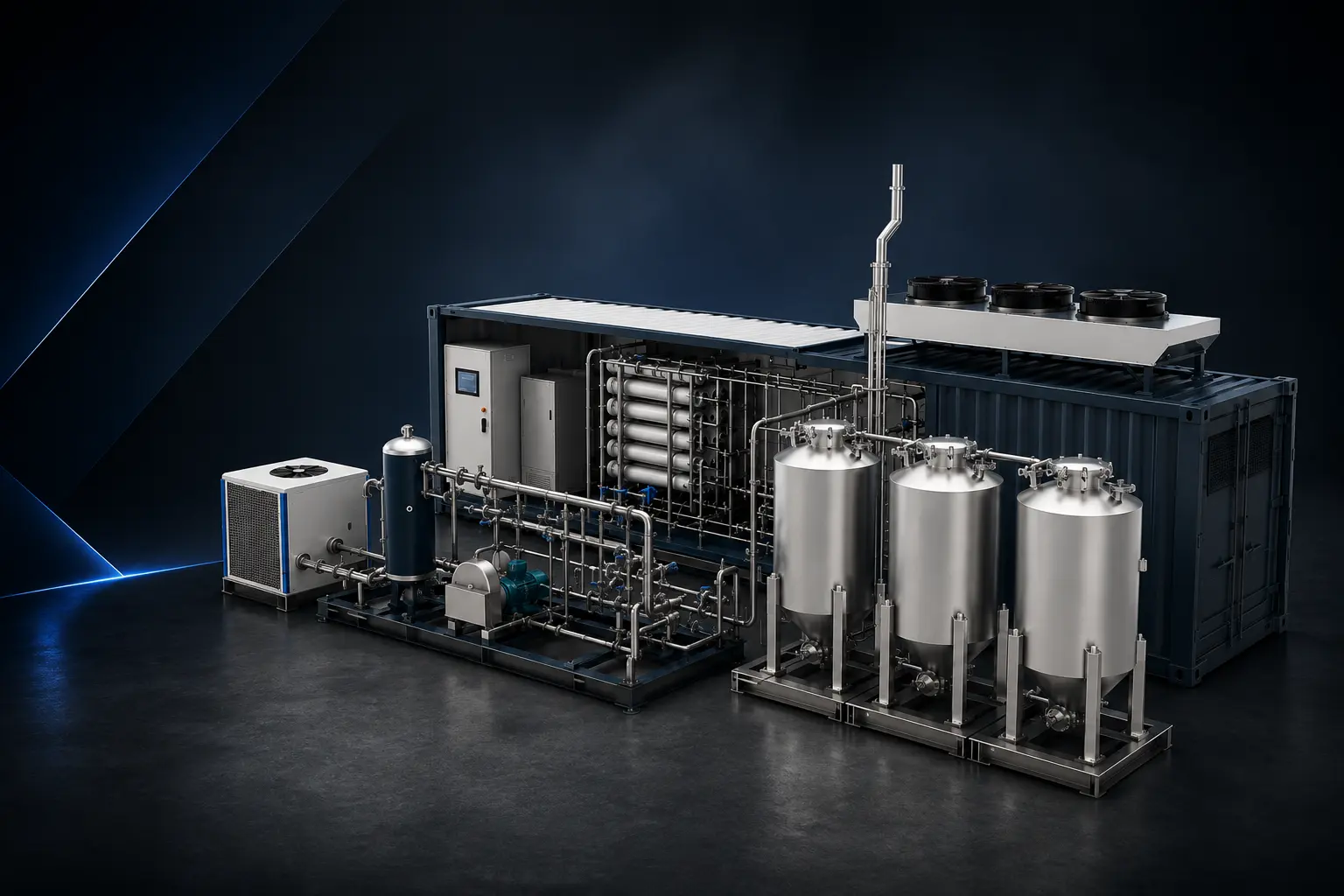
It helps to walk the biogas upgrading train the way the gas actually moves through it. Raw biogas leaves the digester or landfill wet, warm, and carrying hydrogen sulphide. It first needs desulphurisation, then conditioning to control moisture and dew point, then upgrading to separate CO₂ and raise methane to grid or vehicle-fuel purity. The product biomethane then goes to compression, and from there to cascade filling for CBG offtake or to grid injection as RNG. Running alongside all of this is the off-gas from the upgrading step, which carries slip methane that has to be destroyed in a flare or thermal oxidiser rather than vented.
Every one of those steps hands gas to the next at a specific set of conditions, and every handover is an interface. A membrane upgrading unit assumes the gas arriving at its skid is below a certain H₂S level, at a certain dew point, at a certain pressure and temperature. Its performance guarantee is written against those assumptions. If the desulphurisation or gas conditioning ahead of it does not hold those conditions, the guarantee no longer applies, and the vendor is entitled to say so.
When a single supplier owns the whole train, those interface conditions are their own internal design problem. When several suppliers own several sections, the interfaces become contractual boundaries, and the developer is the one standing on the boundary line.
Component guarantees do not add up to a plant guarantee
This is the part that developers tend to learn the expensive way. A CBG or RNG project needs exactly one number to be true: a defined flow of biomethane at the required specification, measured at the plant boundary. That is what the offtake agreement is written against and what the financial model depends on.
In a multi-vendor plant, no single supplier guarantees that number. The desulphurisation vendor guarantees an outlet H₂S figure. The membrane upgrading vendor guarantees a methane purity and recovery, conditional on their assumed inlet. The compression vendor guarantees a discharge pressure and flow. Each guarantee is real, and each is narrow. Add them together and you still do not have a guarantee on plant output, because the failure modes live in how the sections interact, and no one has signed up for the interaction.
A single gas-train partner can be accountable for the whole plant because it controls every interface in it. That is a meaningfully different commercial position, and it is the one a lender or an offtaker actually wants to see before they commit.
Commissioning is where the gaps become visible
Interface risk is invisible on paper and unmistakable during commissioning. When an integrated biogas upgrading plant underperforms, one engineering team traces the problem across the whole train and fixes it. When a multi-vendor plant underperforms, the first thing that happens is a discussion about whose scope is responsible.
The upgrading vendor points upstream and says the inlet gas is out of specification. The desulphurisation vendor points to their own outlet readings and says their scope is met. Both may be technically correct within their own boundary, and the plant still does not produce biomethane at spec. While that is being resolved, the plant sits idle, and the developer, who has no contractual lever over the interaction between two vendors, ends up acting as an unpaid systems integrator between suppliers who have no incentive to concede. The clock on the offtake commitment and the loan does not pause for any of this.
Single-point responsibility does not make commissioning problems disappear. It removes the argument about who owns them, which is usually what turns a two-week problem into a two-month one.
Desulphurisation and methane-slip handling tend to get orphaned
Two parts of the train are reliably treated badly by multi-vendor procurement, and both are the parts a plant cannot run without.
The first is desulphurisation. H₂S removal has to happen before the gas reaches the membranes, because H₂S corrodes compressors and shortens membrane life, and because CBG and pipeline specifications set strict limits on it. When desulphurisation is bought as a separate box against an assumed inlet, its sizing and media life are easy to get wrong, and the cost of getting it wrong shows up later as membrane damage that the upgrading vendor will not cover.
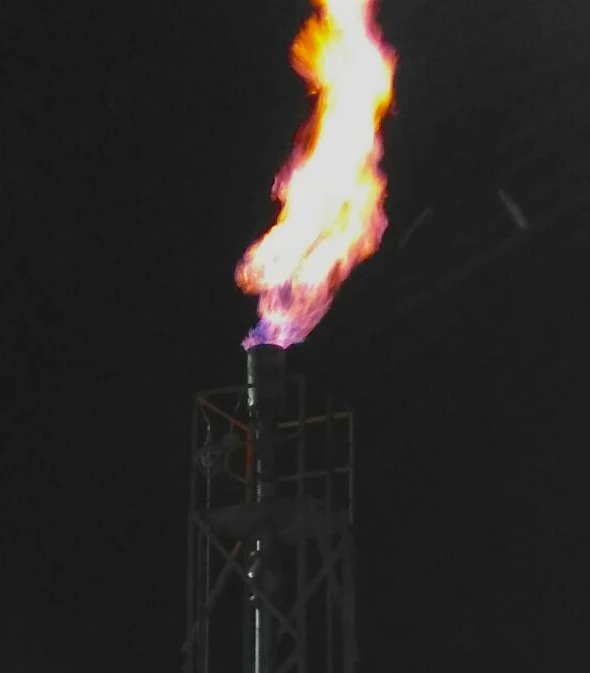
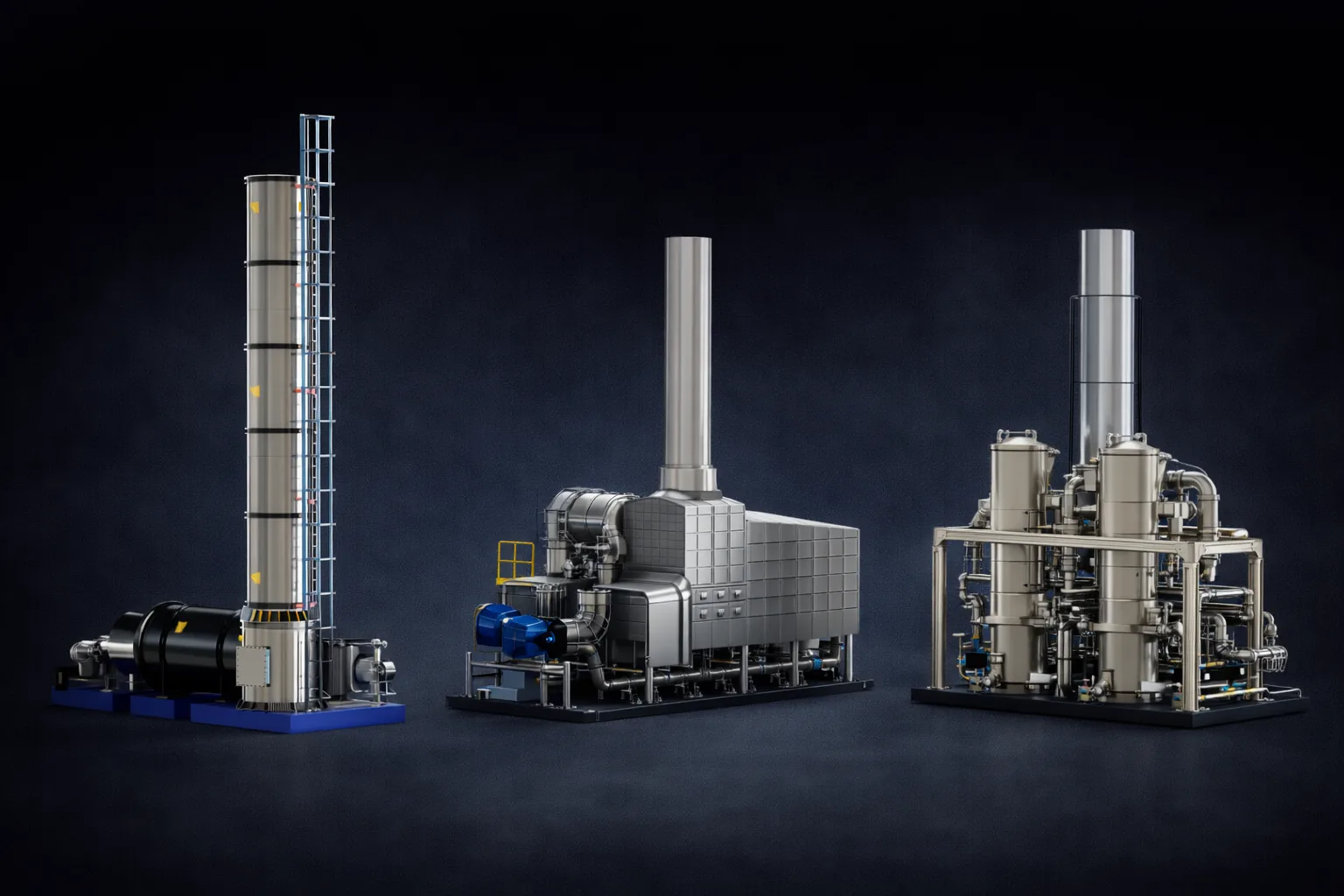
The second is the off-gas. The permeate stream from a membrane upgrading unit carries slip methane, and that methane has to be destroyed rather than released, both because methane is a potent greenhouse gas and because emission rules increasingly require it. Because slip handling is neither the upgrading unit nor the compression unit, it is often bought last, specified loosely, and awarded on price. The result is a flare or thermal oxidiser that was never designed around the actual off-gas composition and turndown of the plant it is attached to. A partner who builds the whole train, and who has a background in combustion, treats desulphurisation and slip destruction as integral to the design rather than as line items at the end of the schedule.
Sizing decisions cascade across the train
The sections of a biogas upgrading train are coupled in ways that are easy to miss when they are procured separately. The blower duty depends on the pressure drop across desulphurisation and conditioning. The membrane stage-cut trades methane recovery against purity and directly changes how much slip goes to the flare. The compressor selection depends on the delivery pressure and the flow that survives all of that.
When one team designs the train, these choices are balanced against each other. When separate vendors design separate sections, each one optimises their own box against their own assumptions, and the mismatches show up as oversized equipment in one place, a turndown limitation in another, and an overall plant that is less efficient than the sum of its reasonably chosen parts. Coherent sizing is not a marketing claim. It is a direct consequence of one team holding the whole design.
Where a single partner is not the right answer
To be fair about this, there are situations where single-source delivery is not the better choice, and it is worth saying so plainly.
A large developer with a strong in-house process engineering team may prefer to own integration itself, treat the interface risk as its own to manage, and buy each section on best terms. A project may be required by its financier or its licensor to use a specific proprietary technology in one part of the train, which forces a split at that point. And in a competitive tender where several sections are genuinely commoditised, unbundling can win on price without much interface risk, provided someone credible is still holding the whole-plant guarantee. If you have the engineering depth in-house to be your own integrator, the single-partner argument weakens, and you should weigh it on its merits rather than take it as a given.
The single-partner case is strongest exactly where most CBG and RNG developers actually sit, which is with limited in-house process engineering, a financed plant with a fixed offtake date, and no appetite to spend the first operating year mediating between suppliers.
What “single partner” should actually mean
It is worth being precise about the claim, because it is easy to overstate. A single gas-train partner does not mean one firm manufactures every component down to the last valve. Good integrators still select proven, best-in-class technology for individual steps, including membrane elements from established suppliers, because the point is plant performance rather than vertical pride.
What single partner should mean is single-point accountability for the whole train, one integrated design rather than a set of stitched-together scopes, one controls and safety philosophy instead of several programmable logic controllers that were never meant to talk to each other, and one service and spares relationship after handover. That is the substance of a turnkey biogas upgrading offer worth having. The equipment inside it can still be sourced on merit.
Questions worth asking before you sign
If you are evaluating how to contract your CBG, biomethane or RNG plant, the following questions tend to separate an integrated offer from a bundle of boxes with a cover page:
- Who guarantees the whole-plant output at the boundary, in biomethane at specification, rather than only the performance of individual units?
- Is there one controls and safety system across the train, or several that have to be made to communicate on site?
- Who owns desulphurisation sizing and membrane protection, and who owns methane-slip destruction and environmental compliance?
- Are the interface conditions between sections documented and owned by one party, or do they sit on a contractual boundary between vendors?
- After handover, is there one service and spares relationship, or several separate ones to coordinate?
The answers tell you quickly whether you are buying a plant or assembling one.
Frequently asked questions
What is biogas upgrading, and how does it produce CBG or RNG?
Biogas upgrading is the process of removing carbon dioxide, hydrogen sulphide, moisture and trace contaminants from raw biogas to raise the methane content to grid or vehicle-fuel purity. The purified gas is biomethane. Compressed for CBG offtake in India it is called compressed biogas or bio-CNG. Injected into the grid in North America it is called renewable natural gas or RNG. Membrane separation, pressure swing adsorption, water scrubbing and amine scrubbing are the common upgrading technologies, with membrane systems widely used for their modular design and high methane recovery.
Should a CBG or biomethane plant use a single turnkey partner or several vendors?
Both models are used, and the right choice depends on your in-house engineering depth. A single turnkey partner carries single-point accountability for the whole train, which removes the interface and commissioning risk that causes most delays. A multi-vendor build can win on component price but leaves the developer responsible for integration. Developers without a strong process engineering team, and with a financed plant on a fixed offtake date, usually benefit more from a single partner.
Why is H₂S removal important before membrane biogas upgrading?
Hydrogen sulphide corrodes compressors and shortens membrane life, and CBG and pipeline specifications set strict limits on it. Most upgrading technologies require H₂S reduced to low levels before the gas enters the separation stage, which makes desulphurisation a standard and essential part of any biogas upgrading system rather than an optional add-on.
Who guarantees the output of a compressed biogas plant?
In a single-partner build, one integrator is accountable for the whole train and the interfaces between its sections. In a multi-vendor build, each supplier guarantees only their own unit against assumed inlet conditions, and no one guarantees the plant as a whole. This gap is the main reason developers ask who is accountable for output before they sign, because it is the number the offtake agreement and the financial model depend on.
What is methane slip, and why does it matter?
Methane slip is the small amount of methane that leaves with the CO₂-rich off-gas from the upgrading step rather than staying in the product. It matters for two reasons. It is lost yield, and methane is a potent greenhouse gas that emission rules increasingly require to be destroyed rather than vented. A well-designed plant minimises slip through the membrane configuration and destroys the remainder in a flare or thermal oxidiser sized for the actual off-gas.
Where CRA fits
CRA builds across the full biogas upgrading train, including bulk desulphurisation, membrane upgrading, gas conditioning, compression, grid and cascade injection, and the flaring and thermal oxidation that handle methane slip, along with the burner management and controls that tie it together. The combustion side of that list is not a recent addition for us. It is what the company has designed and built for three decades, which is part of why we treat desulphurisation, slip destruction and plant safety as integral to the train rather than as afterthoughts.
If you are scoping a compressed biogas, biomethane or RNG plant and want to understand what single-point responsibility for the gas train would look like for your project, send us your gas analysis and target output and we will walk you through it.