How SATAT, GOBARdhan and IS 16087:2025 Are Reshaping Compressed Biogas in India

.svg)
Compressed biogas in India has spent seven years as a policy with more ambition than money behind it. That changed on 6 August 2026, when the Union Cabinet approved a ₹23,731 crore relaunch of GOBARdhan, alongside a revised national quality standard and a blending mandate that turns CBG offtake from a request into a legal obligation. Together these three moves reset what it takes to build and run a CBG plant in India, and what a developer should expect from a partner delivering one.
SATAT set a target compressed biogas could not hit on its own
The Sustainable Alternative Towards Affordable Transportation scheme launched in October 2018 with a specific number attached. It set a target of 5,000 CBG plants producing 15 million metric tonnes a year by 2023-24. Oil Marketing Companies would issue Letters of Intent to entrepreneurs, then buy the CBG those plants produced.
The number never arrived. A Parliamentary Standing Committee reviewing the scheme in December 2022 found 40 plants commissioned against the 5,000 target, roughly four years in. Growth has picked up since then. Nineteen plants were functional in 2020. That reached 125 by the end of 2024, and over 200 by August 2026. The trajectory is real. The scale is still far short of what SATAT set out to reach.
SATAT itself only ever covered offtake. Feedstock support, pipeline connectivity, and manure value chains sat in separate schemes run by separate ministries. That fragmentation is what GOBARdhan now exists to fix.
GOBARdhan started as a sanitation scheme and became India’s CBG platform
GOBARdhan, Galvanising Organic Bio-Agro Resources Dhan, began under the Swachh Bharat Mission (Grameen) as a rural waste management initiative, converting cattle dung and organic waste into biogas and manure at village scale. Its Market Development Assistance component, paying ₹1,500 per tonne for the fermented organic manure these plants produce, is still active today.
The August 2026 Cabinet approval turns GOBARdhan into something considerably larger. Renamed the National Circular Bioenergy Scheme and administered by the Ministry of Petroleum and Natural Gas, it runs from FY2026-27 through FY2035-36 with a ₹23,731 crore outlay. It absorbs SATAT, the manure MDA scheme, the Biomass Aggregation Machinery scheme, the Development of Pipeline Infrastructure scheme, and Central Financial Assistance under the National Bioenergy Programme into one framework. The government’s own stated aim is close to a tenfold increase in domestic CBG production.
Six components carry the funding
The scheme is structured around six growth engines. Assured CBG Offtake gives producers a defined buyer through City Gas Distribution procurement tied to the blending mandate. A Stable CBG Pricing Framework sets an administered rate of ₹2,110 per MMBTU with a minimum ten-year horizon, replacing the shorter-cycle pricing revisions producers dealt with before. Capital Assistance covers up to ₹2 crore per tonne per day of installed capacity, for both new plants and capacity expansions, extending to feedstock aggregation and manure processing equipment.
Development of Pipeline Infrastructure funds both cluster-based and standalone connections from CBG plants to trunk pipelines and CGD networks. A Credit Guarantee mechanism shares lending risk on MSME-based projects, aimed at improving access to institutional finance for smaller developers. The CBG Ecosystem Challenge Fund works at district level, supporting feedstock mapping, aggregation infrastructure, and local implementation planning.
Blending became mandatory, not just encouraged
The National Biofuels Coordination Committee approved phased mandatory CBG blending in November 2023. The obligation stayed voluntary through FY2024-25, then became mandatory from FY2025-26 at 1 percent of CNG and PNG consumption, stepping up to 3 percent in FY2026-27, 4 percent in FY2027-28, and 5 percent from FY2028-29 onward. The Petroleum Minister has put the expected investment at around ₹37,500 crore and projected 750 CBG projects by 2028-29 on the strength of the mandate alone.
This is the mechanism that makes GOBARdhan’s pricing and capital assistance meaningful. A CGD entity under a legal blending obligation has to buy CBG regardless of relative cost. That shifts the commercial risk a developer is underwriting, from finding a willing buyer to hitting production targets reliably.
Pricing and tax caught up with the mandate
CBG pricing under the older CBG-CGD Synchronisation Scheme moved in May 2025 from 80 percent to 85 percent of the average CNG retail price, taking the rate to ₹1,478 per MMBTU with a ₹770 floor. GOBARdhan’s ₹2,110 per MMBTU administered price, guaranteed for a minimum ten years, is a materially different proposition for anyone underwriting a project’s debt service.
Tax treatment moved as well. Blended CNG had carried a 14 percent central excise duty on top of 5 percent GST and state VAT, a structure PNGRB itself flagged in August 2025 as still unresolved with the Ministry of Finance. Budget 2026-27, effective 2 February 2026, exempted the biogas or CBG portion of blended CNG from central excise duty, removing that double taxation on the federal side. State VAT treatment of blended gas still varies and sits outside this exemption.
IS 16087:2025 tightens the quality bar as volumes scale
The Bureau of Indian Standards established IS 16087:2025 on 9 August 2025, superseding IS 16087:2016, which had itself revised the original 2013 edition. The standard governs biogas and biomethane quality for stationary engines, automotive use as bio-CNG or CBG, thermal applications, and industrial use, whether supplied in cylinders or through a piped network.
BIS’s stated reason for the revision was to align permissible impurity levels more closely with how CBG is actually being used today, since automotive and CGD-network volumes have grown well beyond what the 2016 edition anticipated. For pipeline injection, CBG also has to meet PNGRB’s Access Code Regulations for both natural gas pipelines and city gas networks, with whichever specification is more stringent taking precedence.
Table 1 of the standard, under Clause 4.4, sets the requirement values directly:
Source: IS 16087:2025 (BIS), Table 1, Clause 4.4.
The 3.7 mg/m³ ceiling on H₂S sits inside a wider 10 mg/m³ ceiling on total sulphur including H₂S, which leaves limited headroom for other sulphur species such as mercaptans once H₂S removal is accounted for.
The plants already built show where the gap still sits
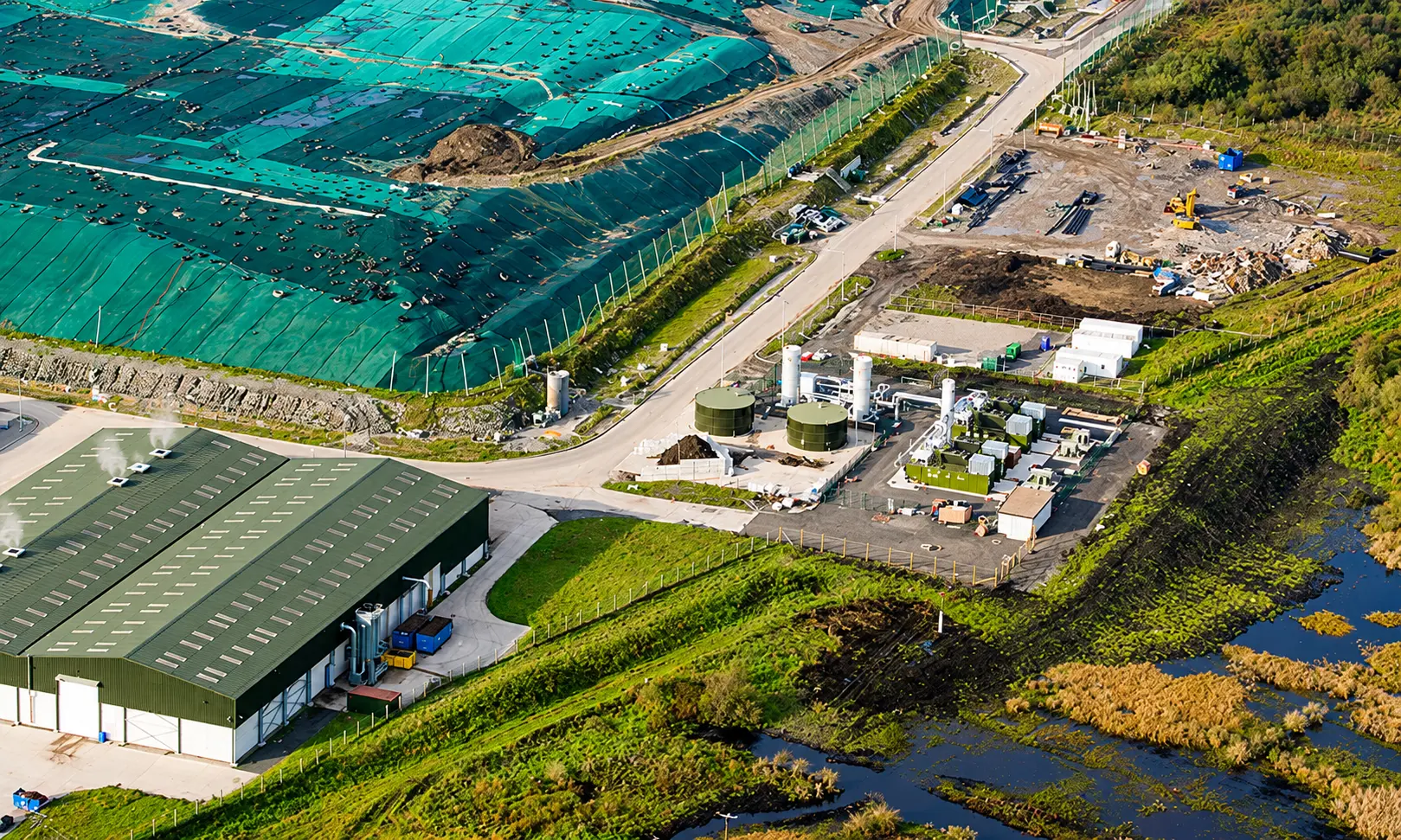
PNGRB’s most recent public accounting, from August 2025, put 160 CBG plants operative with 1.36 MMSCMD of rated capacity, 244 under construction with 2.78 MMSCMD, and 744 yet to break ground with 3.58 MMSCMD, against 1,150 total registrations totalling 7.72 MMSCMD. The regulator’s own assessment is that operating plants run at 20 to 60 percent of rated capacity, driven by inconsistent feedstock supply, seasonal biomass variation, and technical and operational issues at the plant itself.
That gap between registered capacity and delivered output is the part GOBARdhan’s funding does not automatically close. Assured pricing and capital assistance change whether a project gets financed. They do not change whether a plant sized around inconsistent feedstock assumptions, or split across vendors with no single point of accountability for whole-plant performance, actually hits its rated output once it is running.
Where CRA fits
A funded, mandated market is a reason to build now. It is a different question from whether a plant is engineered to run at its rated capacity rather than a fraction of it, and that question turns on gas quality as much as on financing.
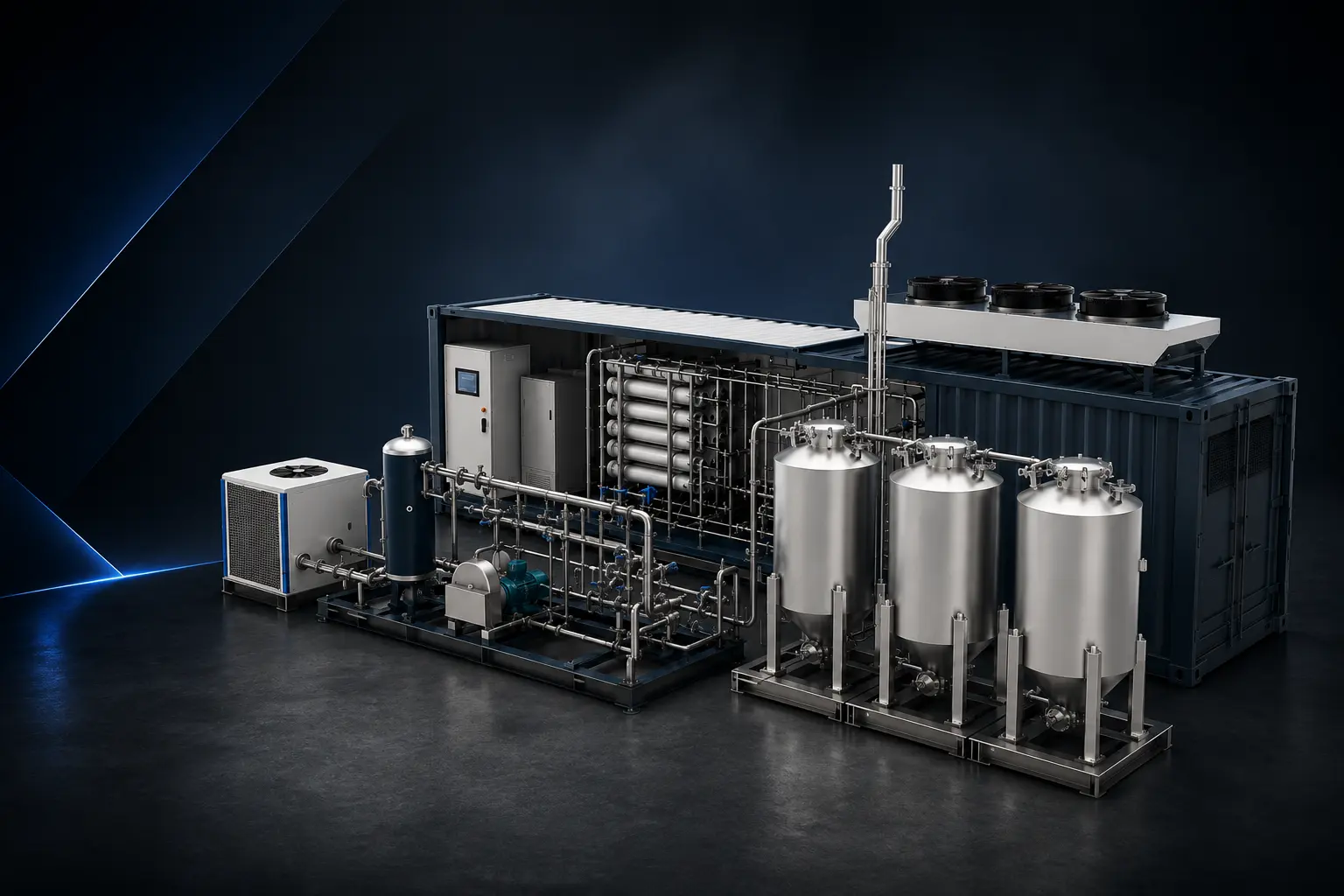
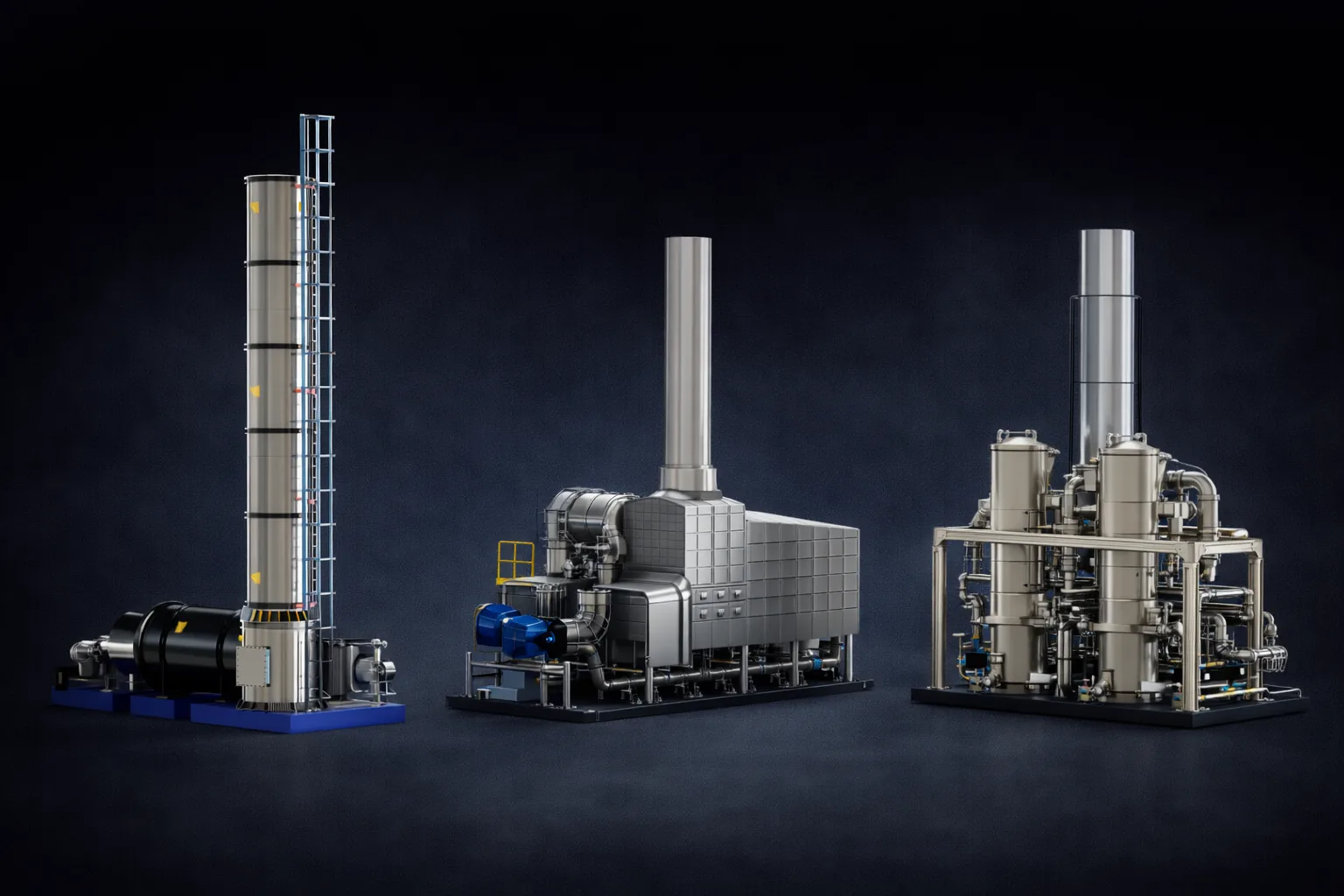
Keeping CBG on spec starts at the desulphurisation step. CRA sizes chemical, bio-regenerative, or dry-bed scrubbing to the feedstock’s actual H₂S profile rather than a generic inlet assumption, because the outlet H₂S figure that scrubber holds is what the membrane upgrading system downstream is rated against. When one partner designs both steps, that outlet spec is set to protect the membrane’s rated service life, not to a number written into a separate vendor’s data sheet with no visibility into what’s actually arriving at their skid. That kind of coordination isn’t new territory here. The same in-house engineering group that has designed flares and thermal oxidisers for three decades engineers the full gas train, from desulphurisation to methane slip destruction, on one design basis.
If you are scoping a CBG plant against the new GOBARdhan pricing and capital assistance framework, send us your feedstock profile and target output and we will walk you through what the gas train needs to look like to hit it.
References
1. PNGRB, “Compressed Biogas Integration in India’s Gas Economy: Progress and Prospects,” August 2025.
4. PRS Legislative Research, “Review of Implementation of CBG (SATAT),” December 2022.
5. Press Information Bureau, “Targets under SATAT Scheme,” December 2022.
9. Down To Earth, “Budget 2026: Biogas blending gets a boost,” February 2026.
10. REGlobal, “India’s CBG sector gains momentum, but challenges remain,” 2026.