
H₂S Scrubbers
CRA removes H₂S from biogas and process gas with scrubbers matched to the inlet load and the outlet that the end use needs. Bulk removal uses CRA's chemical scrubber with biological regeneration for CBG and biological scrubbers for gas engines, and iron oxide or activated carbon polishing takes the gas down to tight outlet limits.
Applications by product range
The application pages are grouped by the product range they draw on.
Flares
View the flare rangeBiogas and CBG
View the biogas and CBG rangeH₂S scrubbers
View the scrubber rangeThermal oxidisers
View the oxidiser rangeGas compression and processing
View the compression rangeWhich scrubber fits your gas?
The right scrubber depends on how much H₂S the gas carries, how low it has to go and what the gas is used for. Bulk removal takes out most of the H₂S, and polishing takes the outlet down to tight limits. This table is a starting point, and the selection is made against your gas data.
Scrubber
- Role
- Best suited to
- Outlet
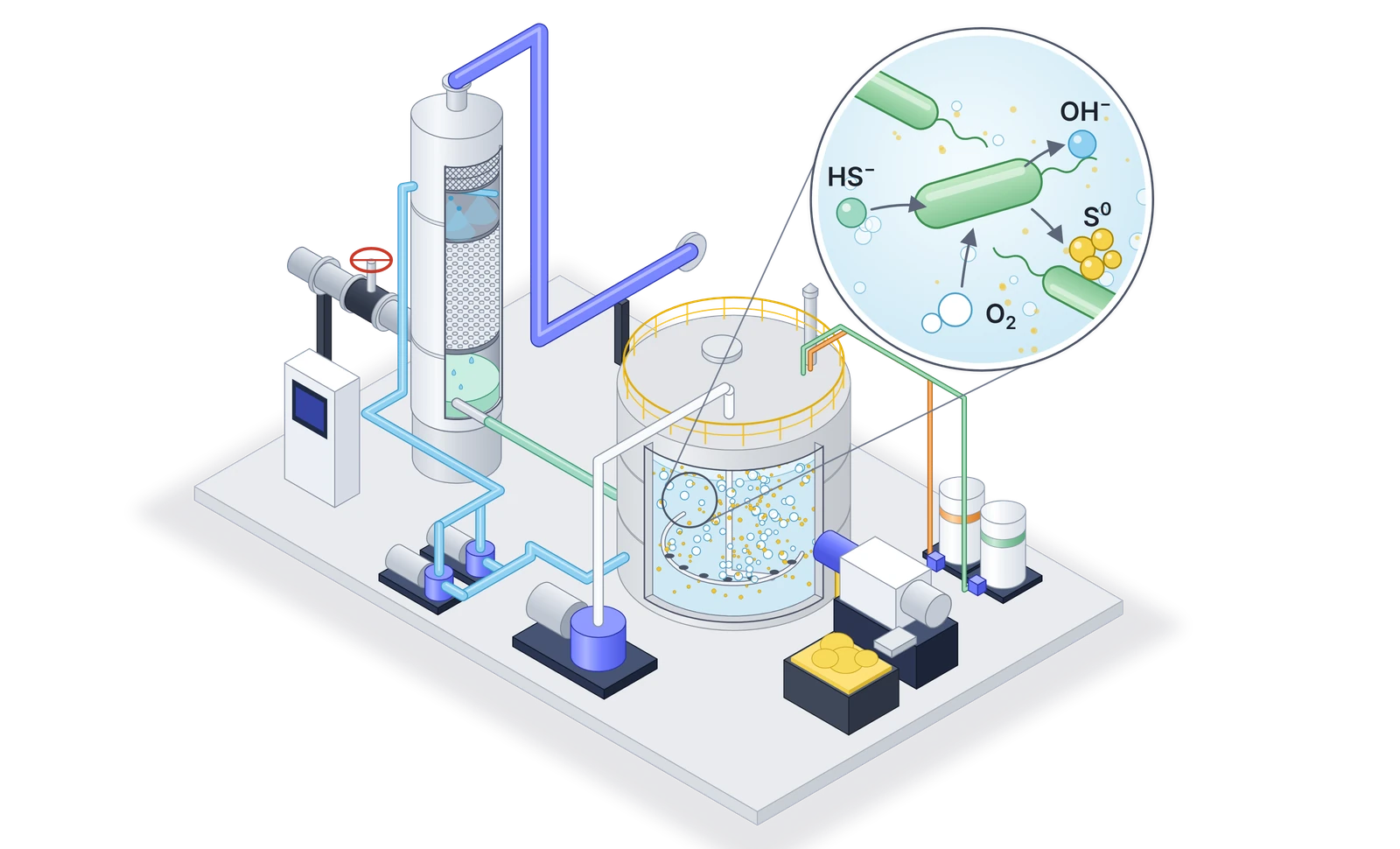
Chemical scrubber with biological regeneration
- Role: Bulk removal
- Best suited to: High H₂S loads on CBG duty, with no air added to the gas
- Outlet: Below 100 ppm
Biological scrubber
- Role: Bulk removal
- Best suited to: Gas for engines and boilers, where a little air in the gas is acceptable
- Outlet: Set to the engine's gas specification
Iron oxide scrubber
- Role: Polishing
- Best suited to: Final polishing with dry media that needs no power or dosing
- Outlet: Tight outlet limits
Carbon scrubber
- Role: Polishing
- Best suited to: Final polishing that also removes siloxanes and VOCs
- Outlet: Below 5 ppm
Industrial odour control system
- Role: Odour control
- Best suited to: Plant air carrying H₂S, mercaptans and VOCs
- Outlet: Set by the site's odour limit
CRA H₂S scrubber range
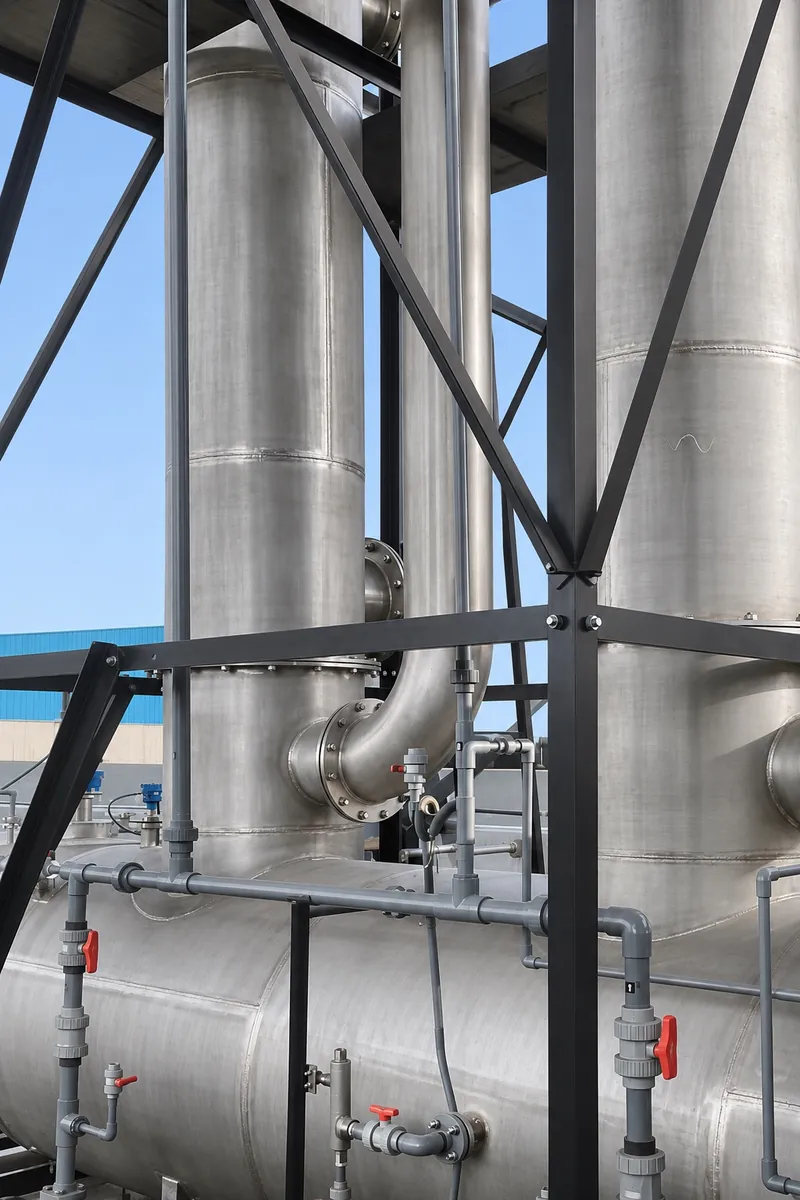
CRA designs and builds every scrubber, and bulk removal and polishing can be supplied together as one package.
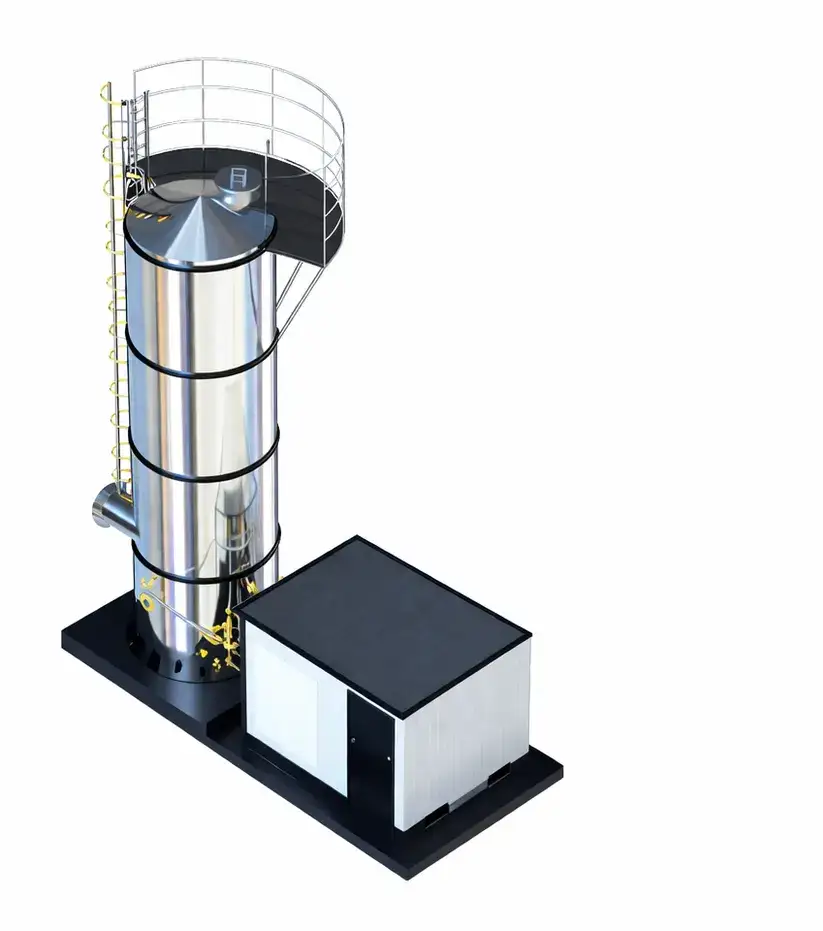
Bulk removal
Scrubbers that take most of the H₂S out of high-load biogas.
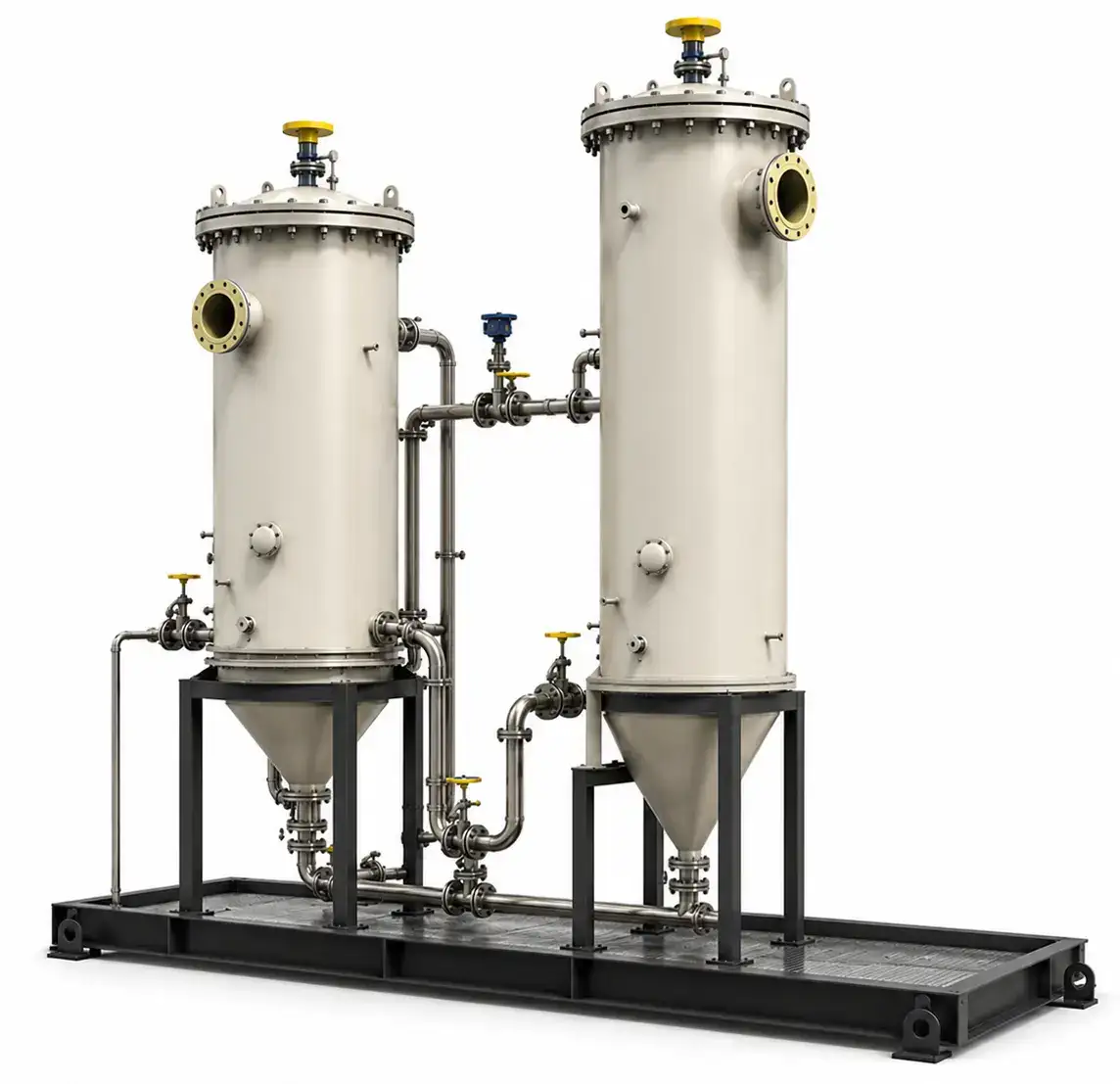
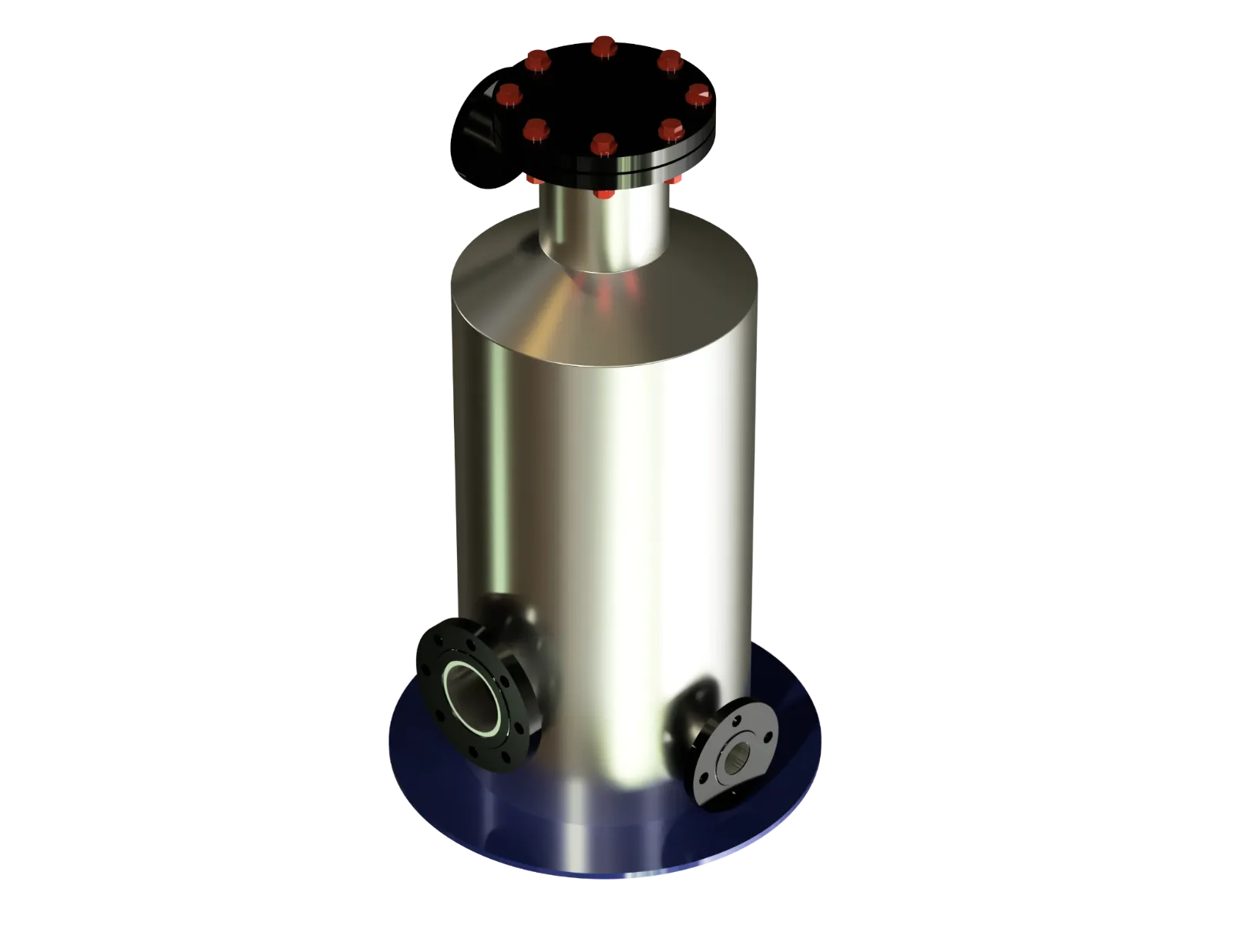
Polishing
Dry media scrubbers that take the outlet down to tight limits.
Odour control
Systems that treat H₂S, mercaptans and VOCs in plant air.
Complete gas trains
CRA scrubbers also come built into complete CBG gas trains and biogas to power trains.
H₂S scrubbers by application
Each application page covers the duty, the equipment CRA supplies for it and the questions buyers ask.
Why CRA for H₂S scrubbers
Matched to the duty
CRA selects bulk removal and polishing from the inlet load and the outlet that the end use needs.
Less caustic
Biological regeneration of the scrubbing liquid cuts caustic use by up to 90 percent.
No air in the gas
The chemical scrubber with biological regeneration adds no air to the gas, which keeps CBG within its oxygen limit.
Built in our own factories
Every scrubber is fabricated and assembled in CRA's factories near Delhi.
Scrubber projects
Which H₂S scrubber is right for my biogas?
It depends on the H₂S load and the end use. For CBG, CRA uses the chemical scrubber with biological regeneration for bulk removal, because it adds no air to the gas. For gas engines and boilers, a biological scrubber is usually the simplest choice.
Where the outlet limit is tight, an iron oxide or activated carbon scrubber follows as a polishing stage.
How low can CRA take the H₂S?
CRA's wet scrubbers take bulk H₂S below 100 ppm, and a polishing stage after them brings the outlet below 5 ppm. The polishing stage is chosen to suit the outlet that the end use needs.
What is a chemical scrubber with biological regeneration?
It is a wet scrubber that absorbs H₂S into a caustic solution and then regenerates the solution biologically, so that the same liquid is used again. Regeneration cuts caustic use by up to 90 percent compared with a once-through caustic scrubber, and no air is added to the gas.
Why does CRA not use a biological scrubber for CBG?
A biological scrubber needs air dosed into the gas for the bacteria to work, and that oxygen would put CBG outside its specification. CRA keeps biological scrubbers for gas-engine duty, where the small amount of air does no harm.
What information does CRA need to size a scrubber?
CRA needs the gas flow, the inlet H₂S and its range, the other gas components, the outlet that the end use needs and the site conditions. The H₂S scrubber questionnaire lists these items.
Brochures and questionnaires
Tell us about your gas
Send us the gas flow, the inlet H₂S and the outlet you need, and we will book a call with a scrubber engineer to go through it.