
Flares for Gasification Syngas
Flares that burn syngas from biomass and waste gasifiers during start-up, off-specification running and engine trips.


Syngas burned safely whenever the user cannot take it
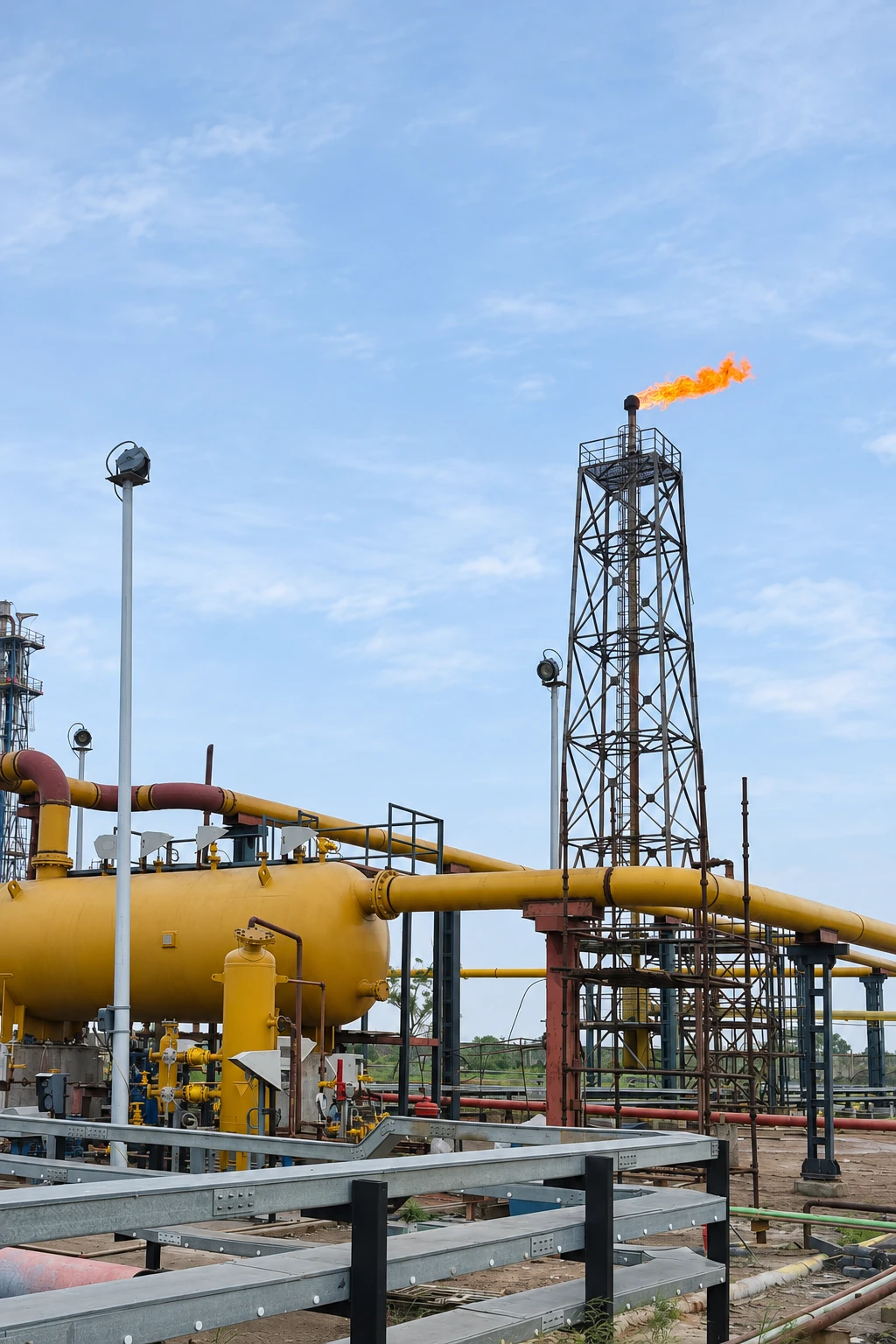
CRA's flares burn syngas from biomass and waste gasifiers during start-up, off-specification running, trips and shutdown, with tips and pilots suited to lean, variable gas.
Configuration
Enclosed or elevated
Gas
Lean syngas
Duty
Start-up and trips
Control
Burner management
What does a flare do at a gasification plant?
A gasifier makes gas continuously, even when the engine, boiler or turbine cannot take it. The flare burns that gas safely, destroying the carbon monoxide and hydrogen it contains.
How it works
Valves send the syngas to the flare during start-up and trips, and back to the gas user once it is ready.
The gasifier produces syngas from biomass or waste.
Valves send the gas to the flare when the user cannot take it.
The flare burns the syngas, with pilots holding the flame.
Once on specification, the gas goes back to the user.
Key Benefits
The flare burns the gas until it is fit for the engine or boiler.
The flare takes the syngas when an engine, boiler or turbine trips.
Tips and pilots are designed for lean, variable syngas.
Burning the syngas destroys its carbon monoxide.
The configuration suits the site layout and visibility needs.
The CRA Edge
CRA has more than 30 years of experience in gas handling and flare engineering.
Design, R&D and manufacturing are carried out under one roof.
ISO 9001 certified through TÜV NORD, with designs aligned with ASME, API and CE.
Designs are customised to the process needs and the regulations that apply at site.
Applications
Frequently Asked Questions
When does a gasification plant flare syngas?
During start-up, when the gas is off specification, when the engine or boiler trips and during shutdown.
Why is syngas flared and never vented?
Syngas contains carbon monoxide, which is toxic, and hydrogen, which ignites easily. Burning it in a flare removes both hazards.
Can the flare handle tar in the syngas?
Yes, with knock-out and drainage on the flare line to deal with condensed tar.
What data does CRA need to size a syngas flare?
CRA needs the gas flow and composition range, the start-up and trip scenarios, the pressure available and the site conditions.
Should a gasification plant use an enclosed or elevated flare?
Enclosed flares hide the flame and suit sites near people. Elevated flares suit larger relief loads.