CBG Plant Retrofits for Off-Spec Gas and High Methane Slip


India’s Petroleum and Natural Gas Regulatory Board (PNGRB) counted about 160 CBG plants in operation in August 2025 and found that average utilisation at many of them ranged from 20 to 60 percent of installed capacity. Feedstock supply explains part of that gap, and PNGRB also points to technical challenges in plant operations. A plant whose gas fails the quality test, or whose upgrading unit loses too much methane to the off-gas, sells less CBG from the same digesters.
When a plant falls short on gas quality or methane recovery, the cause is often confined to one or two stages of the gas train, and the digesters and compressors can be kept. A retrofit of the failing stages is a much smaller job than a new gas train. This article explains how the common failures show up and what a retrofit involves.
What IS 16087:2025 changed for plants already running
The Bureau of Indian Standards established IS 16087:2025 on 9 August 2025, superseding the 2016 edition. The revision raised the methane minimum from 90 to 95 mole percent and reduced the combined limit on carbon dioxide, nitrogen and oxygen to 5 mole percent. It sets H₂S at a maximum of 3.7 mg/m³ within a total sulphur limit of 10 mg/m³. The standard also caps carbon dioxide on its own at 4 mole percent and oxygen at 0.5 mole percent, and holds moisture to 5 mg/m³. Our note on India’s CBG policy and IS 16087:2025 sets out the full table with its test methods.
Many plants running today were designed and bought against the 2016 figures. Where an upgrading unit was sized with little margin above the old 90 percent minimum, it can usually reach 95 percent only by giving up methane recovery, so its methane slip rises as the product gets cleaner. A desulphurisation stage sized for the old sulphur limit may have no margin left under the new H₂S figure.
What the failing parameter points to
The parameter that fails is the best first guide to where the problem sits. Table 1 sets out the usual links between a failed result and its cause.
Table 1. What an off-spec result usually points to
| Test result | Where to look first |
|---|---|
| Methane below 95 percent, with CO₂ within its 4 percent limit | Nitrogen or oxygen is entering the gas, commonly through air dosing for H₂S control. |
| Methane below 95 percent, with CO₂ above 4 percent | The upgrading unit is not removing enough CO₂ at its present flow and operating conditions. |
| Oxygen above 0.5 mole percent | Air is entering the gas through air dosing, or through a part of the system that runs below atmospheric pressure. |
| H₂S above 3.7 mg/m³, or total sulphur above 10 mg/m³ | The desulphurisation stage is undersized for the real inlet load, or there is no polishing stage after it. |
| Moisture above 5 mg/m³ | The drying step lacks capacity for the present flow, or liquid water is carrying over into it from upstream. |
| Off-gas methane higher than the design recovery allows | The upgrading unit is losing methane, either through how it is configured and operated or through damaged membranes. |
When H₂S or total sulphur is over the limit
The most common cause is a desulphurisation stage sized on an assumed inlet H₂S figure. The gas a digester actually produces often carries more H₂S than the assumption, and the level swings when the feedstock mix changes. Press mud and spent wash in particular can lift it sharply. A scrubber sized for the average load then lets H₂S through during the peaks.
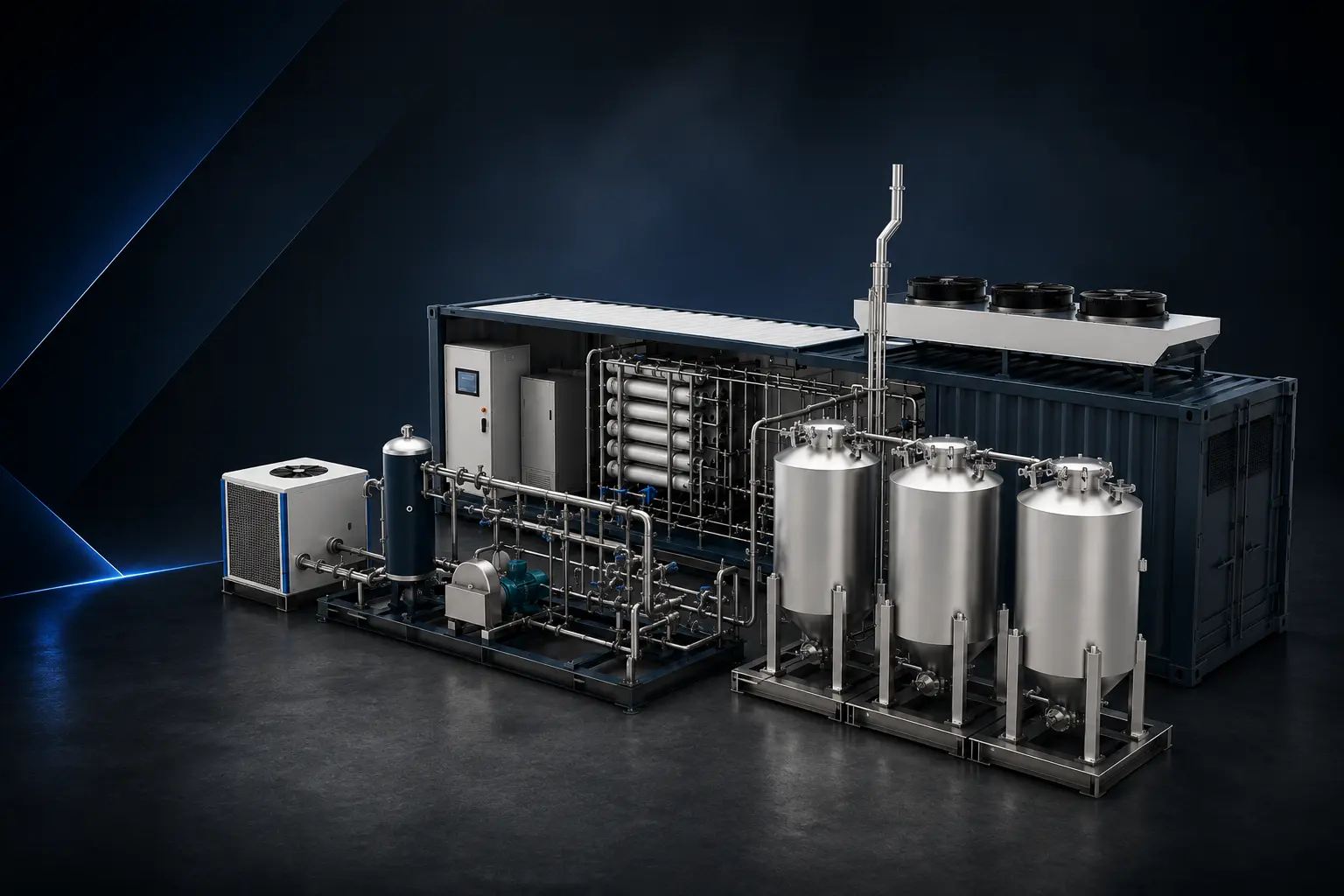
One wet stage on its own does not take biogas down to the 2025 H₂S limit. For CBG duty CRA uses a Chemical Scrubber with Biological Regeneration for bulk removal, followed by an activated carbon polishing stage that removes the residual H₂S ahead of the upgrading unit. Both stages are sized on the plant’s measured inlet profile, including its peaks.
The total sulphur limit counts every sulphur compound in the gas, so a plant can pass on H₂S and still fail on total sulphur. The gas analysis for a retrofit needs to report both.
When nitrogen and oxygen keep methane below 95 percent
Many biogas plants control H₂S by dosing air into the digester headspace or into a biological scrubber, where bacteria use the oxygen to convert H₂S to sulphur. For gas going to an engine this works well. For CBG it causes a problem, because the air brings nitrogen with it and most upgrading technologies remove very little nitrogen.
As the upgrading unit takes CO₂ out, the nitrogen that remains becomes a larger share of the product. A few percent of nitrogen in the raw biogas can be enough on its own to hold the product below 95 percent methane and above the 5 percent limit on carbon dioxide, nitrogen and oxygen combined. Oxygen that the bacteria leave unused counts against the same limit and against the separate 0.5 percent oxygen limit.
The retrofit is a desulphurisation stage that adds no air to the gas. The Chemical Scrubber with Biological Regeneration absorbs H₂S into an alkaline solution, and bacteria regenerate that solution in a separate loop, so the air they need is not dosed into the biogas. Once the air dosing is taken out of service, the nitrogen content of the product falls.
When methane slip is higher than designed
Methane slip is the methane that leaves the upgrading unit with the off-gas. Indian CBG plants normally vent the off-gas, so every extra point of slip is CBG the plant has paid to produce and cannot sell, and it is also a methane emission.
Slip rises for several reasons. A membrane unit with too few stages for its duty, or without permeate recycle, loses more methane than a fully staged design. Recovery also falls when the feed pressure or flow drifts away from the design point, or when the raw gas composition differs from the design basis. Membrane modules lose performance over time when they see contaminants beyond their rating, such as excess H₂S, liquid water or compressor oil. Pushing purity up to meet the 2025 methane limit adds to the loss in each case.
The fix depends on the cause. Retuning pressure and recycle settings sometimes recovers part of the loss. Where the configuration is the limit, the usual options are an added membrane stage with permeate recycle, or more membrane area in the existing stages. Where the upgrading unit is PSA or VPSA and cannot reach 95 percent methane at an acceptable recovery, CRA’s route is replacement with a staged membrane upgrading system. If the membranes have been damaged, the pre-treatment has to be corrected as well, because new modules fed with the same gas will degrade in the same way.
What a retrofit involves
A retrofit starts by finding where in the train the gas goes off spec. That takes gas analysis at the digester outlet, after each desulphurisation stage, before and after the upgrading unit and in the off-gas, read against the plant’s operating data across its normal swings in feedstock and load.
With that picture, the design corrects the stages that are failing and keeps the equipment that is working. Each change is checked against its effect on the stages downstream of it. Online gas analysis between stages is worth adding where a plant lacks it, because it shows operators the gas drifting before a sample fails the quality test.
Frequently asked questions
Can an existing CBG plant be brought up to IS 16087:2025 without replacing the gas train?
In many cases it can. The digesters and compressors are usually kept, and the work goes into the stages that are failing, most often desulphurisation, upgrading or both. The stage-by-stage gas analysis decides the scope for a given plant.
Why does air dosing for H₂S control cause problems in a CBG plant?
The air brings nitrogen in with the oxygen the bacteria need. Most upgrading technologies remove very little nitrogen, so it stays in the product gas. There it counts against the 5 mole percent limit on carbon dioxide, nitrogen and oxygen and pulls methane below the 95 percent minimum.
What causes high methane slip in a CBG plant?
The usual causes are an upgrading configuration with too few stages for the duty, operation away from the design pressure and flow, membrane modules damaged by contaminants, and purity pushed above the design point. Comparing the methane content of the off-gas with the design recovery shows how large the loss is.
How CRA can help
CRA engineers the complete CBG gas train, from raw biogas to 250 bar compression, with mechanical, electrical and process design done in house. Gas conditioning is where CRA is strongest. CRA has worked in biogas for more than 25 years. It is an approved vendor across India, with more than 200 gas conditioning systems installed.
If your CBG is failing the IS 16087:2025 test, or your plant is losing more methane than it should, contact our team. To start, send us the raw biogas flow and feedstock, the H₂S range at the digester outlet, the upgrading technology and its rated capacity, a recent product gas analysis showing the parameter that fails, and the off-gas methane content if you measure it. Our engineers will then arrange a call to go through the plant with you.
For more detail, see our notes on bulk desulphurisation for press mud and spent wash CBG plants and on using one gas-train partner for biogas upgrading, or the retrofit service page.
References
6. CRA Energy, “Chemical Scrubber with Biological Regeneration,” product page.