Why Press Mud and Spent Wash CBG Plants Need Bulk Desulphurisation

.svg)
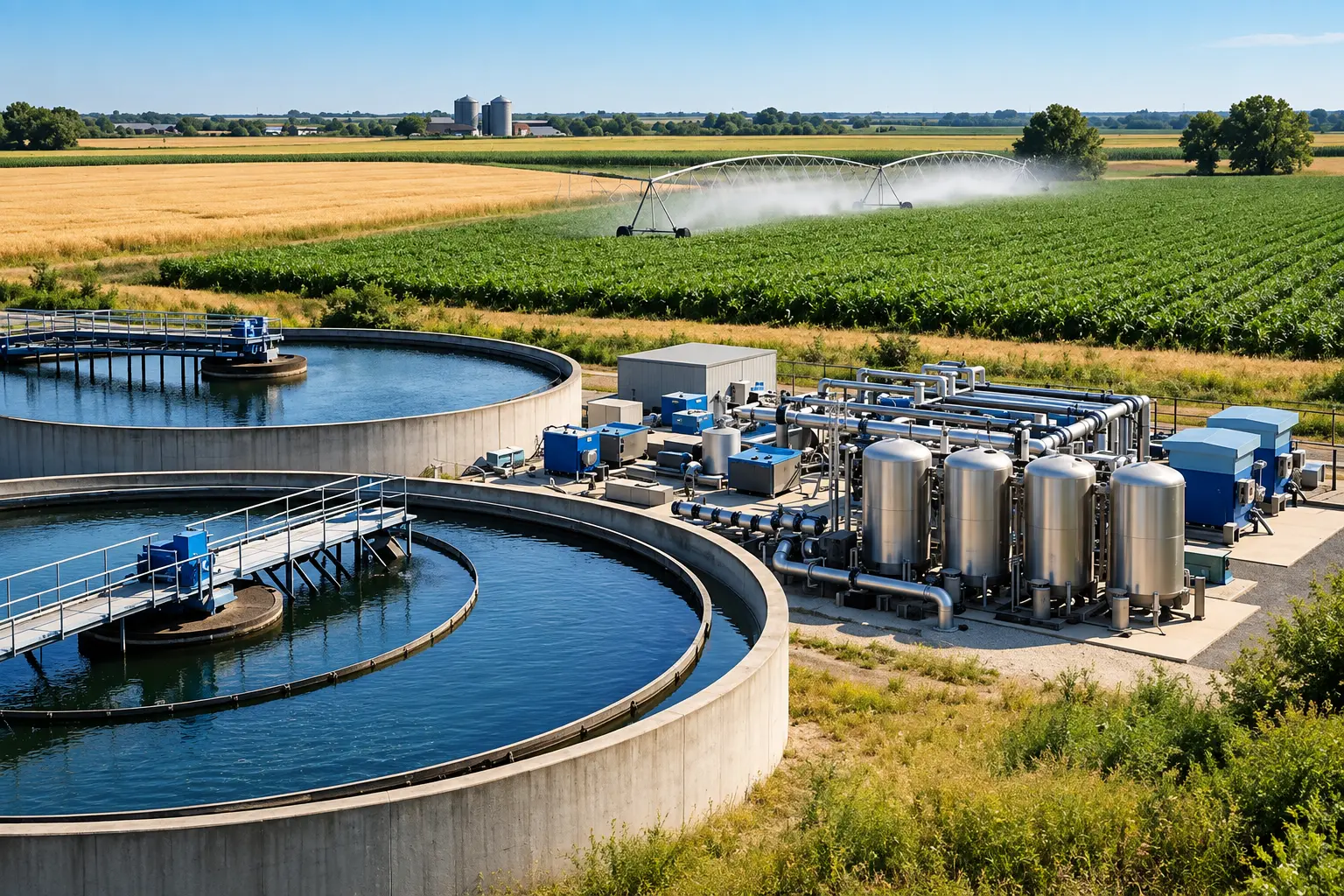
A sugar mill holds its own feedstock
Sugar mills produce press mud at 3 to 4 percent of the cane they crush, and about 25 tonnes of it makes a tonne of CBG. Add spent wash from an integrated distillery and the mill has its feedstock on site, with no farm-gate collection to organise. Demand is arriving too. The Cabinet’s GOBARdhan scheme carries the notified CBG obligation for city gas distributors: 3 percent in FY 2026-27, 4 percent in FY 2027-28 and 5 percent from FY 2028-29. Our note on India’s CBG policy traces how the pieces fit.
Getting feedstock into a digester is the easy part. The gas that comes out is where the engineering starts.
Where the H₂S comes from
Molasses spent wash is rich in sulphates, and the sulphide that sulphate-reducing bacteria produce from them is a known cause of digester inhibition and failure. Part of that sulphide leaves as H₂S in the biogas. Table 1 sets spent wash beside other feedstocks and the CBG limit.
Table 1. Reported raw biogas H₂S by feedstock, against the CBG limit
Sources: Frontiers in Energy Research for the feedstock ranges, a spent wash digestion study, patent US 12264288 for vinasse gas, IS 16087:2025 for the CBG limit.
Spent wash gas sits at the top of the published ranges or beyond them. Where a given mill lands depends on how much spent wash goes into the digester alongside the press mud, so the design starts from a measured H₂S profile.
What that load does to a plant
Take 1,000 Nm³/h of raw biogas at 15,000 ppmv. That is about 23 kg of H₂S every hour, roughly 550 kg a day.
H₂S attacks iron and copper alloys, and does more damage in wet gas that carries traces of oxygen. Gas holders, blowers, compressors and pipework take the hit long before the gas reaches any upgrading equipment. Dry beds and activated carbon capture H₂S by mass, so at hundreds of kilograms a day, media changeouts become a major operating cost instead of routine maintenance. The sulphide behind the gas-phase H₂S also inhibits methanogens, so the same sulphur chemistry that fouls the gas can destabilise the digester.
Why one stage cannot close the gap
IS 16087:2025 holds H₂S in CBG to 3.7 mg/m³ and total sulphur, including H₂S, to 10 mg/m³. A 15,000 ppmv inlet is about 21,000 mg/m³, so the H₂S limit alone is a 99.98 percent reduction, held continuously.
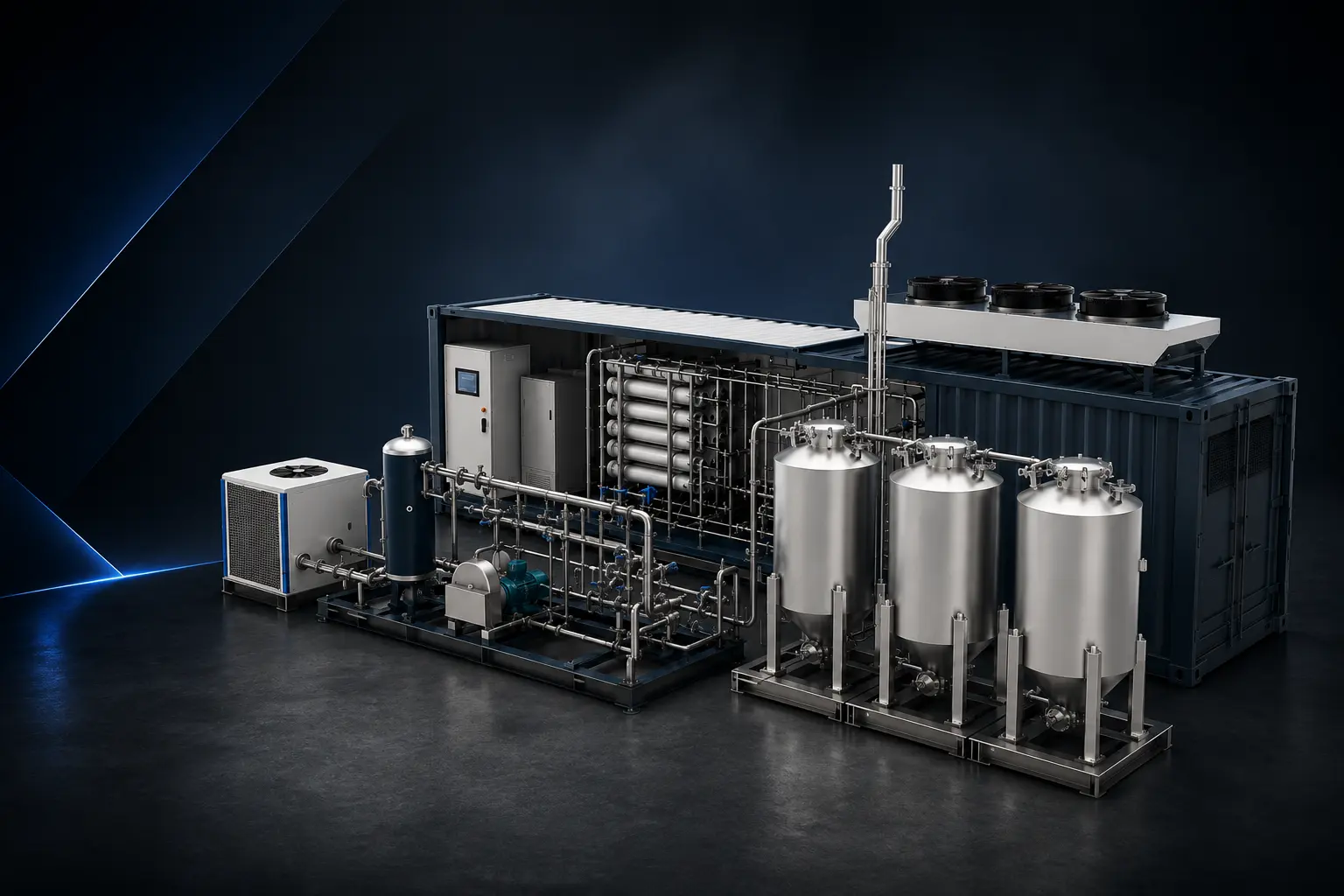
Bio-regenerative desulphurisation is built for the bulk stage. A counter-current alkaline scrubber absorbs the H₂S. Sulphur-oxidising bacteria then convert the absorbed sulphide to elemental sulphur and restore the caustic, so the loop runs on far less chemical than a once-through NaOH scrubber burns. Removal exceeds 99 percent at high inlet concentrations and variable loads. No air is injected into the gas stream, which keeps oxygen and nitrogen out of a gas that the standard holds to 0.5 mole percent oxygen and 5 mole percent CO₂, nitrogen and oxygen combined. On a 15,000 ppmv inlet, 99 percent removal leaves up to 150 ppmv, and adsorption is the cheaper way to cover the remainder. Every technology works well inside its own window and costs too much outside it. The answer is a train: bulk removal first, polishing second, upgrading last.
Iron salt dosing in the digester can also trim the load at source. In a laboratory study on spent wash, FeCl₃ addition cut H₂S from 2 to 2.4 percent to below 0.05 percent. Plant-scale results vary, so treat it as a lever to test alongside a bulk stage, never in place of one.
Sizing the bulk stage
Four inputs drive the choice: H₂S mass load in kg/h, which follows from the press mud to spent wash ratio; gas flow pattern, since crushing seasons and distillery shutdowns mean the plant starts, stops and idles; chemical and sulphur handling on site; and the upgrading technology downstream.
A caustic chemical scrubber starts instantly and suits on-off operation. Where the load is heavy and continuous, a bio-regenerative scrubber regenerates its caustic biologically, cutting chemical consumption and recovering the H₂S as elemental sulphur. Biological scrubbers that dose air into the gas suit gas-engine duty, but the oxygen and nitrogen they add rule them out for CBG. A dry iron oxide scrubber or activated carbon polishing stage then takes the gas to the ultra-low levels that IS 16087:2025, CHP engines, fuel cells and pipeline-grade specifications demand. For a side-by-side comparison, see Which H₂S Scrubber Is Best for Your Application?
Frequently asked questions
How much H₂S do press mud and spent wash biogas contain?
There is no single figure. Spent wash biogas has been measured at 2 to 2.4 percent H₂S by volume in laboratory digestion, and vinasse gas is reported as high as 30,000 ppmv. The level at a given mill depends on the press mud to spent wash ratio, so the design starts from a measured H₂S profile.
What H₂S limit does IS 16087:2025 set for CBG?
The standard holds H₂S to 3.7 mg/m³ and total sulphur, including H₂S, to 10 mg/m³. It sits alongside limits on methane (95 mole percent minimum), CO₂ (4 mole percent), oxygen (0.5 mole percent) and moisture (5 mg/m³). For pipeline injection, PNGRB’s specifications apply on top, and the stricter of the two governs.
Can one scrubber take spent wash biogas to CBG specification?
In practice, no. A bulk stage removes most of the H₂S and a polishing stage covers the remainder. CRA sizes both against the measured inlet profile rather than a generic assumption.
How CRA Energy can help
CRA Energy brings more than 30 years of gas treatment experience. The H₂S range covers chemical, bio-regenerative, biological, dry iron oxide and activated carbon scrubbers, with membrane upgrading downstream. Its chemical scrubbers have run on biogas with inlet H₂S near 10,000 ppm and outlet below 20 ppm.
CRA sizes the bulk stage on your own gas. Send your press mud and spent wash quantities and any H₂S data you have to our team, and CRA’s engineers will design the train from bulk removal through polishing.
For more detail, see our notes on India’s CBG policy framework, on sewage biogas and CBG, and on why one gas-train partner suits a financed plant.
References
3. CRA Energy, “How SATAT, GOBARdhan and IS 16087:2025 Are Reshaping Compressed Biogas in India.”
5. CRA Energy, “What It Takes to Turn STP Biogas Into CBG,” for the IS 16087:2025 limits.
8. Patent US 12264288, “System and method for cleaning of biogas.”
9. Canex Techno, “Role of H₂S and Its Major Problems in CBG Plants.”
10. CRA Energy, “Bio-Regenerative Chemical H₂S Scrubber,” product page.
11. CRA Energy, “Which H₂S Scrubber Is Best for Your Application?”