
Semi-Enclosed Biogas Flare
Standard low-height flares for CBG and biogas plants
.webp)
.svg)
Surplus and emergency flaring, with the flame inside a stainless steel chamber
CRA’s Semi-Enclosed Biogas Flare burns surplus and emergency raw biogas inside a stainless steel chamber that hides most of the flame and blocks most of its radiant heat. It comes in four standard models from 500 to 2,500 Nm³/h. Each unit carries its own blower, gas train and controls in its base, so it runs straight from the gas holder. It is built for CBG and biogas plants that need more than an open flare, but not the controlled high-temperature combustion of an enclosed ground flare.
Capacity
500 to 2,500 Nm³/h
Raw biogas
45 to 65% CH₄
Carbon-credit class
Low-height flare (BEE BM-T-004)
Operation
Fully automatic
What is a semi-enclosed biogas flare?
A semi-enclosed flare burns gas inside an open-topped chamber that hides most of the flame and shields the area around it from radiant heat. It is also called a low-height or low-temperature flare. Unlike an enclosed ground flare, it does not hold a set combustion temperature or residence time, which keeps it simpler and less expensive.
On every CRA model the chamber is between two and ten times as tall as its diameter. BEE’s flaring tool BM-T-004, which sets how flaring is credited under the offset mechanism of India’s Carbon Credit Trading Scheme, classes that geometry as a low-height enclosed flare.
How it works
The flare starts and stops on a signal from the plant, and an EN 298 burner control unit runs every step in between.
The plant control system starts the flare when the gas holder is full, or an operator starts it from the local panel.
The blower draws raw biogas from the gas holder through a knock-out drum, which drains condensate automatically, and raises it to burner pressure.
A spark ignites the gas at low fire, and a continuous-duty UV sensor must confirm the flame within the controller’s safety time before the flare carries on.
Premix injector burners in the open air zone fire up into the stainless steel chamber, and natural draft pulls combustion air in through the open sides. The main valves step between low fire and high fire as the gas flow changes.
When the gas holder level falls, the valves close and the blower stops. A flame failure, an over-temperature at the arrester or blower, low gas pressure or a power failure closes the valves and locks the flare out until an operator resets it.
Key Benefits
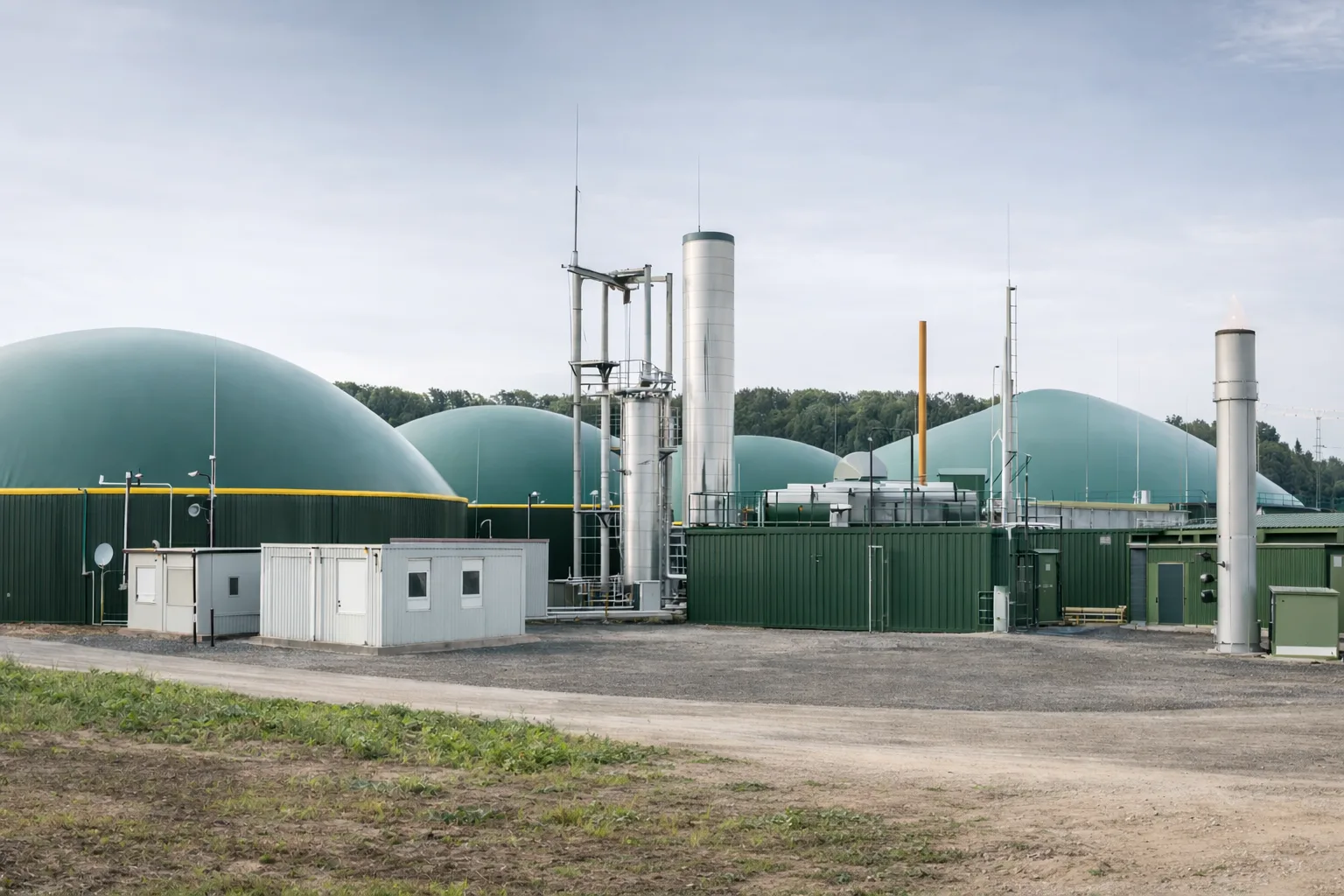
Most of the flame burns inside the chamber, so the flare can stand much closer to gas holders, digesters and their membranes than an open flare.
Under BM-T-004, a low-height enclosed flare earns a default efficiency of 80% for each minute its flame is detected and its temperature and gas flow are within the manufacturer’s operating specification. An open flare gets 50%. The controls log flame and chamber temperature every minute, and a flow meter can be added.
An integral blower draws raw biogas at a few millibar and boosts it for the burners, and a knock-out drum removes condensate on the way. No separate booster skid is needed.
Every part that raw gas or its condensate reaches is 316-grade stainless steel, and no copper alloys are used where the gas flows. The flare can take gas upstream of the H₂S scrubber.
An EN 298 burner control unit with continuous UV flame supervision runs the start-up and shutdown sequence. An ISO 16852 flame arrester protects the burner supply, and fail-closed valves shut on any trip, after which the flare stays locked out until an operator resets it.
The CRA Edge
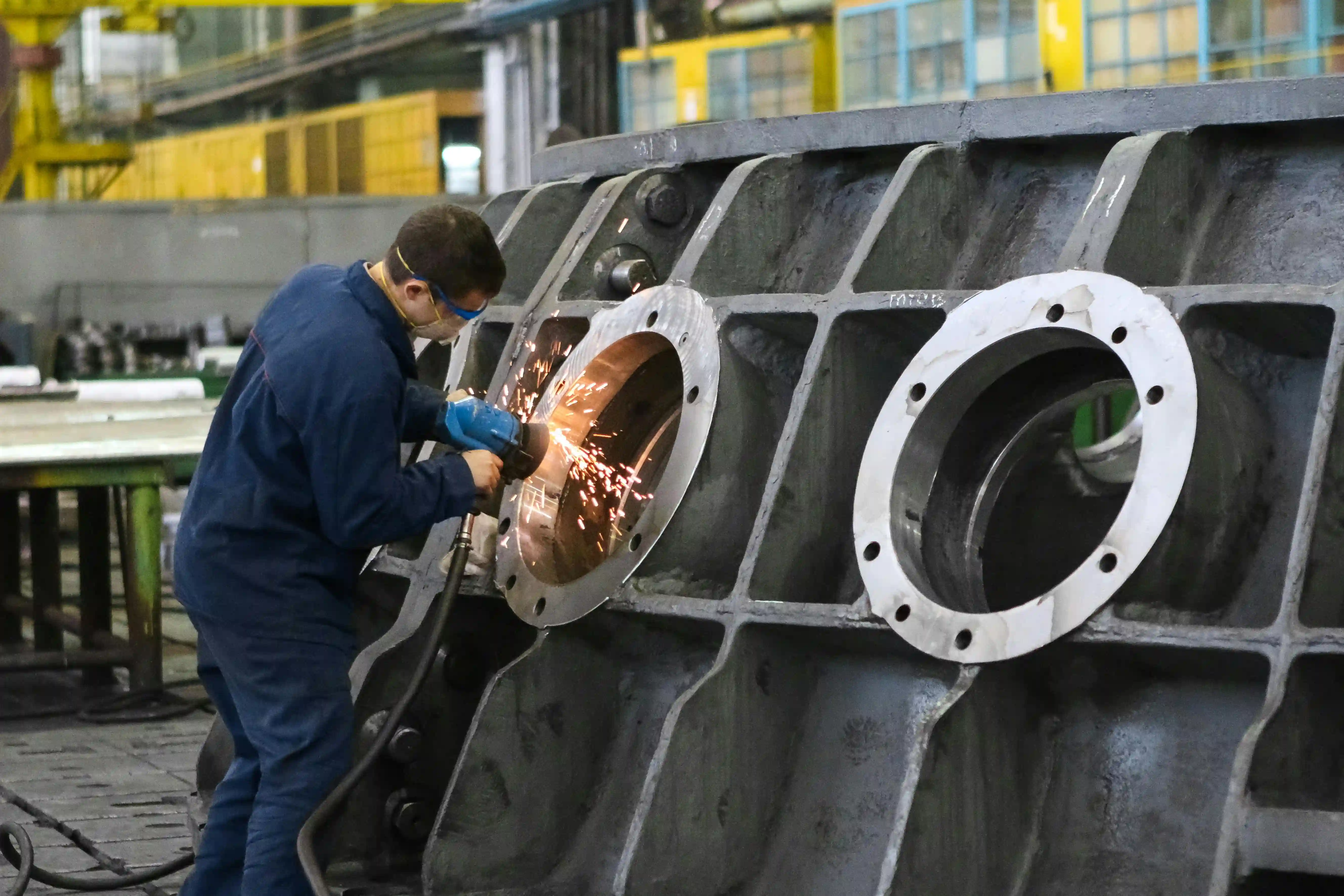
Engineering, fabrication and assembly take place at CRA’s works in Noida, with no import duty or sea freight on the flare.
All four models share the same ignition, flame supervision and control modules. Each project is configured from these modules and a fixed option list.
CRA also supplies H₂S scrubbers, gas dehumidifiers and membrane upgrading systems, so the flare can come from the same supplier as the rest of the gas train.
CRA’s field service engineers are based in India, so commissioning and site visits need no international travel.
Applications

Frequently Asked Questions
How is a semi-enclosed flare different from an enclosed ground flare?
Both burn the gas inside a chamber. An enclosed ground flare has an insulated chamber and controls its air supply to hold a set combustion temperature and residence time, which some permits require. A semi-enclosed flare hides most of the flame and cuts radiant heat but does not control temperature, so it is simpler and costs less.
Can the flare stand close to a gas holder or digester membrane?
It can stand much closer than an open flare, because the chamber blocks most of the flame’s radiant heat. Every site still needs its own check of distance, hot exhaust plume and prevailing wind, so tell us the distance to the nearest gas holder when you enquire.
Does it help with carbon credits under India’s CCTS?
BEE’s flaring tool BM-T-004 classes a flare whose chamber is two to ten times as tall as its diameter as a low-height enclosed flare. It earns a default efficiency of 80% for each minute its flame is detected and its temperature and gas flow are within the manufacturer’s operating specification, against 50% for an open flare. Every CRA model falls in that class, and its controls log flame and chamber temperature every minute. The tool also needs the gas flow and methane content to the flare to be measured, and CRA can add a flow meter and a gas analyser connection where the plant does not have them.
Can it burn off-spec biomethane as well as raw biogas?
Yes, with the biomethane option. Biomethane needs its own burner group, because it needs almost twice as much combustion air as raw biogas and burns faster. The option adds a separate gas train and a pressure reduction skid, and interlocks the two inlets so only one gas enters at a time.
Why is the chamber not lined with refractory?
Raw biogas with H₂S forms acidic condensate. A refractory-lined carbon steel shell runs cool enough for that acid to condense behind the lining, and linings crack under frequent starts. An unlined 316-grade stainless steel chamber avoids both problems, and a ceramic-fibre-lined chamber is available where a cooler outer shell is needed.