What Global RNG, Biomethane and CBG Standards Ask of Your Gas Train

.svg)
One molecule, many rulebooks
Biomethane has no global specification. A plant in Denmark, a landfill in Ontario and a digester near Pune all make the same molecule, and each sells it under a different rulebook. The gas goes by different names too: renewable natural gas (RNG) in North America, biomethane in Europe, and compressed biogas (CBG, also called bio-CNG) in India, where IS 16087 governs it as a vehicle fuel.
Those rulebooks answer three questions. Where can the gas go? What is it worth when it gets there? How must the plant run to keep both answers valid? A train built for the first can still fail the second and third, so the standards belong in the design brief before the equipment list exists.
Table 1 shows which rulebook applies where. The tables that follow set the numbers side by side.
Table 1. The same gas under four names and four rulebooks
Sources: BioCycle on the 2026 to 2027 RFS rule, 2BS on RED III, Mayer Brown on Brazil’s biomethane program. India’s blending obligation is from CRA Energy’s note on Indian CBG policy, listed in the References.
Gas quality standards decide where the gas can go
Europe has the most developed framework. EN 16726 sets gas quality for H-gas networks, and EN 16723-1 and EN 16723-2 add limits for contaminants that only biogas carries, for grid injection and vehicle fuel.
The framework is moving. CEN published a revised EN 16726 in September 2025, with oxygen provisions aimed at easing biomethane injection. A single draft, prEN 16723:2026, followed in September 2026. It covers grid injection and automotive fuel for biomethane and other renewable and low-carbon methane-rich gases, and its public enquiry runs to 4 November 2026.
National rules add their own layer. EN 16726 is voluntary, and countries can choose different limits and often do. Oxygen shows it best. Denmark caps oxygen at 0.5 mol percent at grid entry points, Italy allows up to 0.6, and France holds a far tighter tolerance. Table 2 sets the entry limits of the UK transmission system and Ireland’s distribution network side by side. Network tier matters, but the oxygen gap is wide: 200 ppm in the UK against 1.0 mol percent in Ireland, a fifty-fold difference.
Table 2. Biomethane entry limits, UK transmission and Irish distribution
Sources: National Grid, Gas Quality Parameters at NTS Entry Points and Gas Networks Ireland, biomethane connection booklet. Some individual UK entry points carry their own limits.
Table 3 adds the contaminants specific to biogas, using the limits EN 16723-1 sets and Gas Networks Ireland applies. For vehicle fuel, EN 16723-2 caps hydrogen at 2 mol percent, oxygen at 1 mol percent and H₂S plus COS at 5 mg S/m³, and asks for a methane number of at least 65.
Table 3. Biogas-specific contaminant limits under EN 16723-1, as applied in Ireland
Sources: Gas Networks Ireland and National Physical Laboratory. The ammonia effects are from CRA Energy’s wastewater RNG note, listed in the References.
North America has no single national standard. Each pipeline and utility writes its own tariff, so limits differ line by line. Table 4 sets the Canadian mainlines and one US utility beside India’s CBG specification.
Table 4. RNG limits in Canada and the United States, and CBG limits in India
Sources: TC Energy gas quality specifications fact sheet and ONE Gas biomethane specification. Canadian ranges span the mainlines listed in the fact sheet. India’s figures are those CRA Energy summarised for IS 16087:2025, listed in the References.
The US picture is wider than one utility. ONE Gas’s own comparison chart lines its limits up against ten other specifications, including California’s utilities. CO₂ sits at 2 or 3 percent, oxygen runs from 0.05 to 0.4 percent, and siloxane limits run from 0.1 to 0.5 mg Si/m³ where they are stated in those units.
Brazil’s ANP set biomethane specifications in Resolution 886 of 2022 for landfill and wastewater gas and Resolution 906 for agricultural residues, and its board approved a consolidated replacement in August 2026. At the international level, ISO 20675 defines terms and classifications for biogas production, conditioning and upgrading, and its scope excludes biomethane quality specifications. Quality stays regional.
Each limit protects something specific. CO₂ and inerts hold the heating value and the Wobbe index inside the band that meters and appliances are built for. Oxygen drives corrosion and black powder in high-pressure grids, and adds combustion and microbial risks in storage. H₂S and sulphur attack pipe, compressors and instruments. Water and hydrocarbon dew point keep liquids out of the line. Siloxanes, ammonia and the other trace contaminants protect the end user’s burner or engine.
Read across the markets and an envelope appears. CO₂ limits tighten to 2 to 2.5 percent. The tightest H₂S limits sit between 3.7 and 6 mg/m³. Silicon limits run from 0.1 mg Si/m³ in US utility specifications to 1 mg Si/m³ in Europe. Oxygen is the outlier, from 10 ppm in one US utility’s high-CO₂ case to 1.0 mol percent in Ireland. Removing oxygen from biogas is costly, which is why the EN 16726 revision took it up. A train designed to the strictest value on each parameter carries the least rework when the same design is offered into a second market.
Sustainability rules decide what the gas is worth
Meeting the pipe specification gets the gas onto the network. Sustainability rules set the price it earns there. In the EU, RED III sets minimum greenhouse gas savings against a fossil comparator. Certification through a recognised scheme becomes mandatory for new biomethane producers above 200 m³ of methane equivalent per hour once each member state transposes the directive, and operators record their data in the Union Database.
One clause in the methodology matters to plant designers. RED gives one standard value for biomethane plants that combust their upgrader off-gas and a different one for plants that do not. Without off-gas treatment, the standard value assumes methane equal to 3 percent of the biomethane’s energy escapes, unless the operator substitutes a measured figure. Methane is potent enough that a slip of 0.5 percent alone uses about 8 percent of the emissions allowance for transport biomethane under the 65 percent saving threshold in RED II.
The same logic is spreading. Brazil’s Fuel of the Future law requires natural gas producers and importers to cut emissions by 1 percent in 2026, through biomethane or biomethane guarantee-of-origin certificates, and ANP’s March 2026 resolutions set individual targets and certification rules. In the United States, EPA’s final Renewable Fuel Standard rule for 2026 and 2027 sets cellulosic volumes at 1.36 billion RINs for 2026 and 1.43 billion for 2027, and it clarifies how RNG batches are measured, sampled and tested. India’s blending obligation reaches 5 percent by FY2028-29.
Evidence sits underneath all of it. Carbon intensity scores, certificates and RINs rest on metered volumes and measured methane losses, so a plant earns its premium by proving its numbers.
Methane rules decide how the plant is run
Limits on methane slip from the upgrader vary widely, and so does the slip of the technology behind them. Table 5 puts both side by side.
Table 5. Methane slip limits by jurisdiction and typical slip by upgrading technology
Source: IEA Bioenergy Task 37, Reduction of methane emissions from biogas systems and landfills.
Technology sets the starting point, as the lower rows of Table 5 show. Against Germany’s 0.2 percent limit, every process other than amine scrubbing needs post-treatment of its off-gas. The EU Methane Regulation reaches biomethane only when it is blended with natural gas and moved by pipeline.
Post-treatment is proven, and its cost is small. Upgrader off-gas is mostly CO₂ with methane in the low single digits. Regenerative thermal oxidation is the only technology able to treat methane below 2 percent by volume, and it runs without added fuel down to 0.37 percent. At a German plant with a membrane upgrader and an RTO on the off-gas, the oxidiser removed 99.6 percent of the methane in that stream. IEA Bioenergy’s costing for a small plant puts the added production cost at 0.3 to 0.7 euro cents per kWh, against German selling prices of 6 to 9 cents.
Oxidising the off-gas also moves a plant into the with-treatment category in RED’s methodology, and it lets a membrane plant meet the tightest slip limits, which its membranes alone would exceed.
How the standards translate into a gas train
Read the standards backwards and the train follows. Each limit maps to a stage.
Table 6. From limits to gas train stages
The membrane stage sits inside the tightest CO₂ limits in Tables 2 and 4. H₂S and trace contaminants depend on the polishing stage and on the gas analysis, so final figures are agreed at proposal stage against the specification of the target market.
Frequently asked questions
Is there a single global standard for RNG, biomethane or CBG?
No. ISO 20675 defines terms and classifications for biogas production, conditioning and upgrading, and its scope excludes biomethane quality specifications. Quality is set regionally: EN 16726 and EN 16723 in Europe, network entry specifications in the UK and Ireland, pipeline and utility tariffs in North America, IS 16087:2025 in India and ANP resolutions in Brazil.
What is the difference between RNG, biomethane and CBG?
They name the same upgraded biogas in different markets. RNG is the North American term, biomethane the European one, and compressed biogas (CBG, also bio-CNG) the term used in India for the compressed product. The chemistry and the gas train are shared. Specifications, incentives and offtake rules differ by market.
What CO₂ and H₂S limits apply to biomethane?
Limits depend on the network. National Grid’s UK transmission entry points allow up to 2.5 mol percent CO₂ and 3.3 ppm H₂S. Canadian mainlines cap CO₂ at 2 percent by volume, and ONE Gas caps H₂S at 0.25 grain per 100 scf, about 4 ppm. India’s IS 16087:2025 allows CO₂ at 4 mole percent and H₂S at 3.7 mg/m³.
What is methane slip, and which limits apply?
Methane slip is the methane that leaves with the CO₂-rich off-gas of the upgrader instead of staying in the product. Germany’s subsidy scheme allows 0.2 percent of the methane fed into the grid, Denmark 1 percent and France 0.5 to 1 percent by plant size, and the UK sets no limit at present. Membrane units typically slip 0.5 to 1 percent, so plants facing the tightest limits oxidise the off-gas.
Does oxidising the off-gas improve a plant’s carbon intensity score?
Under RED’s methodology, plants that combust their upgrader off-gas use a different standard value from plants that do not. The no-treatment value assumes methane equal to 3 percent of the biomethane’s energy is lost, and operators can replace it with a measured figure.
How CRA Energy can help
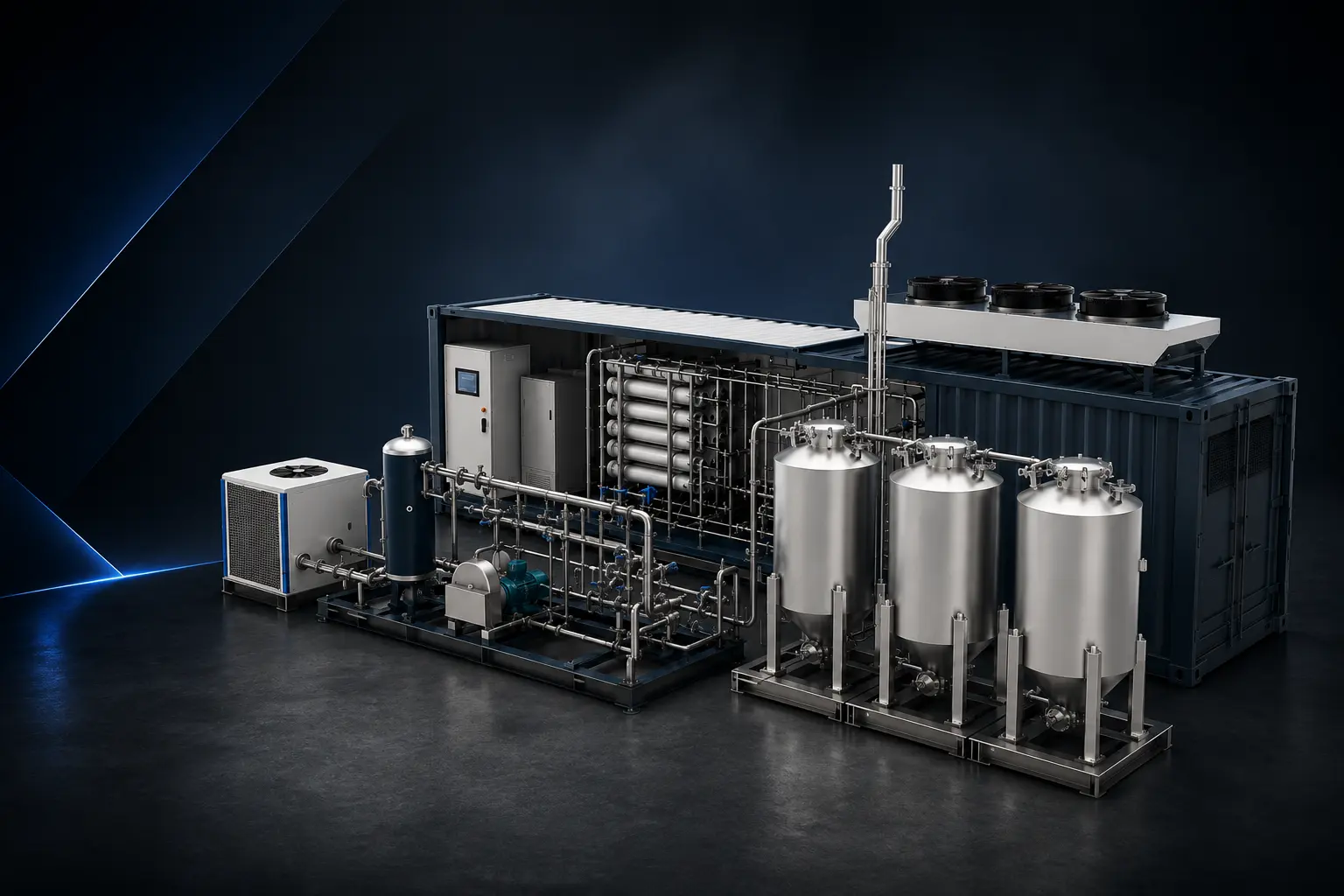
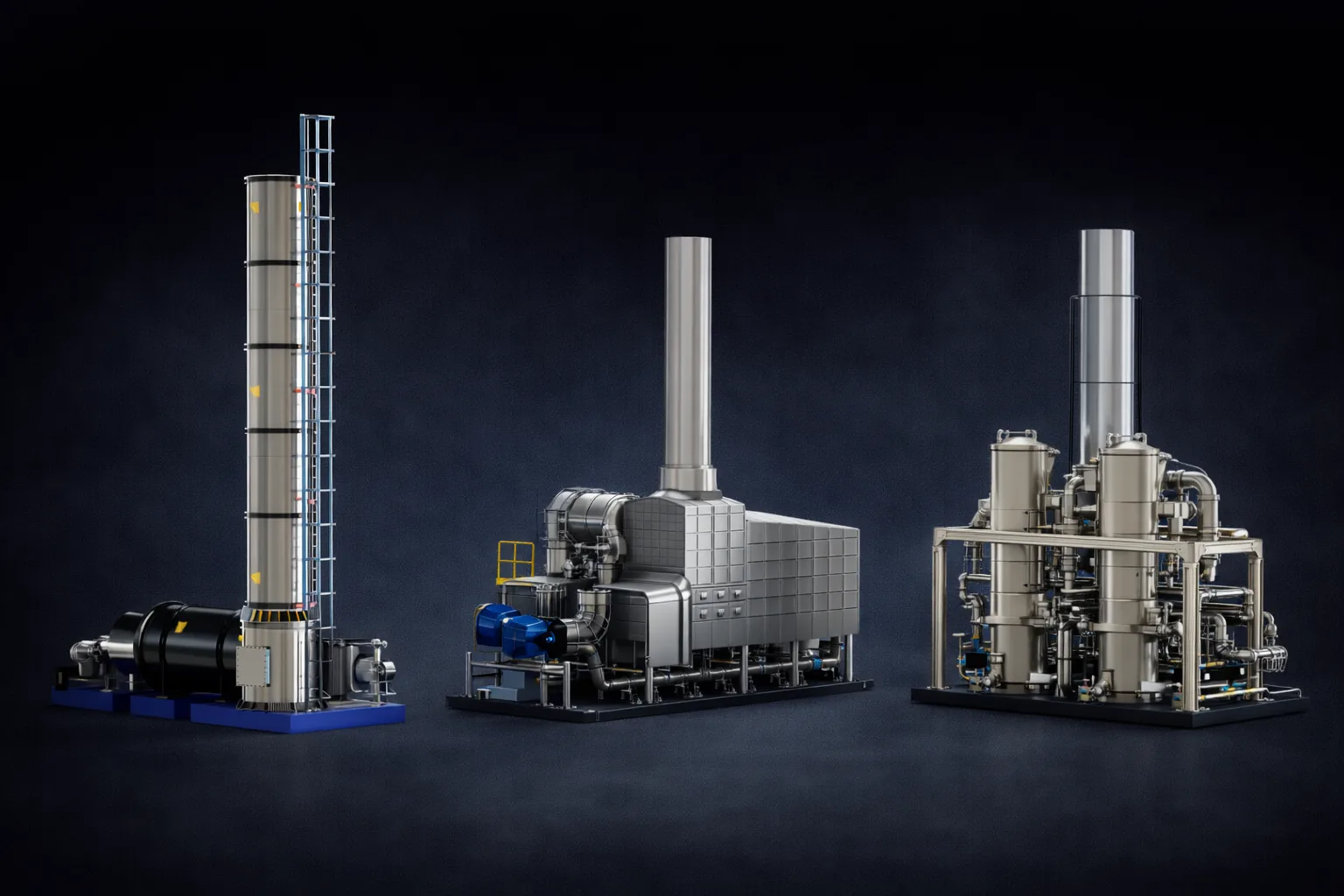
CRA Energy engineers and integrates the whole train described above: chemical and bio-regenerative H₂S scrubbing, activated-carbon polishing, the gas dehumidifier, membrane upgrading, compression, and the biogas enclosed flare and regenerative thermal oxidisers that handle methane slip. The upstream train is engineered in-house around the membrane skid, because membrane life and product purity depend on the condition of the gas entering the module.
Each plant has to prove its gas to a network operator and a certification body. The same in-house engineering group that has designed flares and thermal oxidisers for three decades engineers the full gas train, from desulphurisation to methane slip destruction, on one design basis.
The standards in this article are design inputs. CRA sizes each stage to your gas analysis and your target market’s specification. The technical datasheet sets out the performance envelope. To scope a plant, send the data points in our inquiry questionnaire to our team, together with your target specification.
For market detail, see our notes on India’s CBG policy framework, on sewage feedstock and RNG, and on why one gas-train partner suits a financed plant.
References
1. CEN, “EN 16723-1: Biomethane for injection in the natural gas network,” summary of limits.
2. CEN, “EN 16723-2: Automotive fuels specification,” Table 1 limit values.
3. National Physical Laboratory, “Enabling the injection of biomethane into the gas grid.”
6. European Biogas Association, “Biomethane standards: facilitating renewable gas uptake.”
7. National Grid, “Gas Quality Parameters at NTS Entry Points,” October 2022.
9. TC Energy, “Gas Quality Specifications: TC Energy and other pipelines,” November 2025.
10. ONE Gas, “Biomethane Specification and Quality Management Program,” 2022.
13. Mayer Brown, “Brazilian Federal Government Regulates the National Biomethane Program,” 2025.
16. 2BS, “New RED III technical references: update of 2BS Standards and Procedures,” 2025.
17. IEA Bioenergy Task 37, “Reduction of methane emissions from biogas systems and landfills,” 2025.
18. Lexology, “ANP Issues Rules on Biomethane Targets and CGOB Issuance,” 2026.
19. BioCycle, “EPA Finalizes Increased Renewable Fuel Volumes for 2026 to 2027,” 2026.
22. Umweltbundesamt, “European Methane Regulation.”
23. CRA Energy, “Membrane Biogas Upgrading System,” product page with the published train figures.