
Thermal Oxidizers for Paper Mill NCG
Thermal oxidisers that destroy the non-condensable gases and sour vents of kraft pulp mills.


Destruction of kraft mill NCG and sour vents
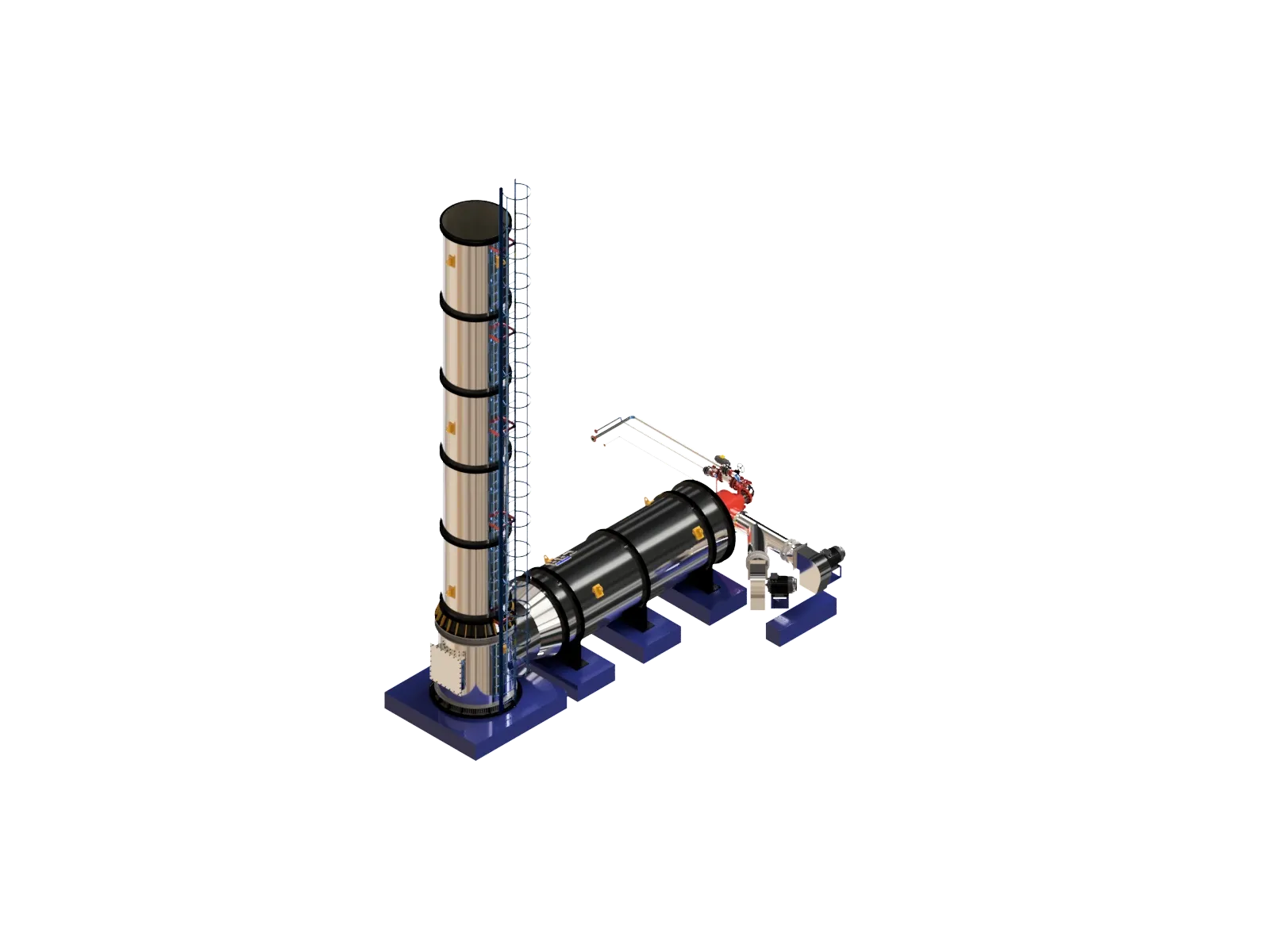
CRA's direct fired thermal oxidisers destroy the reduced sulphur compounds, methanol and other organics in paper mill non-condensable gases, as the primary incinerator or as backup to the lime kiln and recovery boiler.
VOC/HAP destruction
>99%
Target compounds
TRS, methanol, turpentine
Role
Primary or backup incineration
SO₂ control
Downstream scrubber option
How does a thermal oxidiser destroy paper mill NCG?
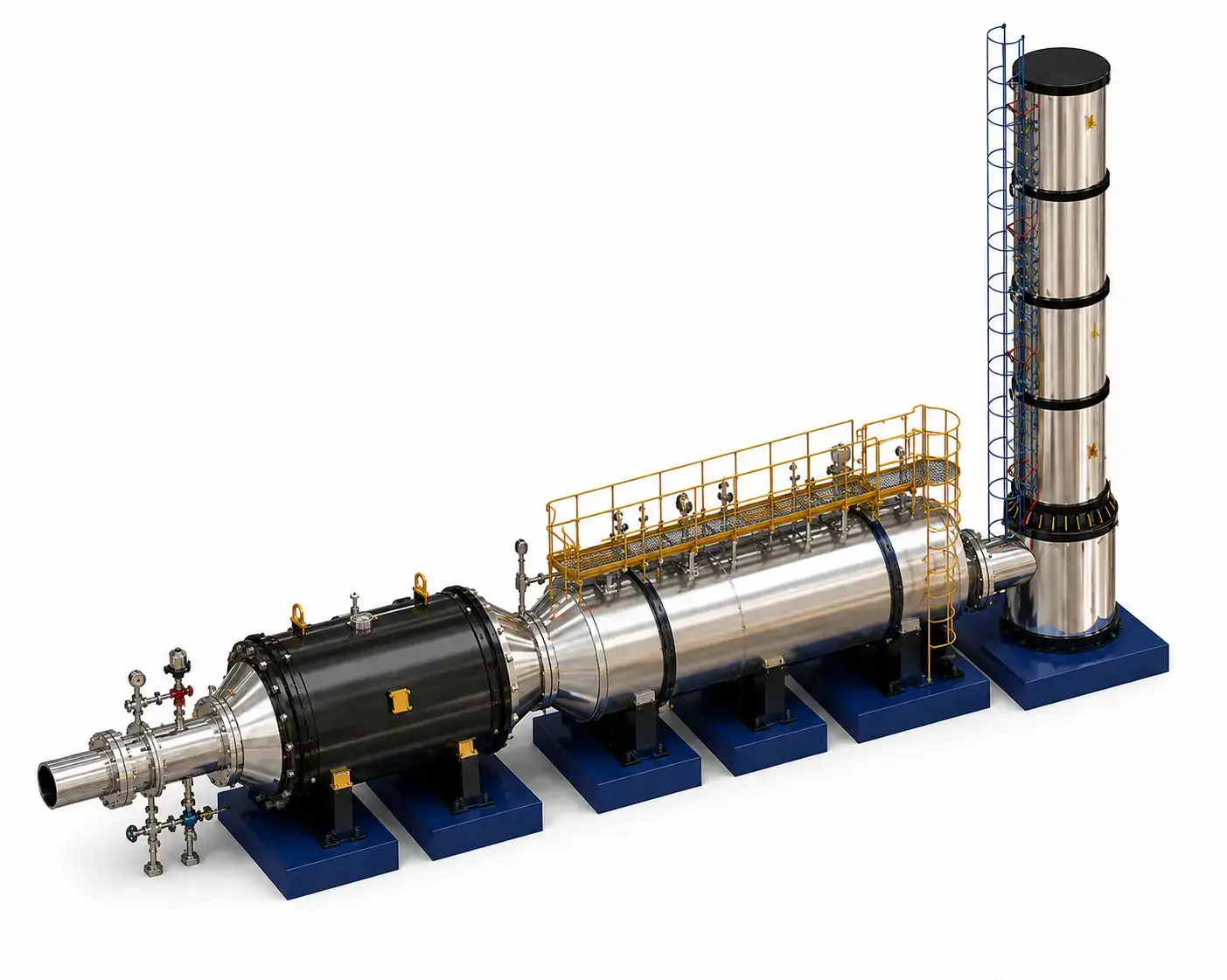
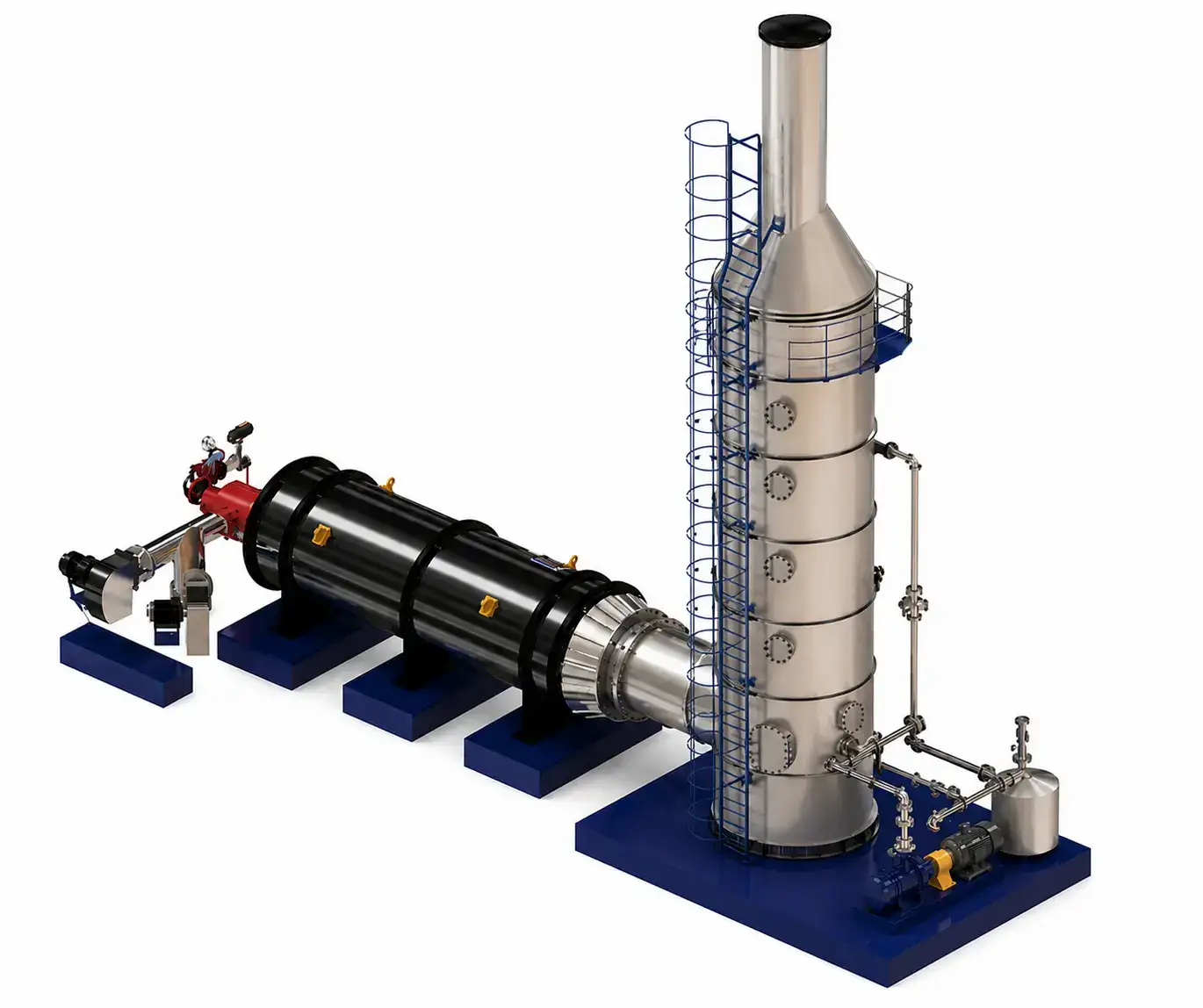
The collected gases enter a combustion chamber, where they burn with supplementary fuel and air at high temperature. The chamber holds the gas at temperature long enough for the reduced sulphur compounds, methanol and turpentine to be destroyed. The flue gas then leaves the chamber directly or passes to a scrubber that removes the sulphur dioxide.
How it works
The oxidiser takes gas from the mill's NCG collection system and runs alongside the lime kiln and recovery boiler.
The mill's NCG system gathers the gases from the process.
The gases burn with supplementary fuel and air.
The chamber holds the gas at temperature to complete destruction.
A scrubber removes sulphur dioxide where the permit requires it.
The flue gas leaves through the stack after the last stage.
Key Benefits
Reduced sulphur compounds are destroyed before they reach the air.
A dedicated oxidiser keeps NCG out of the air when the kiln or boiler is down.
Methanol and other organics are destroyed along with the sulphur compounds.
A scrubber can follow the oxidiser where the permit limits sulphur dioxide.
The system is designed around the flammability and corrosiveness of NCG.
Projects That Push Boundaries

Simultaneous destruction of multiple corrosive gas streams in an active paper manufacturing process.
The CRA Edge
CRA has more than 30 years of experience in gas handling and combustion engineering.
Design, R&D and manufacturing are carried out under one roof.
ISO 9001 certified through TÜV NORD, with designs aligned with ASME, API and CE.
Designs are customised to the process needs and the regulations that apply at site.
Applications


Built to help you specify.
Sizing tools, decision guides, and technical references. Use them before, during, and after your evaluation.




Frequently Asked Questions
What are NCG at a pulp mill?
Non-condensable gases are the vapours that do not condense in the mill's cooling systems. They come from the digesters, evaporators, condensate strippers and tanks and carry total reduced sulphur (TRS) compounds, methanol and turpentine.
Why use a dedicated thermal oxidiser for NCG?
Many mills burn NCG in the lime kiln or recovery boiler. A dedicated oxidiser destroys the gas when those units are down or cannot take it, so the mill does not have to vent it.
What happens to the sulphur in the gas?
The sulphur compounds burn to sulphur dioxide. Where the permit limits SO₂, a scrubber after the oxidiser removes it.
Can one system handle concentrated and dilute gases?
CRA designs the system for the streams the mill collects, including concentrated and dilute NCG, which differ in flow and in hazard.
What data does CRA need to size an NCG oxidiser?
CRA needs the flow and composition of each gas stream, the operating pattern of the kiln and boiler, the emission limits and the site conditions.