
CBG Gas Trains for Press Mud Plants
CBG gas trains for press mud biogas plants at sugar mills, from raw biogas to 250 bar.


Press mud biogas to CBG at 250 bar
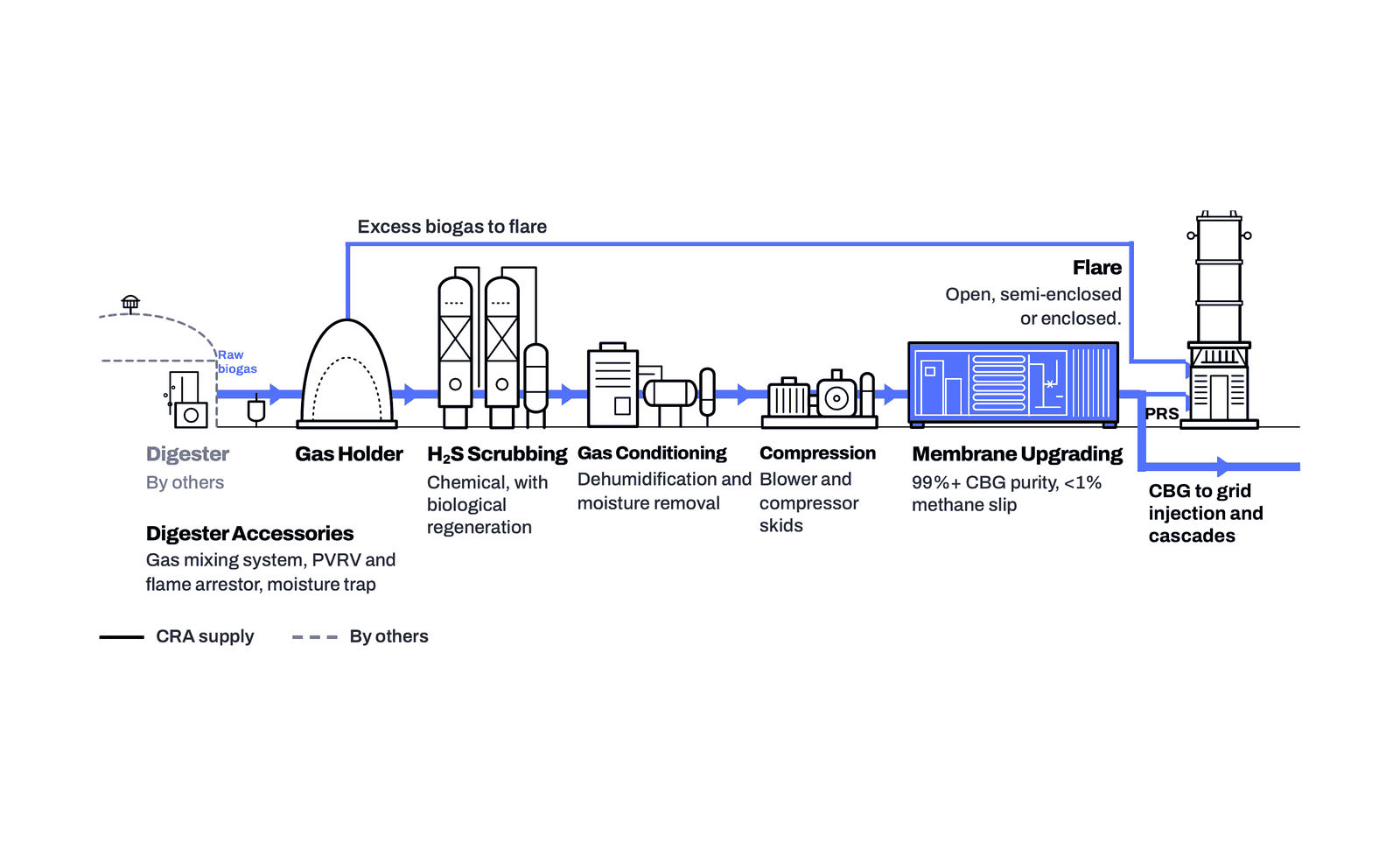
CRA's gas train takes raw biogas from press mud digesters through desulphurisation, drying, membrane upgrading and compression to 250 bar, ready for cascade filling.
Compression
Up to 250 bar
Product gas
IS 16087:2025
Outlet H₂S with polishing
Below 5 ppm
Methane slip
Below 1%
What does a CBG gas train do at a press mud plant?
Biogas from press mud digesters carries carbon dioxide, moisture and often a heavy load of hydrogen sulphide. The gas train strips out the H₂S, dries the gas, separates the carbon dioxide through membranes and compresses the methane-rich product to 250 bar. Each stage is designed around the one that follows, so the CBG holds its quality from digester to cascade.
How it works
The train starts at the gas holder beside the digesters and ends where the cascades are filled, with a flare connection for surplus gas.
A bulk scrubber and carbon polishing remove the hydrogen sulphide.
Dry gas protects the membranes and the compressors downstream.
Membrane stages separate the carbon dioxide.
The compression package raises the CBG to 250 bar.
Each cascade fill is metered for sale.
Key Benefits
Every stage from scrubbing to metering is designed as one train.
Bulk H₂S removal is sized for the sulphur in press mud biogas.
The train is designed for CBG that meets IS 16087:2025.
Membrane upgrading holds methane slip below 1%.
The train is sized for crushing-season and off-season gas flows.
Projects That Push Boundaries
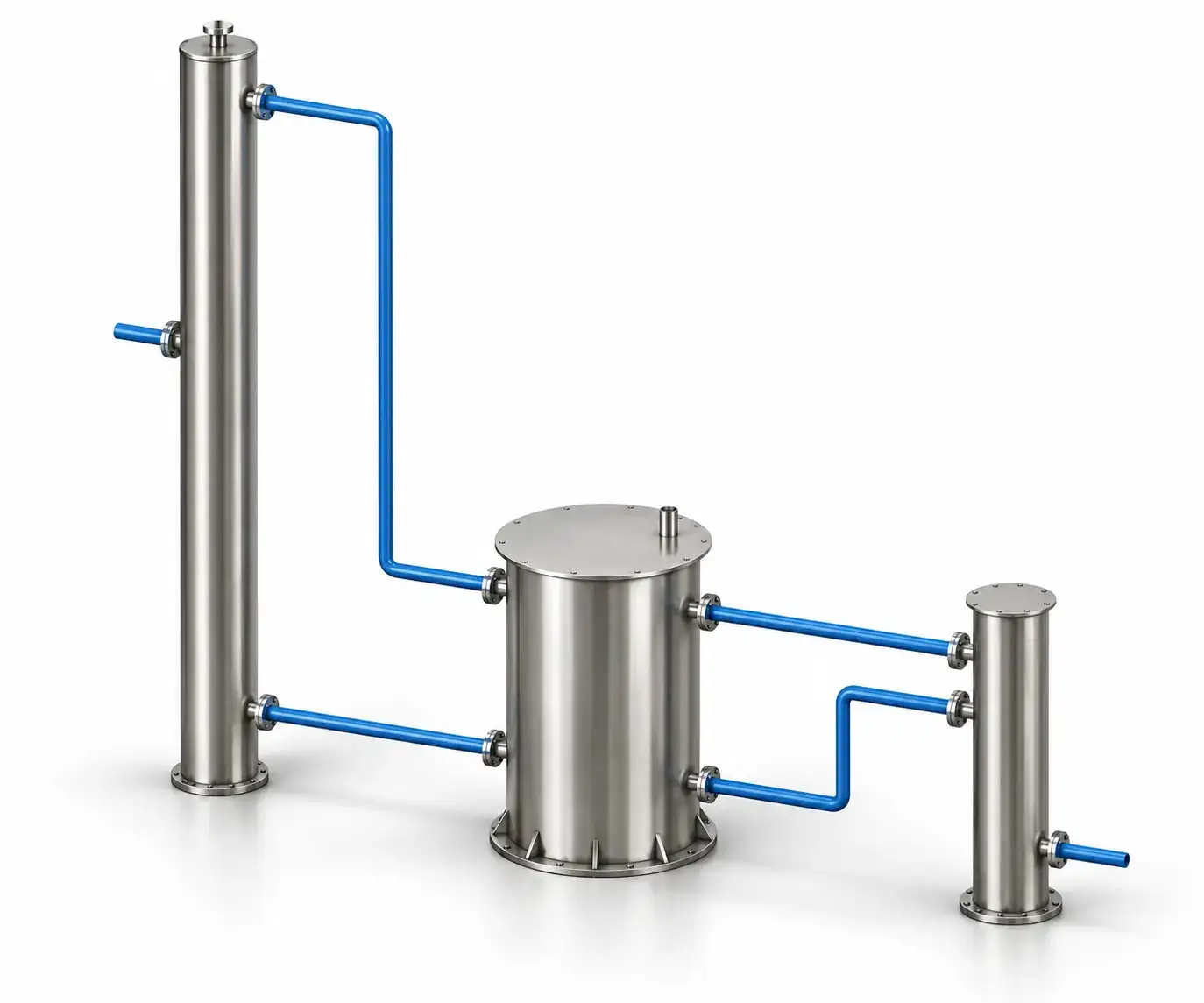
Chemical scrubber with biological regeneration and activated-media polishing designed to reduce H2S from 10,000 ppm to below 200 ppm.
The CRA Edge
CRA has more than 30 years of experience in gas handling and flare engineering.
Design, R&D and manufacturing are carried out under one roof.
ISO 9001 certified through TÜV NORD, with designs aligned with ASME, API and CE.
Designs are customised to the process needs and the regulations that apply at site.
Applications


Built to help you specify.
Sizing tools, decision guides, and technical references. Use them before, during, and after your evaluation.






Frequently Asked Questions
What does the gas train include at a press mud plant?
It includes bulk H₂S removal and polishing, drying, membrane upgrading, compression to 250 bar and metering, engineered together from the digester gas holder to the cascade.
Why can press mud biogas be high in H₂S?
Mills that clarify cane juice by sulphitation leave sulphur in the press mud, and it ends up as hydrogen sulphide in the biogas. CRA sizes the bulk desulphurisation for the measured load.
Which scrubber suits press mud CBG?
For CBG duty CRA uses the chemical scrubber with biological regeneration, which adds no air to the gas, followed by activated carbon polishing below 5 ppm.
How does the train cope with the off-season?
CRA designs the train for the plant's flow range across the year, including the lower flows of the off-season.
What data does CRA need for a press mud CBG gas train?
CRA needs the biogas flow in and out of the crushing season, its composition including H₂S, the target CBG output and the site conditions.