
Gas Conditioning for Biogas Engines
Gas conditioning trains that scrub, dry and boost biogas to the quality gas engines need.


Engine-ready biogas from raw digester gas
CRA's gas conditioning trains take raw biogas from the digester and deliver gas that is scrubbed, dried and boosted to the engine's fuel gas specification.
Stages
Scrubbing, drying and boosting
End use
Gas engines and CHP
Outlet H₂S after bulk removal
Below 100 ppm
Supply
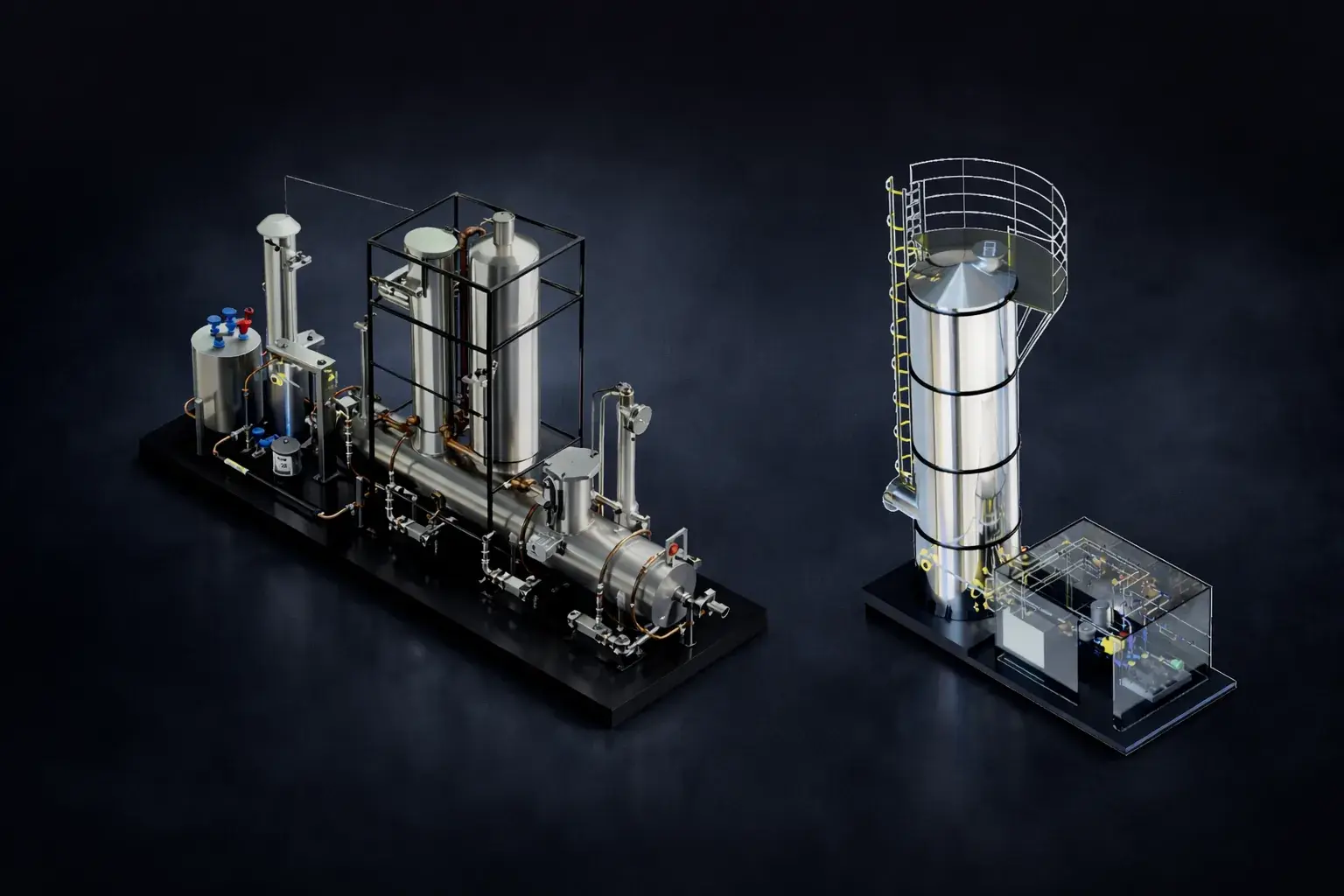
Skid-mounted package
What does a biogas conditioning train do for a gas engine?
Raw biogas leaves the digester wet, sour and at a low pressure. The conditioning train removes the hydrogen sulphide in a scrubber, cools the gas to condense and drain the water, and raises the pressure with a booster. The engine then receives clean, dry gas at a steady pressure.
How it works
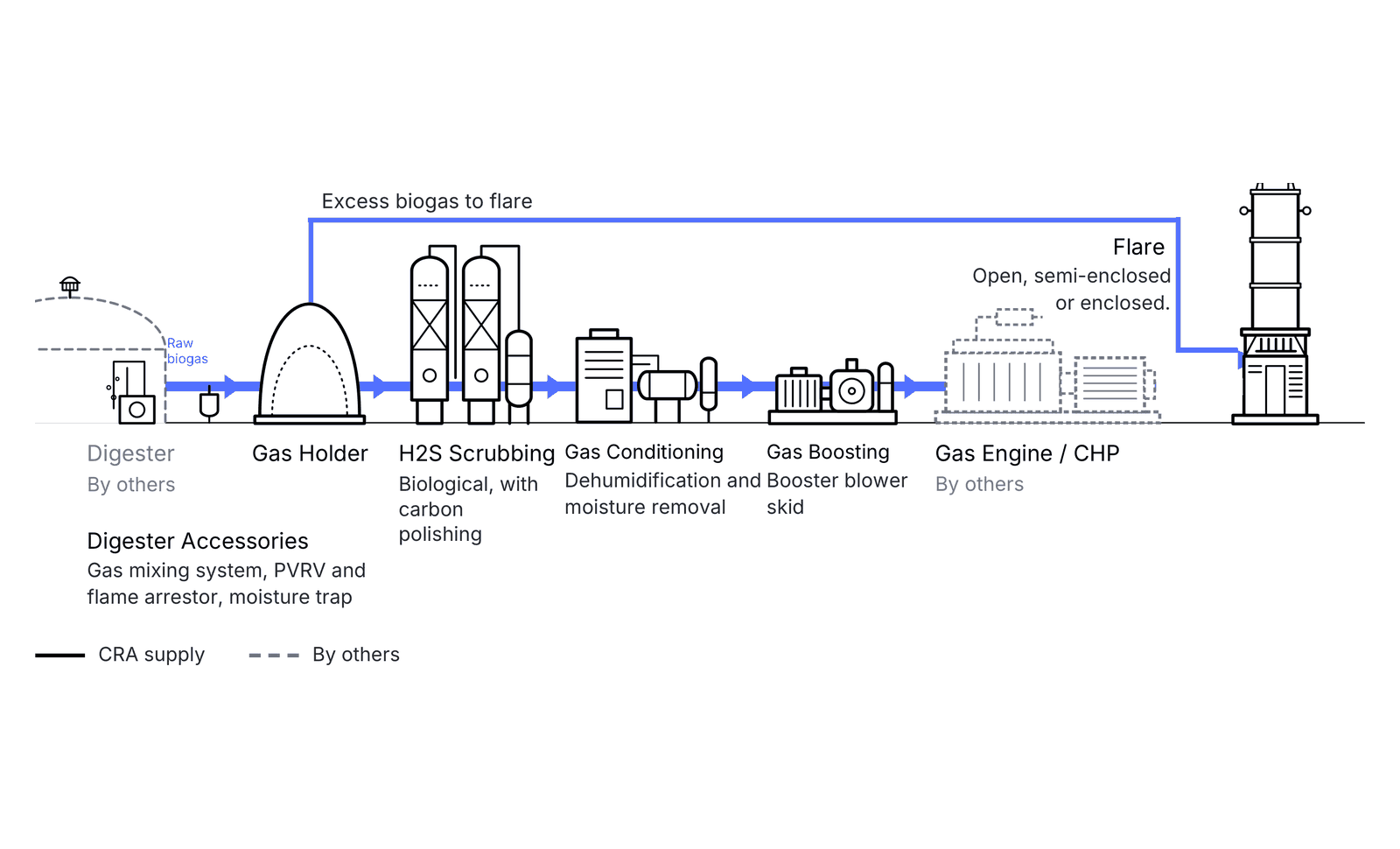
The train sits between the digester gas holder and the engines, with a branch to the flare for surplus gas.
The scrubber removes the hydrogen sulphide, using a biological scrubber or a chemical scrubber with biological regeneration.
Refrigerated cooling condenses the water vapour in the gas.
Condensate is separated and drained automatically.
The booster lifts the gas to the engine's supply pressure.
Clean, dry gas flows to the engines, with surplus gas sent to the flare.
Key Benefits
Clean, dry gas protects engine parts and lube oil from H₂S and moisture.
The booster holds the gas at the pressure the engine needs.
CRA designs the train to the fuel gas specification of the engines it feeds.
Scrubbing, drying and boosting are engineered together on one skid.
A flare connection can be included so that surplus gas has a safe route.
Projects That Push Boundaries
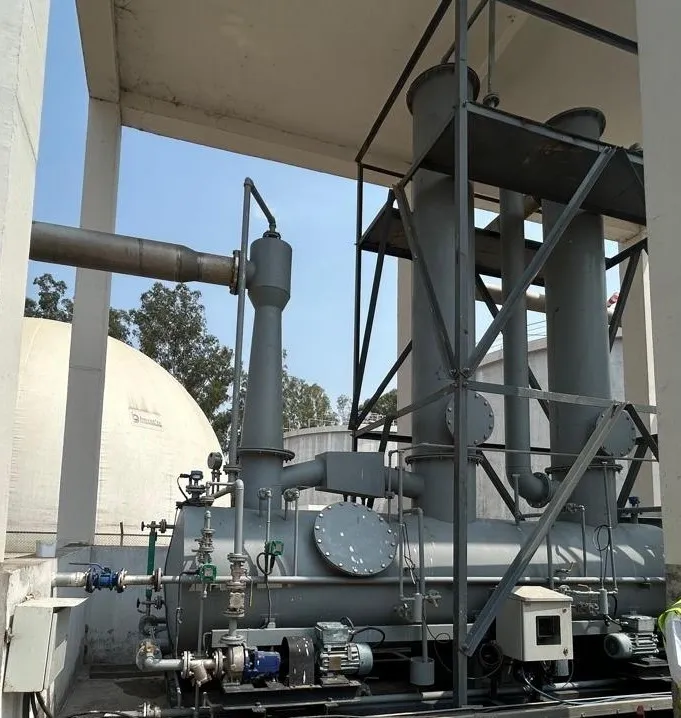
Complete gas conditioning train transforming raw digester gas into clean, usable fuel for a city utility.
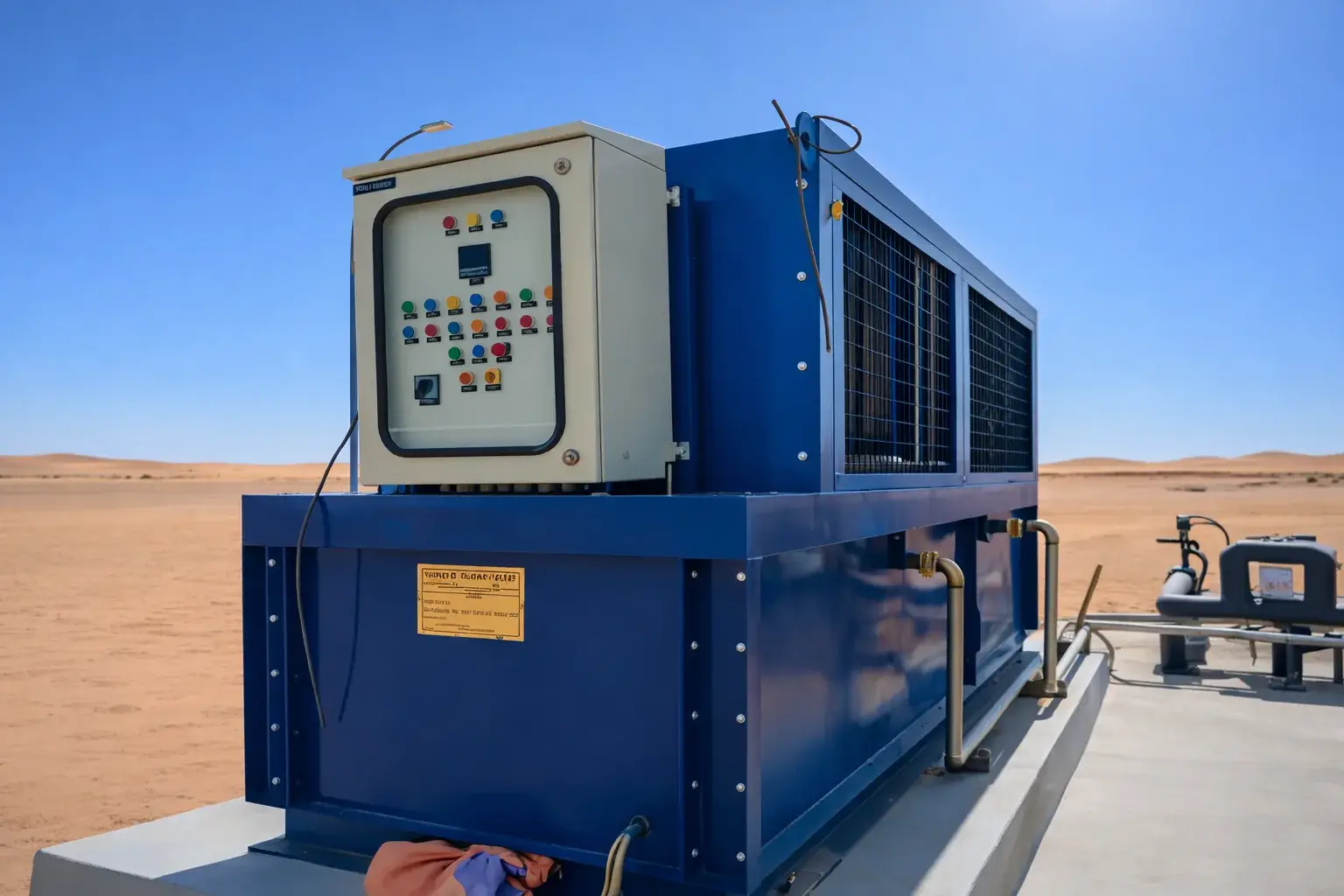
Prevents corrosion and combustion instability in biogas systems exposed to desert heat.
The CRA Edge
CRA has more than 30 years of experience in gas handling and flare engineering.
Design, R&D and manufacturing are carried out under one roof.
ISO 9001 certified through TÜV NORD, with designs aligned with ASME, API and CE.
Designs are customised to the process needs and the regulations that apply at site.
Applications

Built to help you specify.
Sizing tools, decision guides, and technical references. Use them before, during, and after your evaluation.



Frequently Asked Questions
What does a gas engine need from biogas?
Gas engines need biogas that is low in H₂S, free of liquid water and supplied at a steady pressure. The engine maker's fuel gas specification sets the exact limits.
Which H₂S scrubber suits engine duty?
For engine duty CRA usually supplies a biological scrubber. Where the H₂S load is very high, a chemical scrubber with biological regeneration is used.
Why dry biogas before the engine?
Raw biogas is saturated with water, which condenses in pipes and engines and combines with H₂S to cause corrosion. Refrigerated drying removes it.
What data does CRA need to size an engine gas conditioning train?
CRA needs the biogas flow range, its composition including H₂S, the engine make and fuel gas specification, and the site conditions.
Can the train be added to an operating plant?
Yes. CRA builds the train as a skid that ties into the existing gas line ahead of the engines.