
Moisture Traps for Digester Gas Lines
Passive moisture traps that drain condensate from digester gas lines, with no power needed.


Explore more
Condensate removal at the low points of digester gas lines
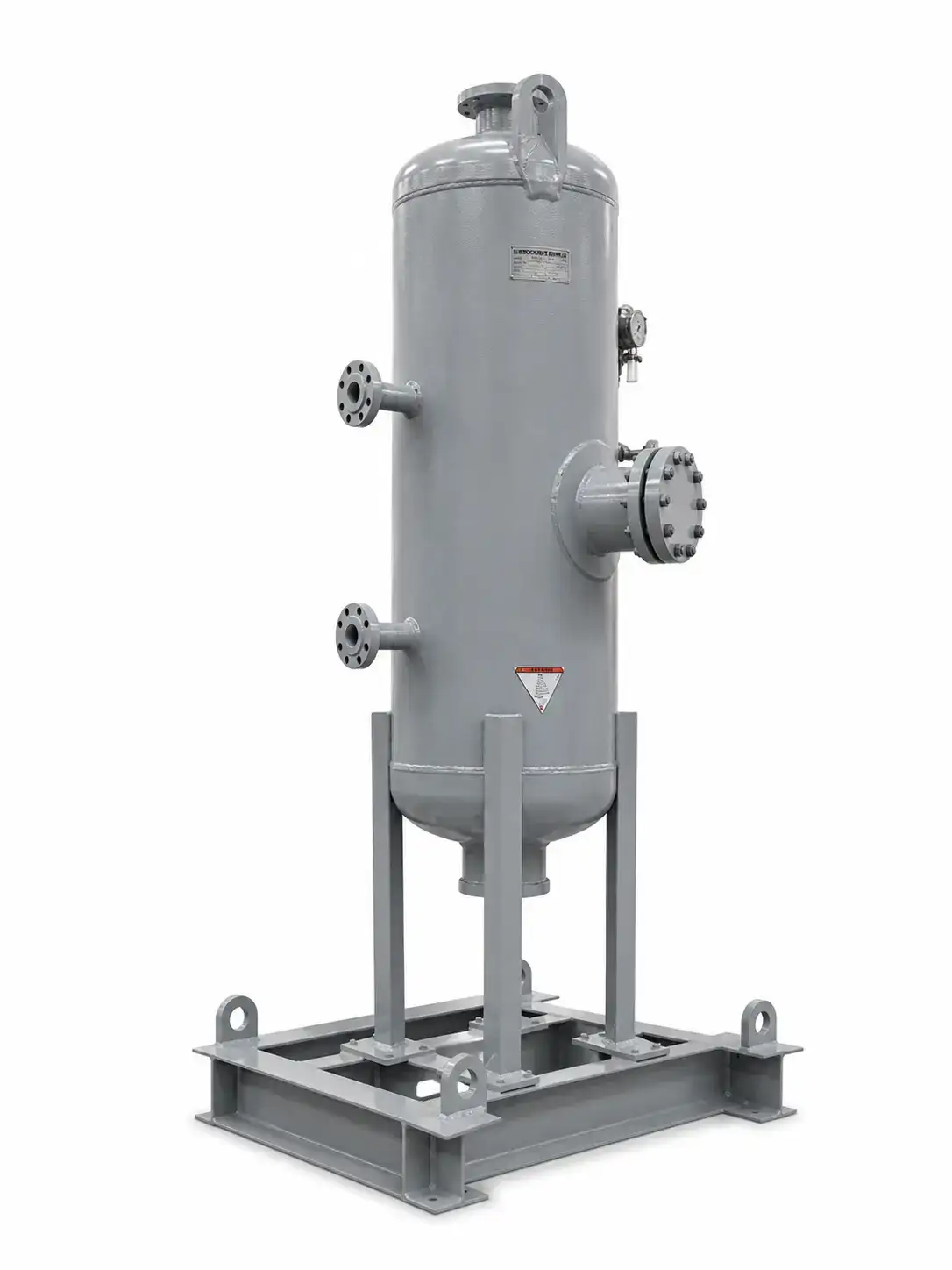
CRA's moisture traps separate and collect the water that condenses in digester gas pipelines, passively and with minimal pressure drop.
Operation
Power-free, passive
Pressure drop
Minimal
Mechanism
Flow reversal and impingement
Service
Low-pressure digester gas
How does a moisture trap work in a digester gas line?
Gas entering the trap is forced to reverse direction. Water droplets carried in the stream strike the internal surfaces, merge into larger drops and fall to the base of the vessel, while the gas continues along the line. The collected water is drained by hand or through an optional mechanical auto-drain.
How it works
Traps sit at the low points of the gas line and ahead of blowers, meters and burners.
Gas entering the trap is forced to change direction.
Water droplets strike the internal surfaces and coalesce.
The coalesced water falls to the base of the vessel.
The gas leaves the trap and carries on down the line.
Collected water drains by hand or through an optional auto-drain.
Key Benefits
The trap works passively, with no motors or utilities.
Low-pressure digester gas passes through with little resistance.
Blowers, meters, flares and engines receive less water.
Condensate is removed before it can block low points in the pipework.
A mechanical auto-drain can empty the trap without an operator.
Projects That Push Boundaries
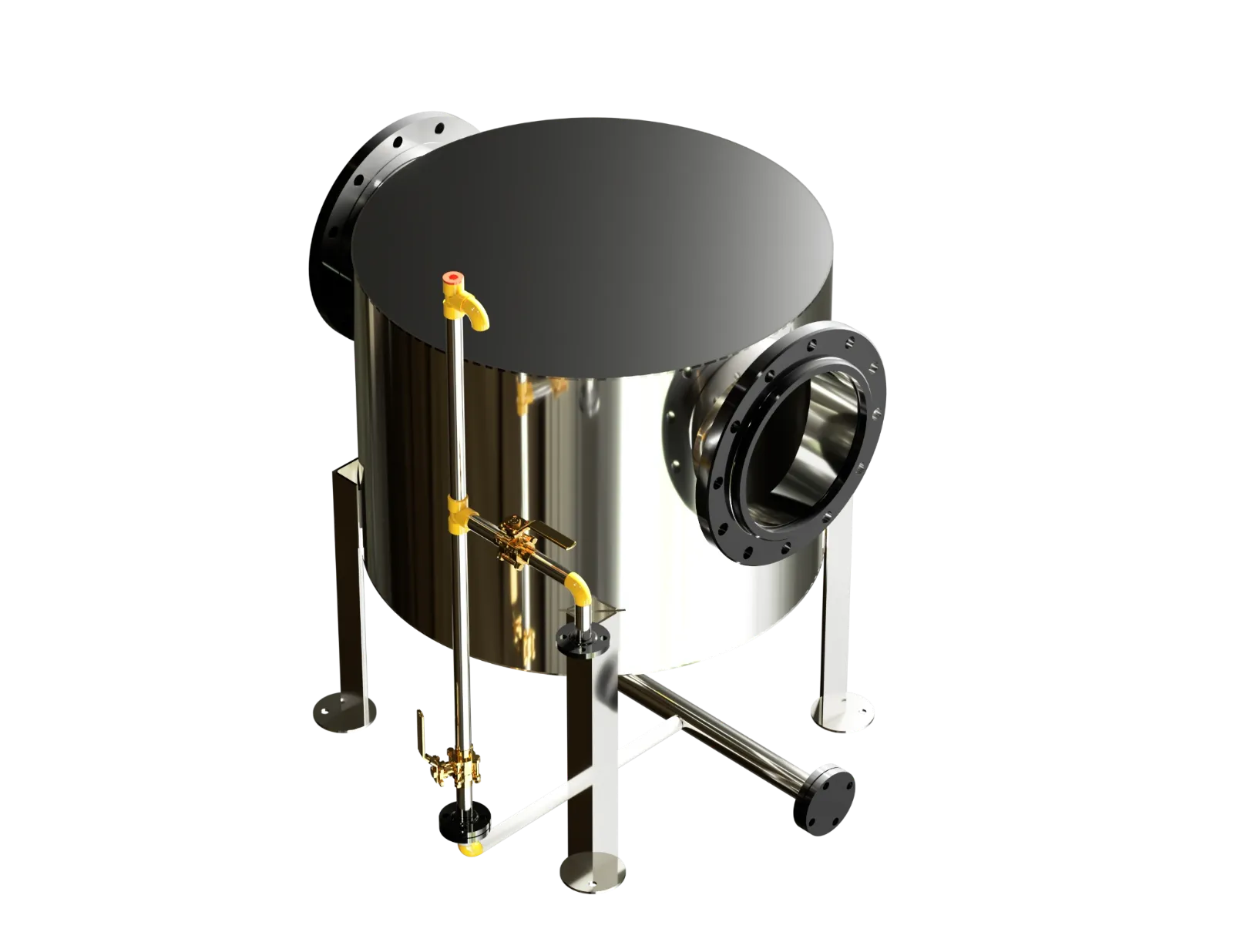
Protects downstream blowers, compressors, and gas analysers through continuous condensate removal.
The CRA Edge
CRA has more than 30 years of experience in gas handling and flare engineering.
Design, R&D and manufacturing are carried out under one roof.
ISO 9001 certified through TÜV NORD, with designs aligned with ASME, API and CE.
Designs are customised to the process needs and the regulations that apply at site.
Applications

Frequently Asked Questions
Why does water collect in digester gas lines?
Digester gas leaves the tank saturated with water vapour. As the gas cools in the pipework, the vapour condenses and runs to the low points of the line.
Where should moisture traps be installed?
At the low points of the gas line and ahead of equipment that water would harm, such as blowers, meters and burners. CRA can advise on placement from the pipe layout.
Does the trap need power?
No. The trap separates water by flow reversal and impingement, and the water drains under gravity. An optional mechanical auto-drain empties it without power.
Is a moisture trap enough to dry the gas?
A moisture trap removes water that has already condensed. Where an engine or upgrading plant needs dry gas, a refrigerated dehumidifier removes the vapour as well.
What data does CRA need to select a moisture trap?
CRA needs the gas flow range, the line size and operating pressure, the gas temperature and the installation point.