
CBG Gas Trains for Cattle Dung Plants
CBG gas trains for cattle dung biogas plants, from raw biogas to 250 bar compression for cascades.


Cattle dung biogas to CBG at 250 bar
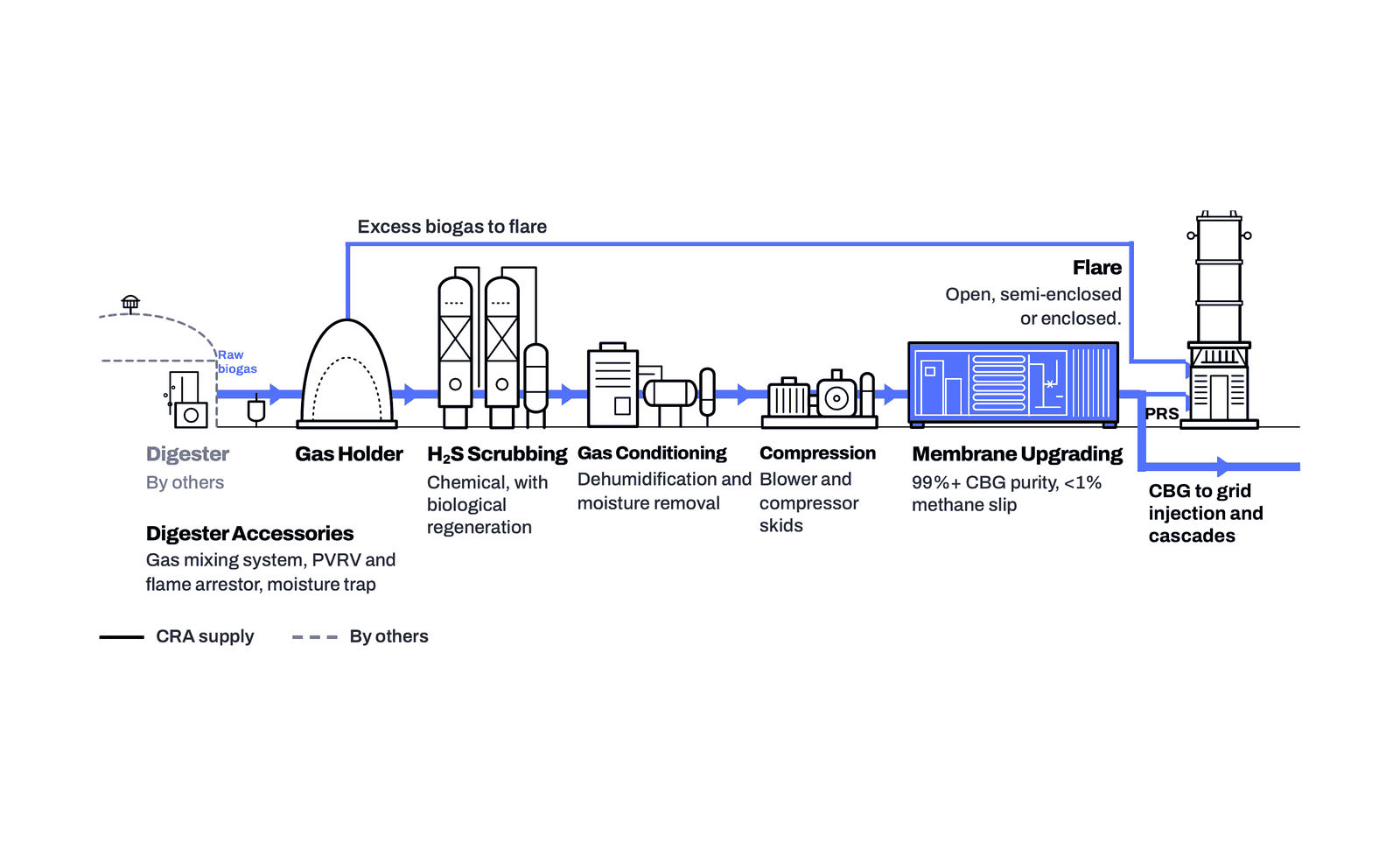
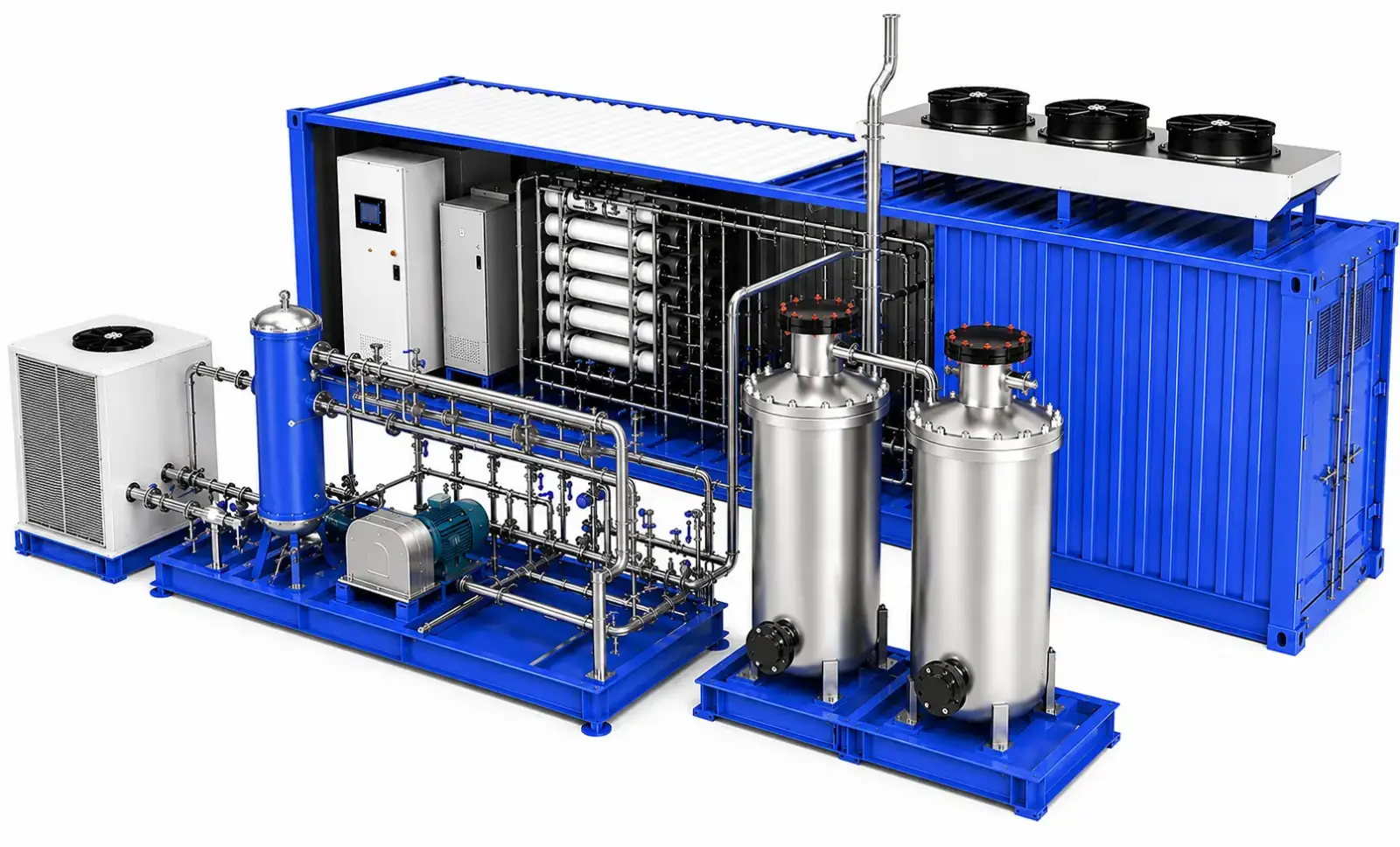
CRA's gas train takes raw biogas from cattle dung digesters through scrubbing, drying, membrane upgrading and compression to 250 bar, ready for the cascades.
Compression
Up to 250 bar
Product gas
IS 16087:2025
Methane slip
Below 1%
Scope
Raw biogas to cascade
What does a CBG gas train do at a cattle dung plant?
Cattle dung digesters produce biogas of fairly steady quality, with carbon dioxide, moisture and hydrogen sulphide to remove. The train scrubs out the H₂S, dries the gas, separates the carbon dioxide through membranes and compresses the product to 250 bar. The stages are designed together, so the CBG holds its quality from digester to cascade.
How it works
The train runs from the digester gas holder to the cascade filling point, with a flare for surplus gas.
The scrubber removes hydrogen sulphide from the raw biogas.
Drying protects the membranes and the compressor.
Membranes separate carbon dioxide and raise the methane content.
The compression package fills the cascades at 250 bar.
The CBG is metered as it leaves the plant.
Key Benefits
Every stage from scrubbing to metering shares one design basis.
Product gas quality is designed around IS 16087:2025.
Multi-stage membranes hold methane slip under 1%.
CRA matches each stage to the plant's gas output.
Every stage comes from one supplier, so the interfaces are engineered together.
Projects That Push Boundaries
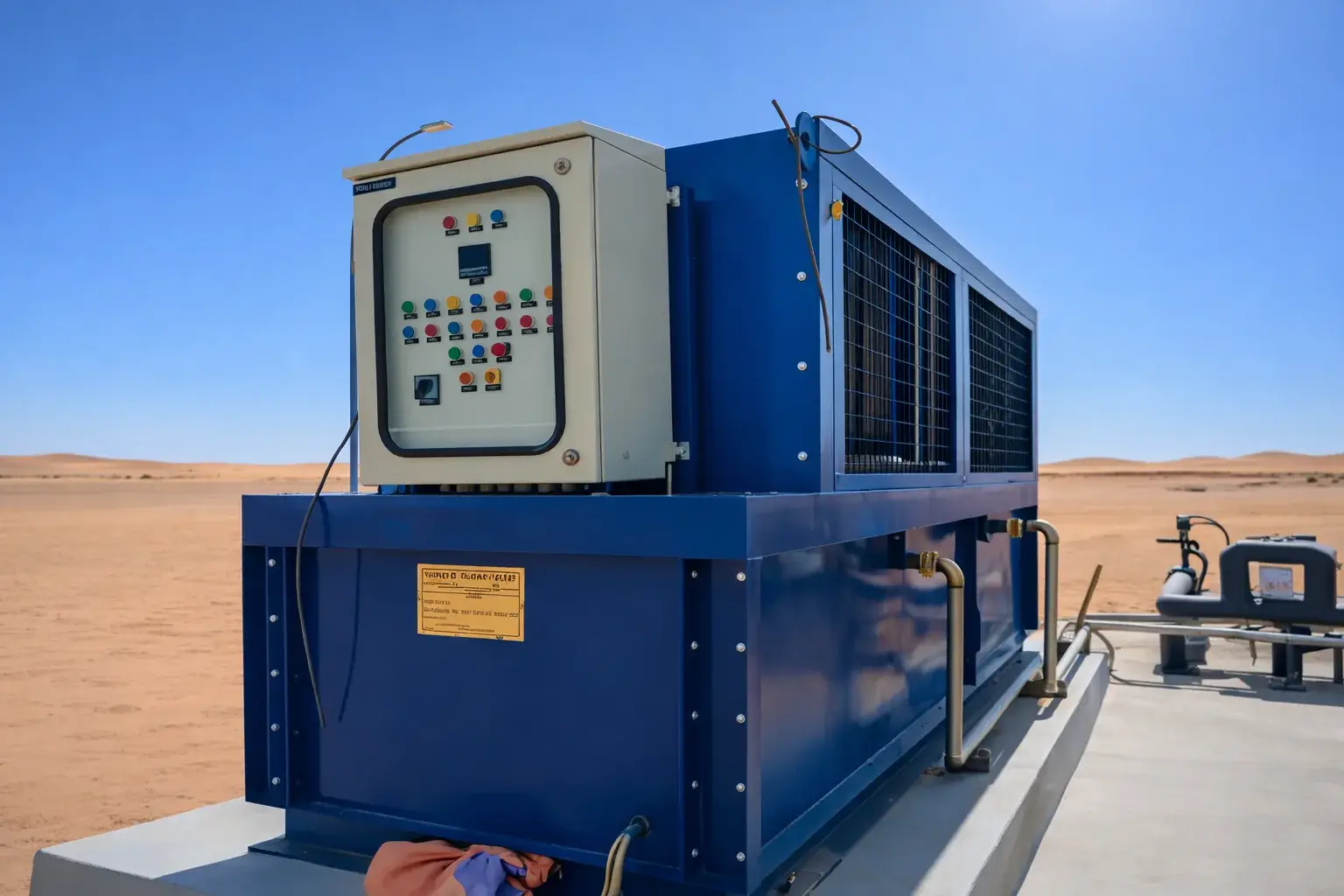
Prevents corrosion and combustion instability in biogas systems exposed to desert heat.
The CRA Edge
CRA has more than 30 years of experience in gas handling and flare engineering.
Design, R&D and manufacturing are carried out under one roof.
ISO 9001 certified through TÜV NORD, with designs aligned with ASME, API and CE.
Designs are customised to the process needs and the regulations that apply at site.
Applications

Built to help you specify.
Sizing tools, decision guides, and technical references. Use them before, during, and after your evaluation.





Frequently Asked Questions
Is cattle dung biogas suitable for CBG?
Yes. Once the H₂S, moisture and carbon dioxide are removed, cattle dung biogas can be upgraded and compressed as CBG.
What does the gas train include?
It includes H₂S scrubbing, drying, membrane upgrading, compression to 250 bar and metering, engineered as one package.
Does the product gas meet IS 16087?
CRA designs the cattle dung gas train to deliver CBG within IS 16087:2025, the Indian specification for compressed biogas.
What data does CRA need for a cattle dung CBG gas train?
CRA needs the raw biogas flow range, its composition including H₂S, the required CBG output and the site conditions.
Can the train be supplied in stages?
Yes. CRA supplies each stage on its own as well, so a plant can add upgrading and compression to an existing biogas set-up.