
Odour Control for Pulp Mills
Odour control systems that treat the sulphur compounds and organics in pulp mill vent air.


Treatment of odorous air from pulp and paper mills
CRA's odour control systems remove H₂S, mercaptans and VOCs from the dilute vent air of pulp and paper mills with chemical, biological and activated carbon stages.
Target compounds
H₂S, mercaptans, VOCs
Technologies
Chemical, biological, carbon
Sources
Vents, tanks and effluent areas
Operation
Continuous duty
How is odour controlled at a pulp mill?
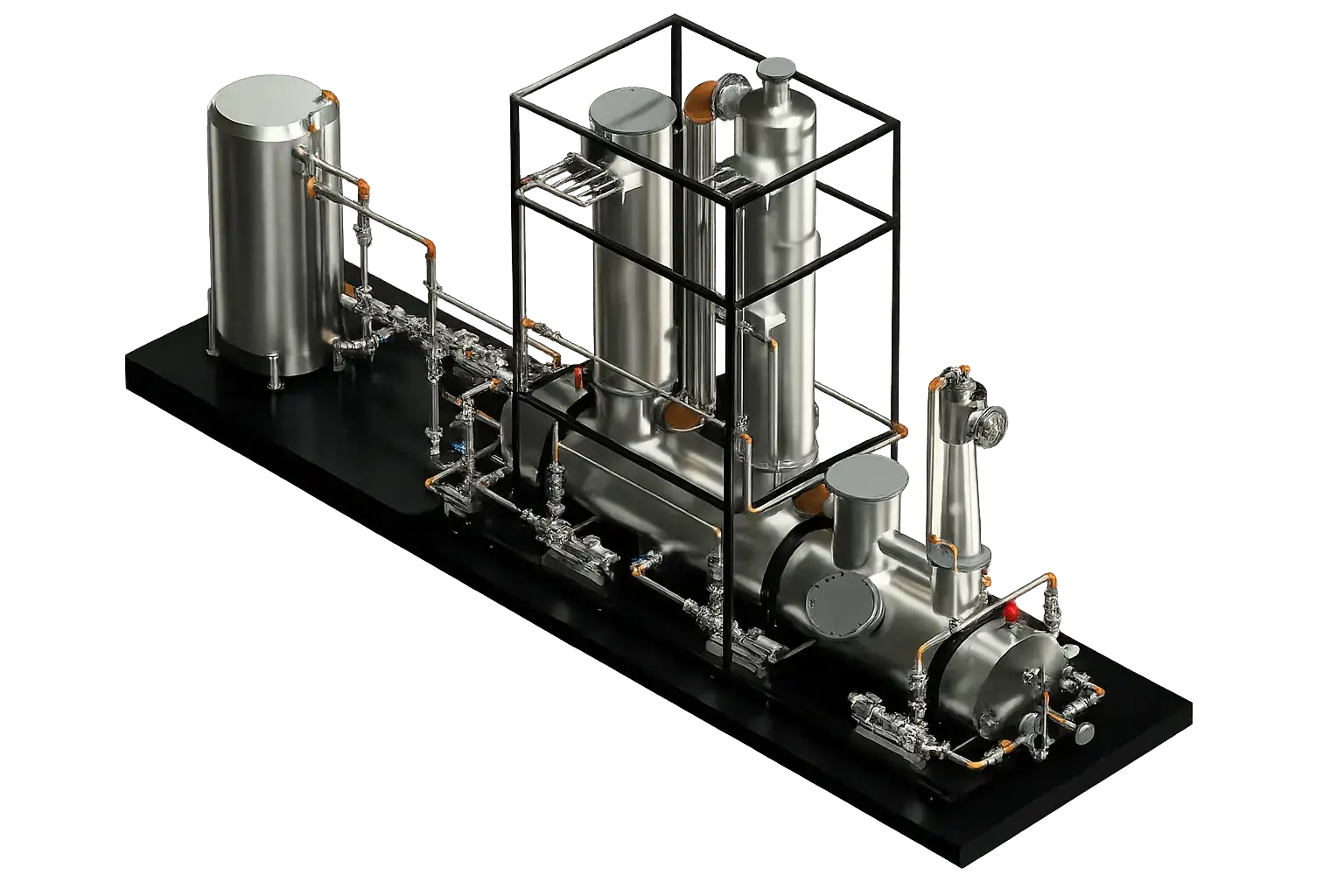
Air from vents and covered sources is collected and passed through treatment chosen for its compounds. A chemical scrubber absorbs and oxidises the sulphur compounds in a circulating solution, a biological stage uses bacteria on packing media to break them down, and activated carbon adsorbs what remains. Two or more stages can be combined where the outlet target calls for it.
How it works
The system treats the dilute air streams. The concentrated NCG go to the kiln, the boiler or a thermal oxidiser.
Each odour source is characterised by flow and compounds.
Air from vents and covered areas is drawn to the system.
Chemical or biological treatment removes most of the sulphur compounds.
Activated carbon takes out the remaining odour.
Treated air leaves the system after the last stage.
Key Benefits
Treatment is aimed at H₂S, mercaptans and other sulphur compounds.
Chemical, biological and carbon stages are chosen for each source.
A second stage is added where one technology cannot reach the target.
Lower odour emissions help the mill meet its permit and its neighbours' expectations.
The systems run continuously alongside mill production.
The CRA Edge
CRA has more than 30 years of experience in gas handling and flare engineering.
Design, R&D and manufacturing are carried out under one roof.
ISO 9001 certified through TÜV NORD, with designs aligned with ASME, API and CE.
Designs are customised to the process needs and the regulations that apply at site.
Applications


Built to help you specify.
Sizing tools, decision guides, and technical references. Use them before, during, and after your evaluation.



Frequently Asked Questions
What causes odour at a pulp mill?
Most pulp mill odour comes from reduced sulphur compounds formed in kraft pulping, mainly hydrogen sulphide, methyl mercaptan, dimethyl sulphide and dimethyl disulphide. Effluent and sludge handling add more.
How does odour control differ from NCG incineration?
Concentrated NCG are burned in the kiln, the recovery boiler or a thermal oxidiser. Odour control treats the larger, dilute air streams from vents and effluent areas, where burning the air would take a lot of fuel.
Which technologies does CRA use?
CRA uses chemical scrubbing, biological treatment and activated carbon, alone or combined, chosen for the compounds, the flow and the site.
Can odour control be added to an operating mill?
Yes. CRA designs the system around the existing sources and the space available.
What data does CRA need to size pulp mill odour control?
CRA needs a list of the sources with their air flows, the compounds measured at each, the target at the outlet and the site conditions.