
Membrane Upgrading for Biomethane and CBG
Dry membrane upgrading that turns biogas into biomethane and CBG above 98% methane.


Biomethane above 98% methane from raw biogas
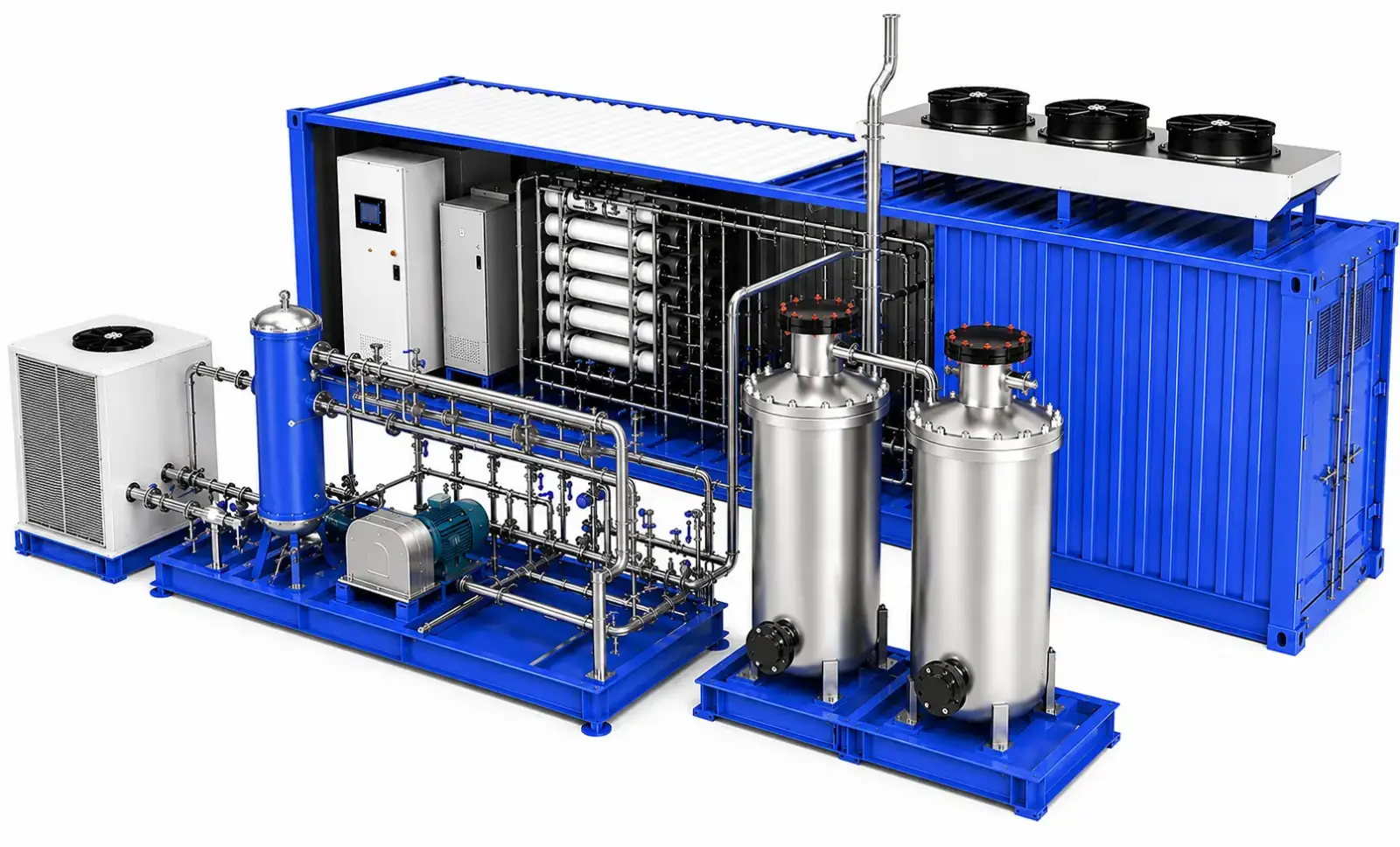
CRA's dry membrane upgrading separates carbon dioxide from biogas without water or solvents, producing biomethane and CBG above 98% methane while recovering more than 99.5% of the methane.
Methane recovery
>99.5%
CO₂ in product
<0.5%
Biomethane purity
>98% CH₄
Process
Dry membrane
How does membrane biogas upgrading work?
Cleaned and dried biogas is compressed and passed through bundles of hollow membrane fibres. Carbon dioxide permeates through the fibre walls much faster than methane, so the gas leaving the fibres is rich in methane. Later stages recycle the permeate to recover methane that would otherwise be lost.
How it works
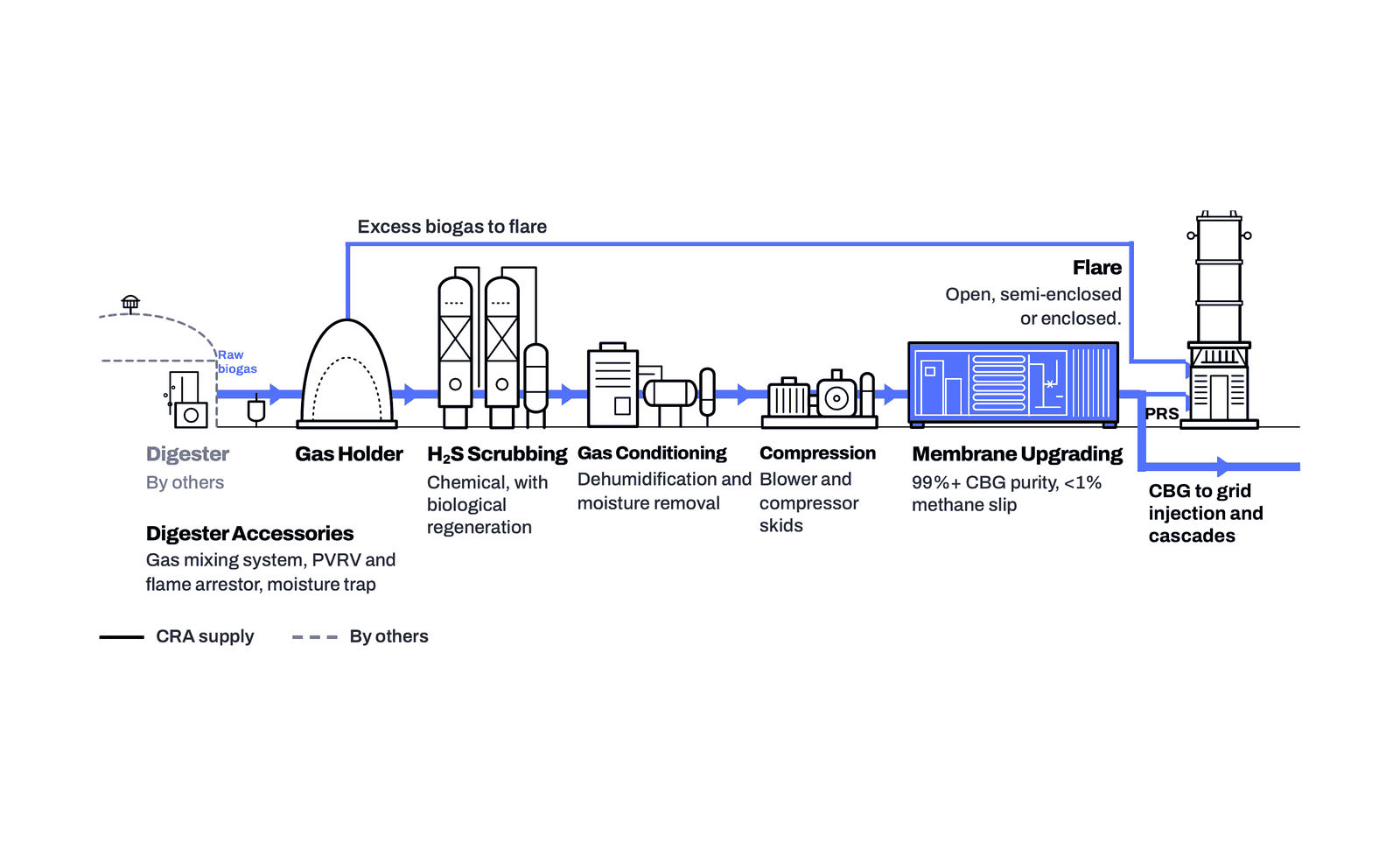
The membrane skid follows H₂S removal and drying, and feeds the compression stage of the CBG plant.
H₂S, moisture and particles are removed ahead of the membranes.
A compressor raises the gas to the membrane feed pressure.
Carbon dioxide passes through the membrane fibres and leaves as off-gas.
Later stages recycle the permeate to recover more methane.
Biomethane above 98% methane leaves for compression or grid injection.
Key Benefits
The product gas leaves above 98% methane, with less than 0.5% CO₂.
Multi-stage membranes keep methane losses in the off-gas low.
The membranes need no water or solvents to separate the CO₂.
CRA designs the H₂S removal, drying and filtration that protect the membranes.
Stable inlet gas and tight control keep the product gas within specification.
Projects That Push Boundaries
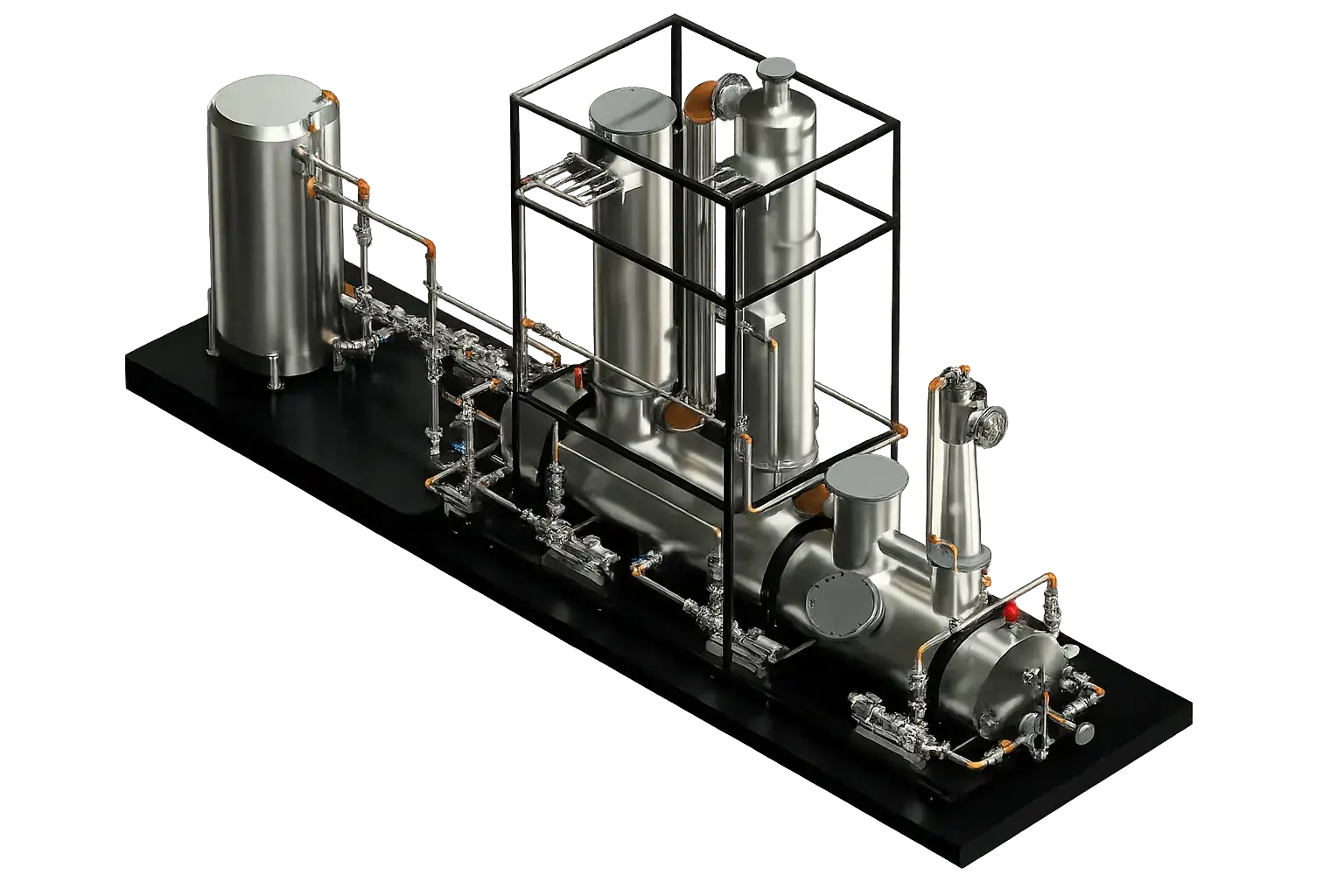
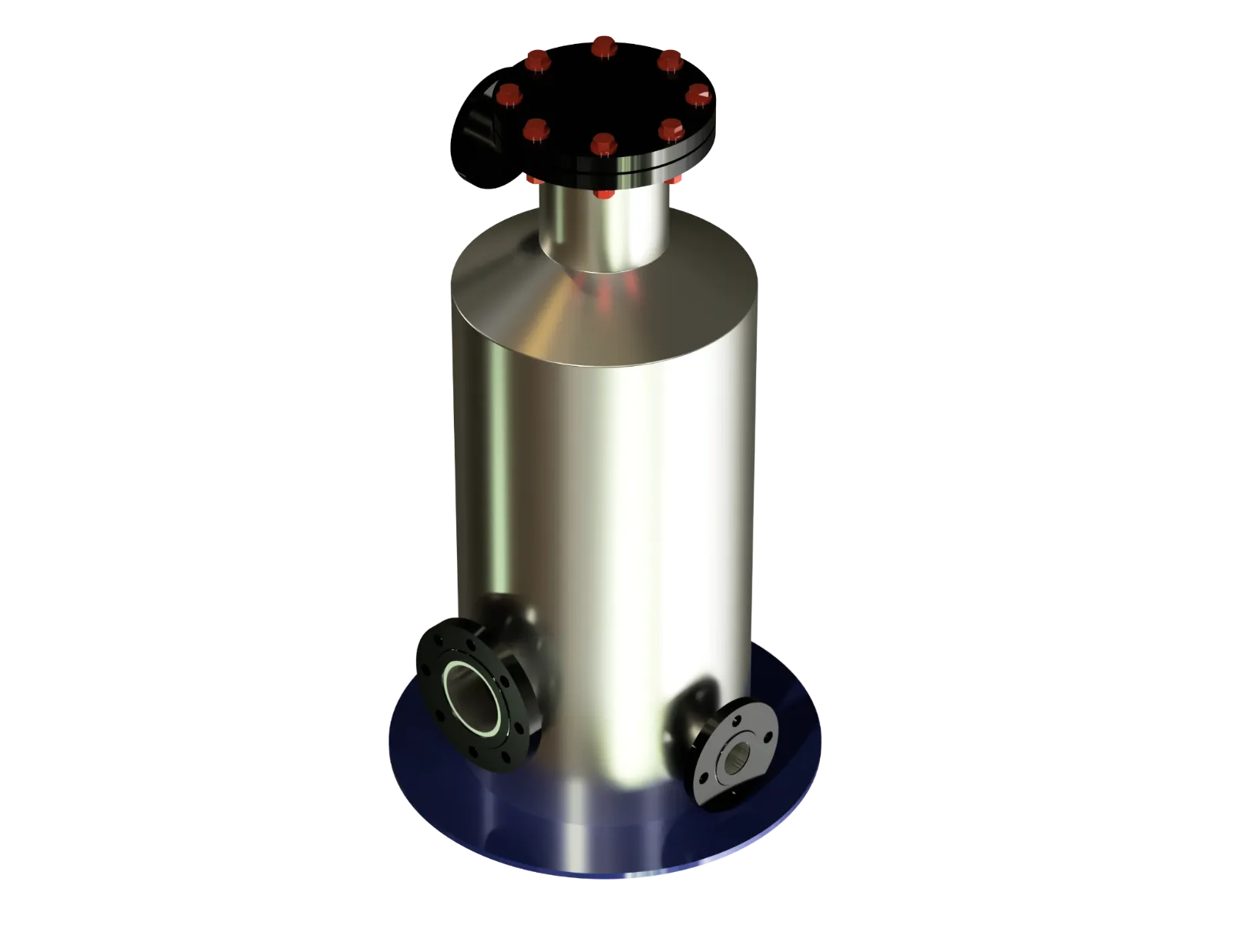
Removes H₂S from Biogas stream using a wet scrubber, engineered for CBG Application.
The CRA Edge
CRA has more than 30 years of experience in gas handling and flare engineering.
Design, R&D and manufacturing are carried out under one roof.
ISO 9001 certified through TÜV NORD, with designs aligned with ASME, API and CE.
Designs are customised to the process needs and the regulations that apply at site.
Applications
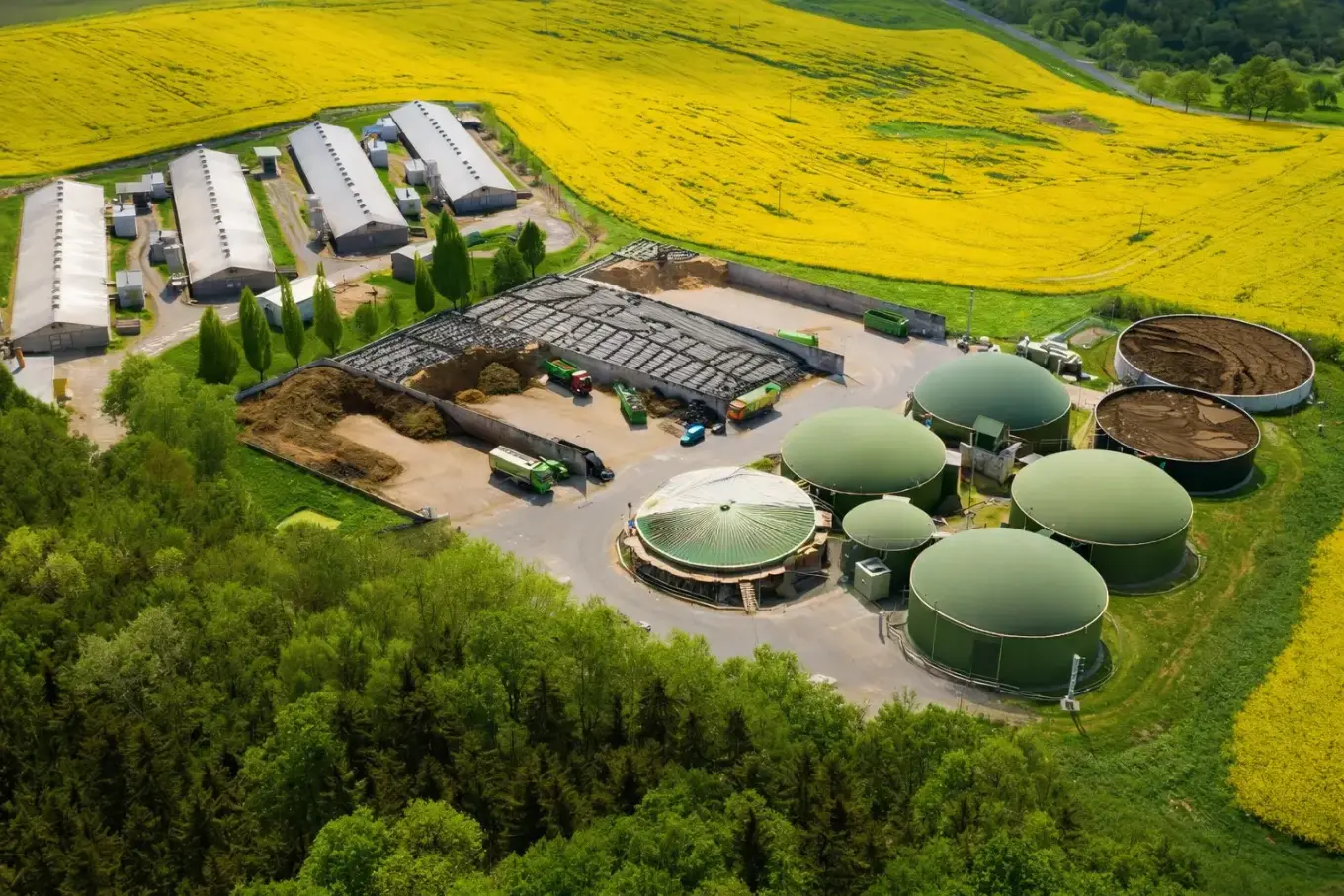

Built to help you specify.
Sizing tools, decision guides, and technical references. Use them before, during, and after your evaluation.




Frequently Asked Questions
How does membrane upgrading separate CO₂?
Carbon dioxide passes through the membrane fibres faster than methane, so the methane stays on the high pressure side and leaves as product gas.
What methane purity does the system reach?
CRA's membrane systems produce gas above 98% methane, with less than 0.5% carbon dioxide.
How much methane is lost?
The multi-stage design recovers more than 99.5% of the methane in the feed.
Why does the inlet gas need pre-treatment?
H₂S, moisture and oil shorten membrane life and lower recovery, so CRA designs scrubbing, drying and filtration ahead of the membranes.
What data does CRA need to size a membrane upgrading plant?
CRA needs the raw biogas flow range and composition, the product gas specification and the site conditions.