
Regenerative Thermal Oxidizers for Flexible Packaging Printing
Regenerative thermal oxidisers that destroy ink and adhesive solvents in exhaust from flexible packaging printing and lamination.


Ink solvent destroyed and dryer heat put back to work
CRA's regenerative thermal oxidisers destroy the ink and adhesive solvents in printing and laminating exhaust, recovering most of the heat to keep fuel use low.
Destruction efficiency
>99%
Heat recovery
Regenerative beds
Support fuel
Low at high load
Duty
Continuous
What does an RTO do at a flexible packaging plant?
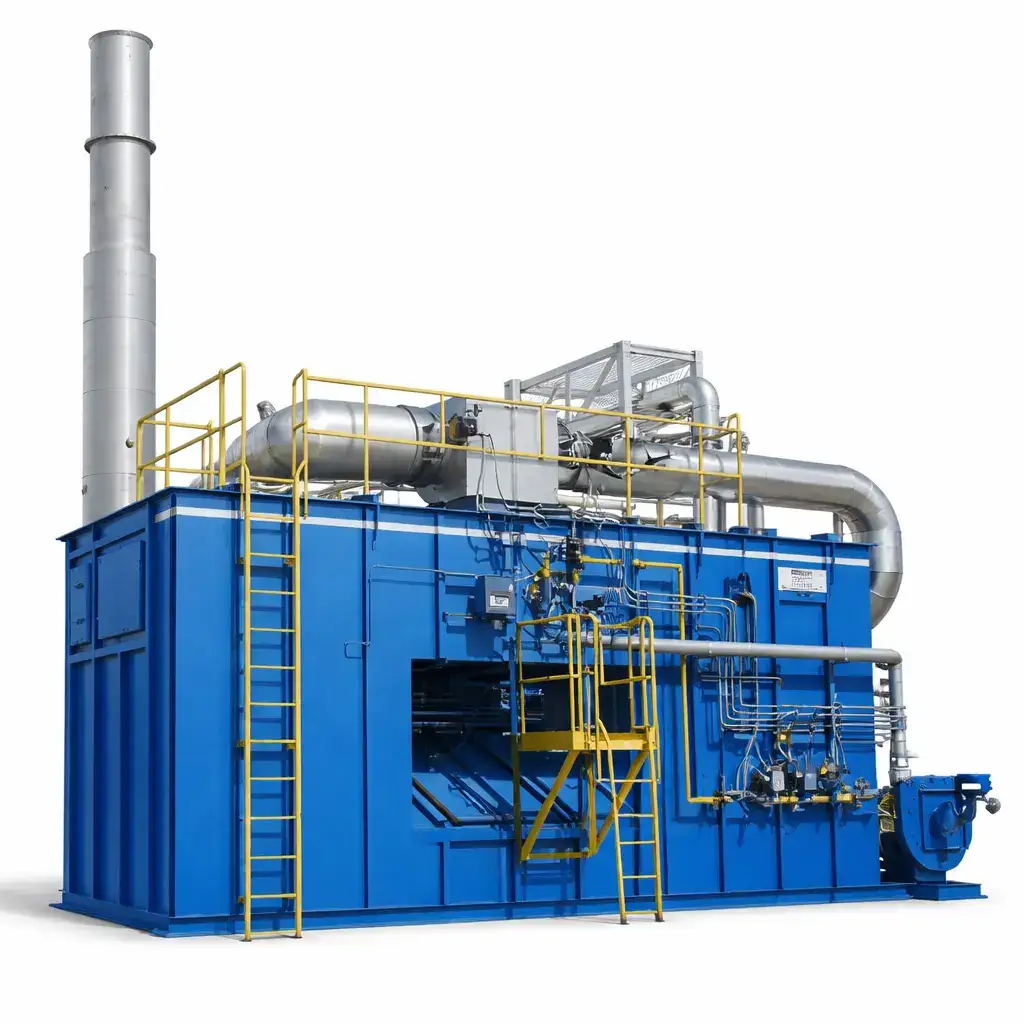
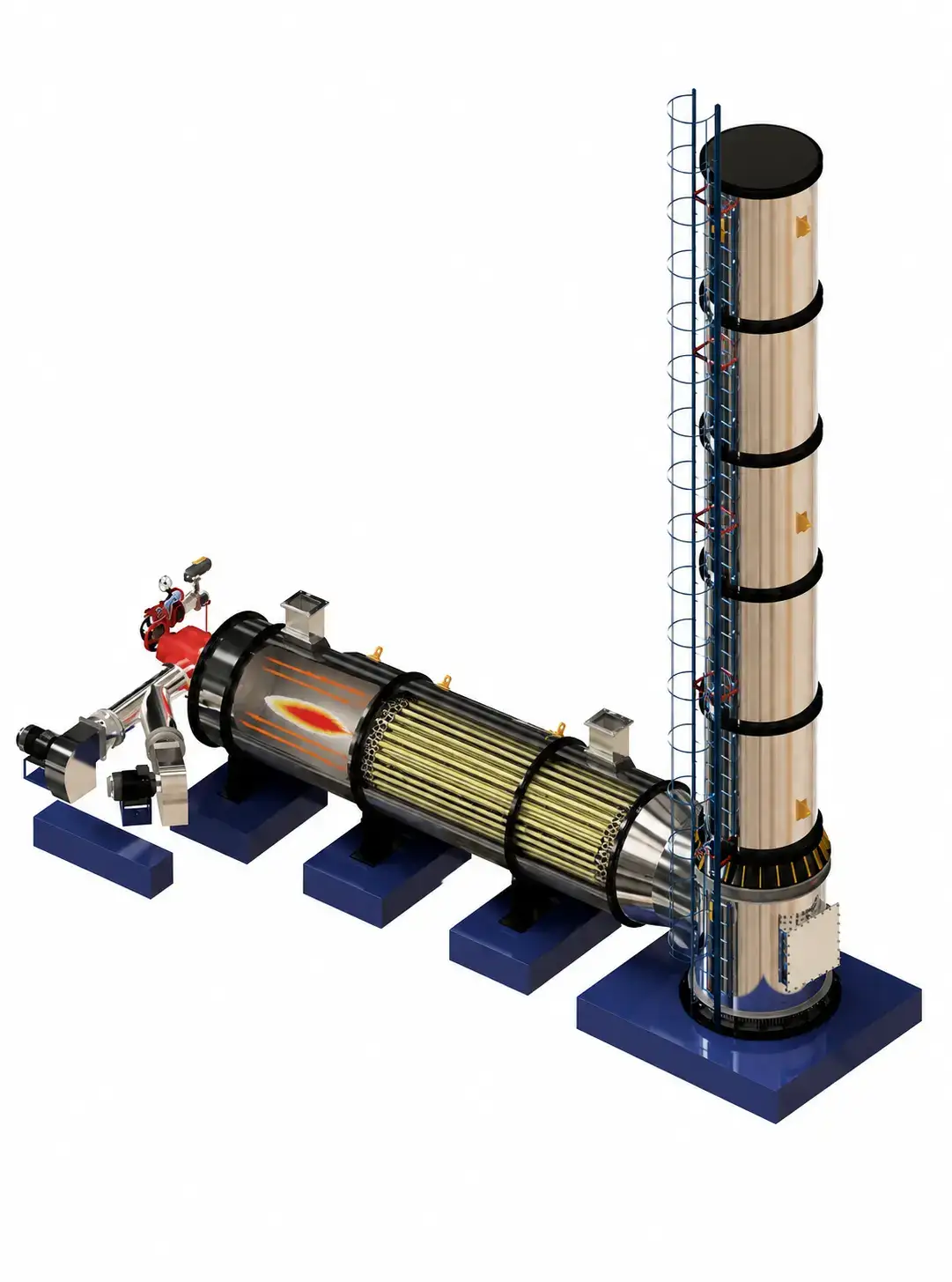
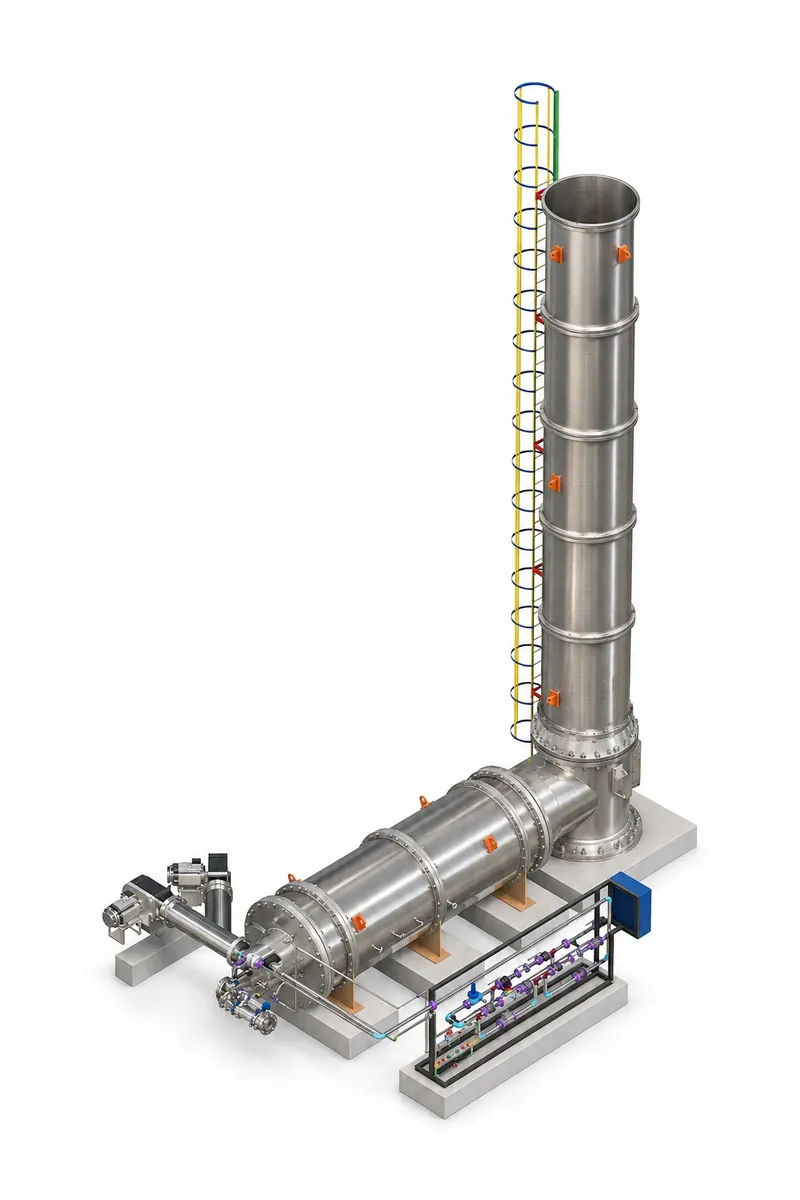
Dryers on presses and laminators evaporate the solvent from inks and adhesives into hot air. The RTO takes this exhaust, warms it in a bed that holds heat from the previous cycle, and oxidises the solvent in its combustion chamber.
How it works
The hot, clean air then heats a second bed before leaving, and the flow reverses at intervals so each bed takes turns to give and store heat.
Fans draw solvent-laden air from the press and laminator dryers.
The air passes through a hot bed and warms up.
The solvent oxidises in the combustion chamber.
The clean air heats the next bed on its way out.
Valves switch the flow so the beds swap roles.
Key Benefits
Ink and adhesive solvents in the dryer exhaust are destroyed before discharge.
Heat-storage beds return most of the heat to the incoming air.
At higher solvent loads, the oxidiser needs little or no support fuel.
Exhaust from presses and laminators can be ducted to one oxidiser.
Surplus heat can be returned to the press dryers where the layout allows.
The CRA Edge
CRA has more than 30 years of experience in gas handling and flare engineering.
Design, R&D and manufacturing are carried out under one roof.
ISO 9001 certified through TÜV NORD, with designs aligned with ASME, API and CE.
Designs are customised to the process needs and the regulations that apply at site.
Applications


Frequently Asked Questions
Why fit an RTO on a printing line?
Solvent-based inks release their solvent in the dryers. An RTO destroys that solvent before the exhaust leaves the plant.
Does the RTO need much fuel?
The heat-storage beds recover most of the heat. When the solvent load is high enough, the oxidiser runs with little or no support fuel.
Can one RTO serve several presses?
Yes. Exhaust from several presses and laminators can be ducted to one unit sized for their combined flow.
What data does CRA need to size a printing RTO?
CRA needs the exhaust flow from each press and laminator, the solvent use, the operating pattern, the emission limits and the site conditions.
When does solvent recovery make more sense?
Solvent recovery suits plants that use a single solvent in large amounts. Plants with mixed solvents usually suit oxidation.