
Thermal Oxidizers for Pharmaceutical Effluent Vents
Thermal oxidisers that destroy solvent vapour and odour from pharmaceutical effluent tanks, strippers and evaporators.


Solvent vapour from effluent units destroyed on site
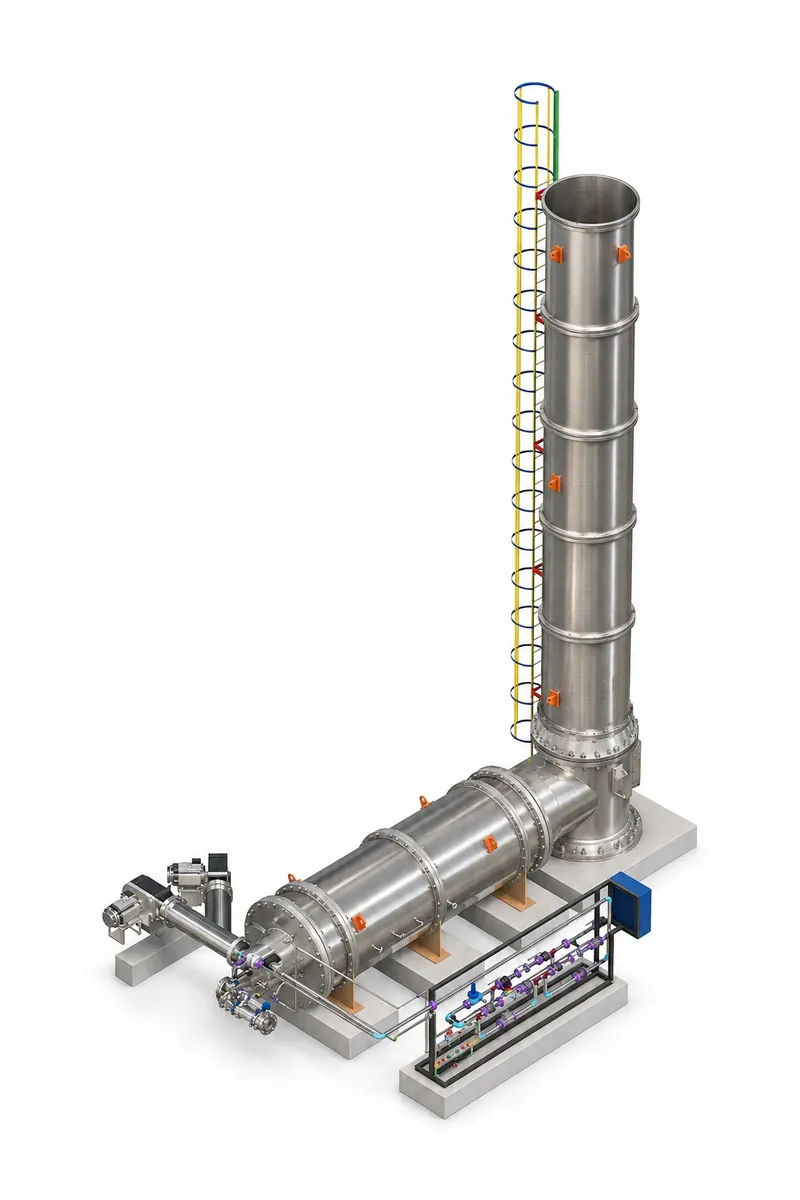
CRA's thermal oxidisers destroy the solvent vapour and odour vented from pharmaceutical effluent tanks, strippers and evaporators, with scrubbing for chlorinated streams.
Destruction efficiency
>99%
Stream
Effluent plant vents
Acid gas
Scrubber option
Odour
Destroyed
What does a thermal oxidiser do at a pharmaceutical effluent plant?
Solvents in the effluent evaporate from tanks, strippers and evaporators. Fans collect these vents and send them to a thermal oxidiser, which burns the solvents and odour-causing compounds.
How it works
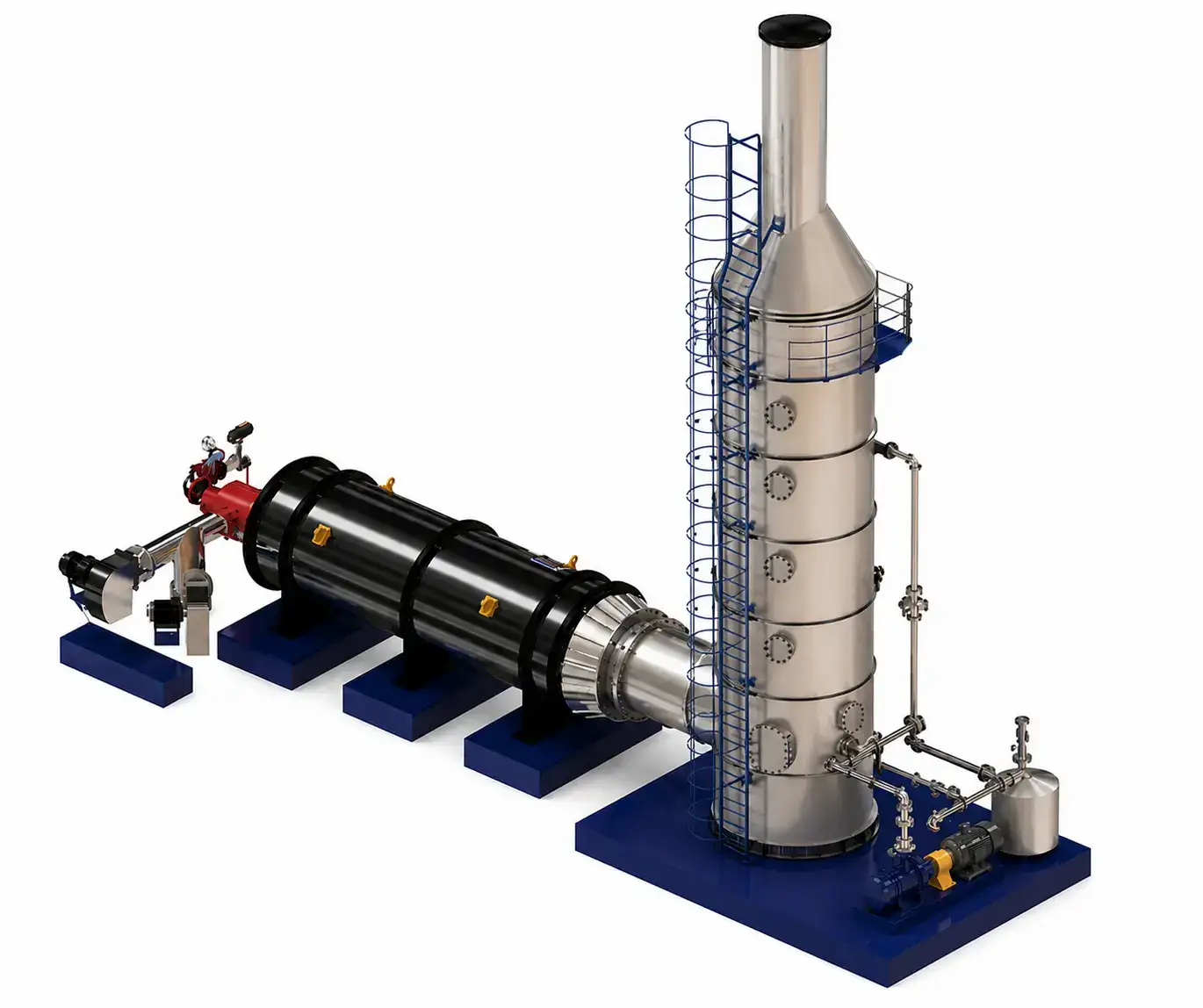
Where the vents carry chlorinated solvents, a scrubber after the oxidiser removes the acid gas before the stack.
Fans draw vents from the effluent units into a header.
The oxidiser burns the solvents at high temperature.
A scrubber removes acid gas formed from chlorinated solvents.
Clean gas leaves through the stack.
Key Benefits
Solvent vapour from effluent units is oxidised before discharge.
Odour-causing compounds around the effluent plant are destroyed with the solvents.
A scrubber after the oxidiser removes the acid gas formed from chlorinated solvents.
The oxidiser treats vents from several effluent units together.
The oxidiser is designed for destruction efficiency above 99%.
The CRA Edge
CRA has more than 30 years of experience in gas handling and flare engineering.
Design, R&D and manufacturing are carried out under one roof.
ISO 9001 certified through TÜV NORD, with designs aligned with ASME, API and CE.
Designs are customised to the process needs and the regulations that apply at site.
Applications


Frequently Asked Questions
Why treat vents from a pharmaceutical effluent plant?
Effluent tanks, strippers and evaporators release solvent vapour and odour. Treating the vents keeps them out of the air around the plant.
Can the oxidiser handle chlorinated solvents?
Yes. Chlorinated solvents form acid gas when burned, and a scrubber after the oxidiser removes it.
How do effluent vents differ from process vents?
Process vents come from reactors and dryers in the production blocks. Effluent vents come from the treatment plant and are usually larger in flow and more dilute.
What data does CRA need to size an effluent vent oxidiser?
CRA needs the vent sources and flows, the solvents present, the emission limits and the site conditions.
Can effluent vents share an oxidiser with process vents?
Yes, where the streams are compatible. CRA reviews each stream before combining them.