
Flare Gas Recovery for Oil Fields
Recovery systems that capture associated gas sent to the flare at oil fields and return it for use as fuel.


Routine flare gas captured and put to use
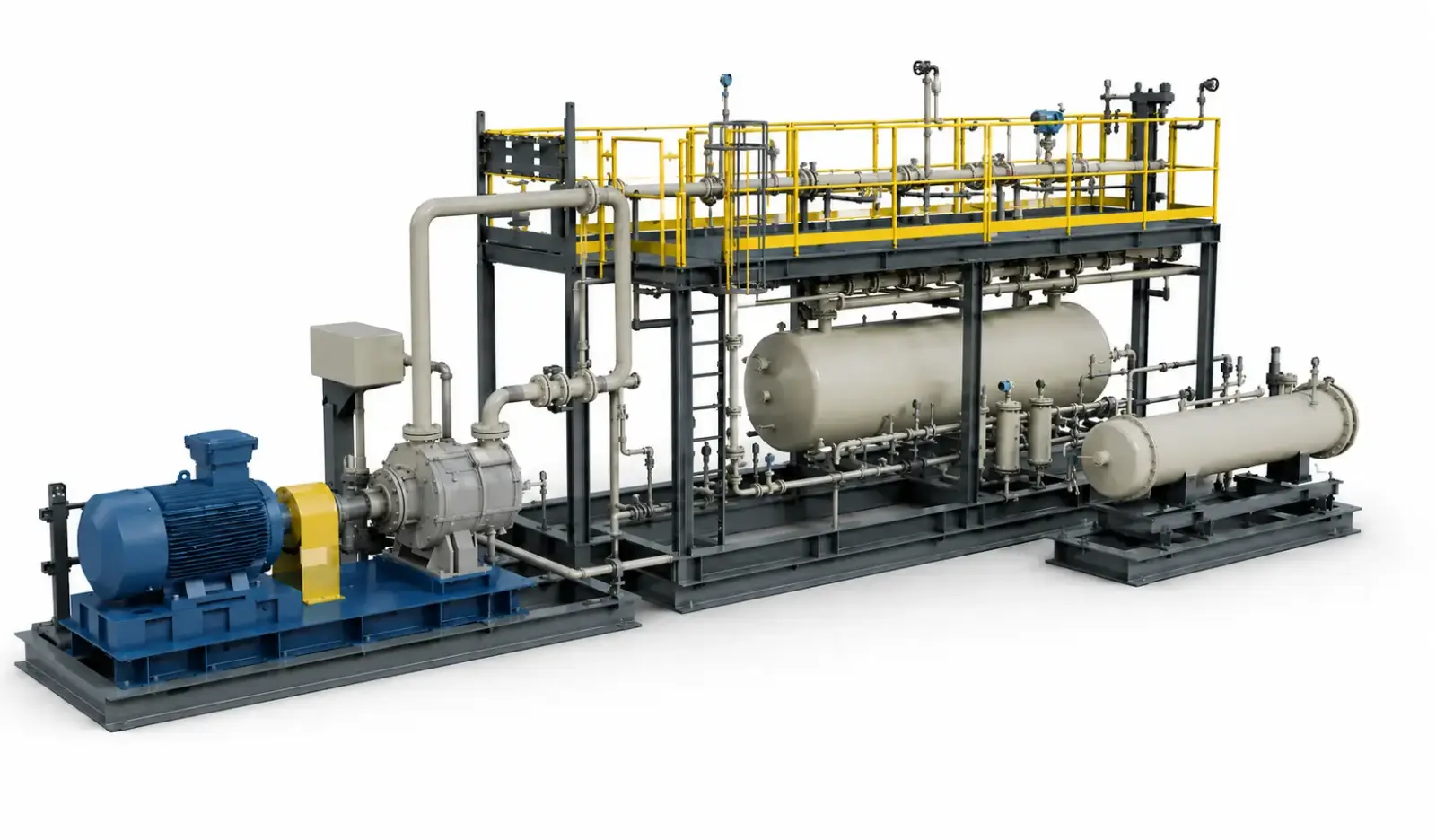
CRA's flare gas recovery systems capture the routine gas sent to an oil field flare, compress it and return it to the site's fuel system or gas network, while the flare stays ready for relief loads.
Duty
Routine flare gas
Compressor
Selected for the gas
Mount
Packaged skid
Flare
Stays in service
What does flare gas recovery do at an oil field?
At many oil fields, associated gas goes to the flare because there is no use for it at the time. Recovery captures the steady part of that flow and puts it to use on site or in a gas line, so less gas is burned.
How it works
The recovery package sits on the flare header, upstream of the flare, and the flare stays connected for relief loads.
Routine gas in the flare header is drawn off before it reaches the flare.
A compressor raises the gas to the pressure the user needs.
Liquids that condense on compression are removed.
The gas goes to heaters, engines or a gas line.
Relief and upset loads still pass to the flare.
Key Benefits
Gas that would burn at the flare every day is captured and used.
Recovered gas can fire heaters, boilers and gas engines on the field.
The flare remains in service for relief and upset loads.
The compressor type is chosen for the gas, the flow and the pressure needed.
Compression, cooling and controls are supplied on one skid.
The CRA Edge
CRA has more than 30 years of experience in gas handling and flare engineering.
Design, R&D and manufacturing are carried out under one roof.
ISO 9001 certified through TÜV NORD, with designs aligned with ASME, API and CE.
Designs are customised to the process needs and the regulations that apply at site.
Applications

Frequently Asked Questions
How does flare gas recovery work at an oil field?
The system draws gas from the flare header before it reaches the flare, compresses it and sends it to a user on site or to a gas line. Relief loads above the recovery capacity still pass to the flare.
Does the flare stay in service with recovery in place?
Yes. The flare remains available for emergency relief, upsets and any gas the recovery system cannot take.
Which compressor does CRA use for flare gas recovery?
CRA selects the compressor for the duty. Liquid ring, screw and rotary vane machines are common choices for wet, variable flare gas.
What data does CRA need to size recovery for an oil field?
CRA needs the routine flare gas flow and how it varies, the gas composition, the pressure at the flare header, the pressure the user needs and the site conditions.
Can recovery be added to an existing flare system?
Yes. CRA designs the recovery package to tie into the existing flare header and flare.