
Vapor Recovery Units for Fuel Depots
Vapour recovery units that return petrol vapour from depot loading and storage to liquid product.


Petrol vapour returned to storage as product
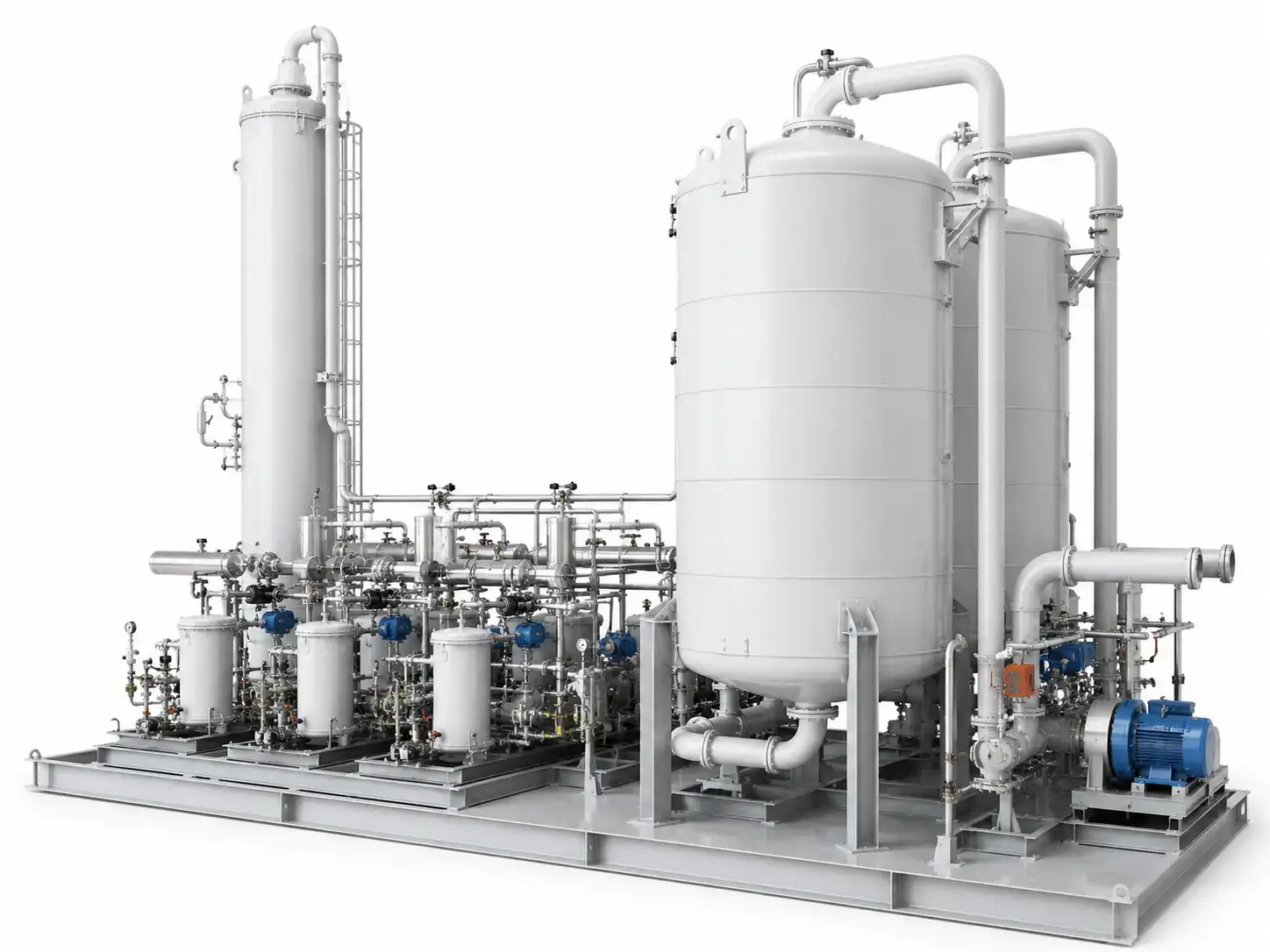
CRA's vapour recovery units capture the petrol vapour displaced at depot gantries and tanks and return it to storage as liquid, cutting emissions and product loss.
Recovered product
Returned to storage
Method
Compression or carbon
Mount
Pre-piped skid
Vent
Combustor option
What does a vapour recovery unit do at a fuel depot?
At a depot, petrol vapour leaves tankers at the gantry and tanks during filling. A header carries it to the recovery unit, where the hydrocarbons are captured and turned back into liquid.
How it works
The recovered petrol returns to a storage tank, and the cleaned air leaves through the unit vent.
Vapour from the gantry and tanks flows into the header.
A knock-out drum removes any liquid in the vapour line.
The recovery stage captures the petrol vapour.
Recovered petrol is pumped back to a storage tank.
The cleaned air leaves through the vent.
Key Benefits
Recovered petrol goes back to storage for sale.
Hydrocarbon vapour from loading and storage is captured before it reaches the air.
Compression or carbon adsorption is chosen for the vapour and the throughput.
Collection, recovery and controls arrive as one pre-piped skid.
A vapour combustion unit can treat the vent where the limit needs it.
The CRA Edge
CRA has more than 30 years of experience in gas handling and flare engineering.
Design, R&D and manufacturing are carried out under one roof.
ISO 9001 certified through TÜV NORD, with designs aligned with ASME, API and CE.
Designs are customised to the process needs and the regulations that apply at site.
Applications


Frequently Asked Questions
Why fit vapour recovery at a fuel depot?
Petrol vapour displaced during loading is lost product and an emission. Recovery returns it to storage as liquid.
How does the unit recover petrol vapour?
The unit captures the hydrocarbons by compression and condensation or by adsorption on activated carbon, and returns them to storage as liquid.
Is recovery needed for diesel loading?
Diesel gives off little vapour, so recovery at a depot is usually sized for petrol loading.
What data does CRA need to size a depot vapour recovery unit?
CRA needs the petrol throughput, the number of bays loading at once, the tank filling rates, the vent limit and the site conditions.
Can recovery and combustion work together?
Yes. A vapour combustion unit can treat the vent from the recovery unit where the emission limit is tight.