
Thermal Oxidizers for Acid Gas and Amine Off-Gas
Thermal oxidisers that destroy H₂S-bearing acid gas and amine regenerator off-gas at gas processing sites.


Sour off-gas oxidised before it reaches the stack
CRA's thermal oxidisers destroy hydrogen sulphide and other reduced sulphur compounds in acid gas and amine off-gas, with a flare route for the gas when the oxidiser trips.
Destruction efficiency
>99%
Target compounds
H₂S, COS, mercaptans
Trip disposal
Flare included
Stack treatment
Scrubber option
What does a thermal oxidiser do with amine off-gas?
An amine unit removes hydrogen sulphide and carbon dioxide from produced gas, and its regenerator releases them as a concentrated off-gas. A thermal oxidiser burns that stream with support fuel and air, turning the reduced sulphur compounds into sulphur dioxide.
How it works
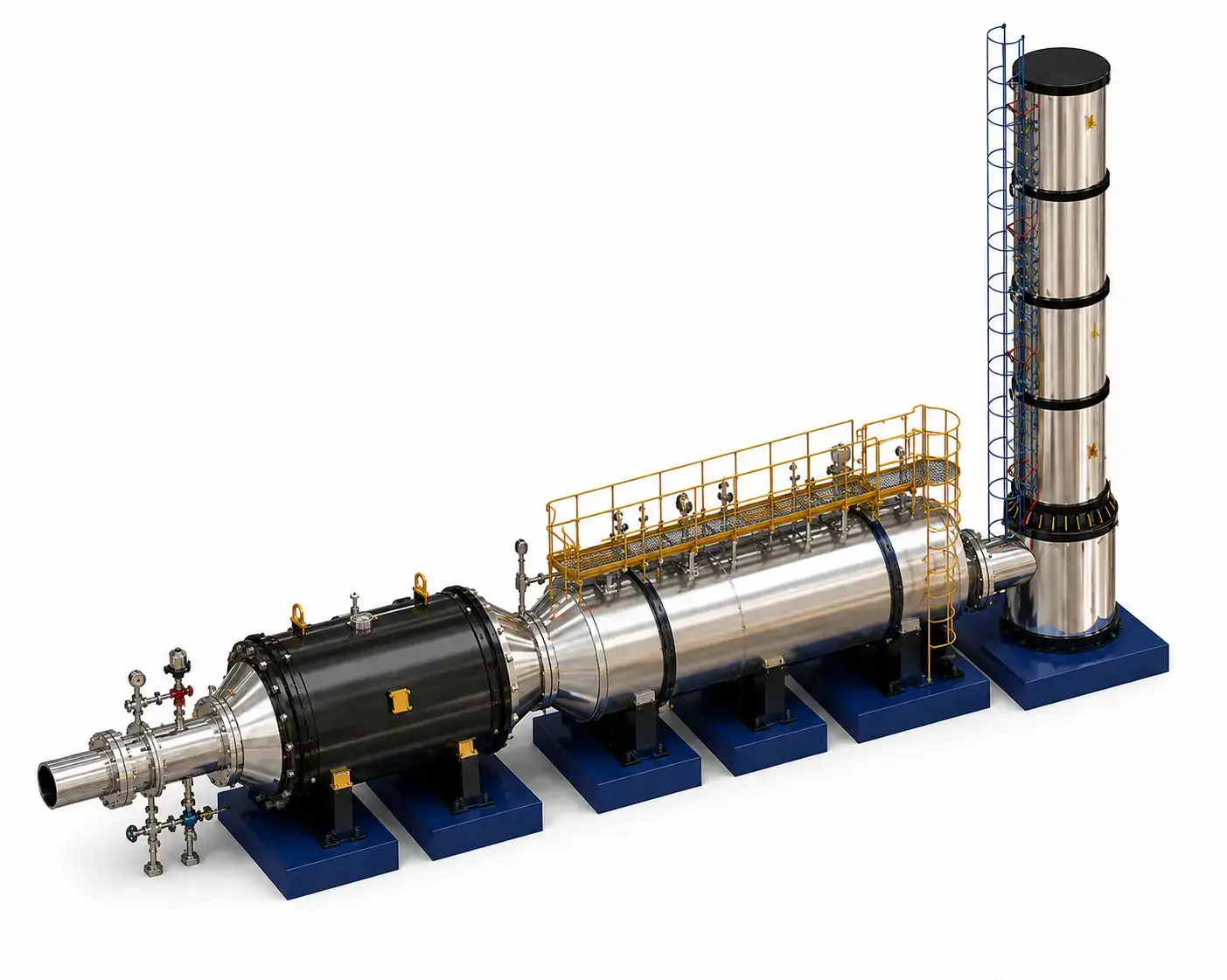
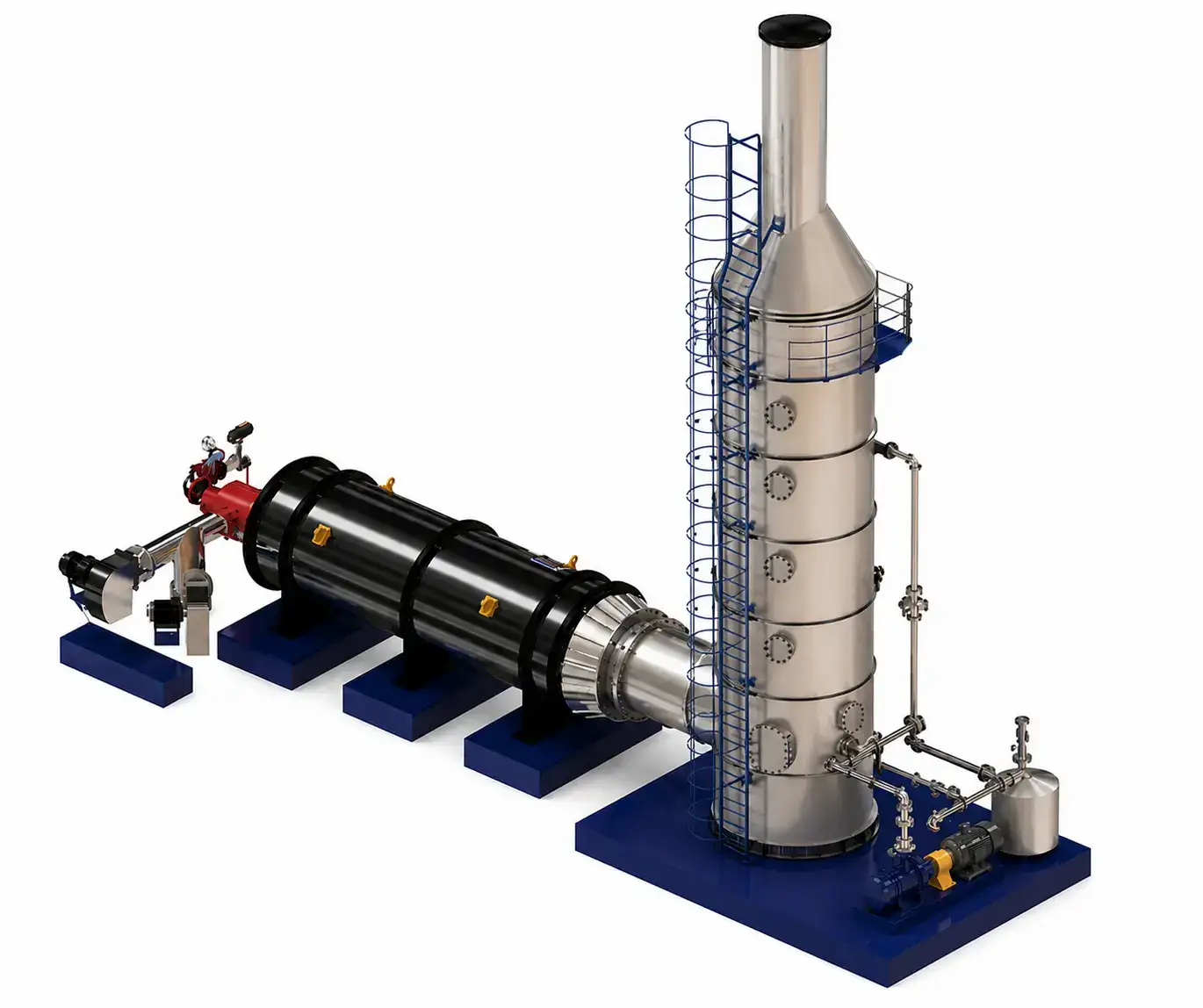
The off-gas passes through a knock-out drum to the burner, and a flare takes the gas whenever the oxidiser is offline.
The regenerator off-gas is piped to the oxidiser.
A knock-out drum catches any liquid carried with the gas.
Support fuel and air burn the off-gas at high temperature.
A scrubber removes sulphur dioxide where the limit requires it.
The flare takes the gas when the oxidiser stops.
Key Benefits
Hydrogen sulphide, mercaptans and other reduced sulphur compounds are oxidised before the stack.
The oxidiser is designed for destruction efficiency above 99%.
Support fuel keeps combustion stable when the off-gas is mostly carbon dioxide.
A scrubber can follow the oxidiser where the stack limit for sulphur dioxide requires it.
A flare route takes the off-gas safely whenever the oxidiser trips.
The CRA Edge
CRA has more than 30 years of experience in gas handling and flare engineering.
Design, R&D and manufacturing are carried out under one roof.
ISO 9001 certified through TÜV NORD, with designs aligned with ASME, API and CE.
Designs are customised to the process needs and the regulations that apply at site.
Applications

Frequently Asked Questions
When is a thermal oxidiser used for acid gas?
Where the sulphur in the acid gas is too little to justify sulphur recovery, a thermal oxidiser destroys the hydrogen sulphide and other compounds before the stack.
What happens to the sulphur?
The oxidiser converts reduced sulphur compounds to sulphur dioxide. Where the stack limit requires it, a scrubber after the oxidiser removes the sulphur dioxide.
Why does the package include a flare?
Process gas needs a safe route when the oxidiser trips, so CRA includes a flare in every thermal oxidiser package.
What data does CRA need to size an acid gas oxidiser?
CRA needs the off-gas flow range and composition, including hydrogen sulphide and hydrocarbons, the support fuel available, the stack emission limits and the site conditions.
Can the same oxidiser treat glycol dehydration vents?
Yes. Glycol regenerator vents carry hydrocarbons and aromatics that the same oxidiser can destroy.