Mobile Enclosed Flares for Landfill Mining and Dumpsite Remediation

.svg)
Legacy waste is being dug up, and the gas comes with it
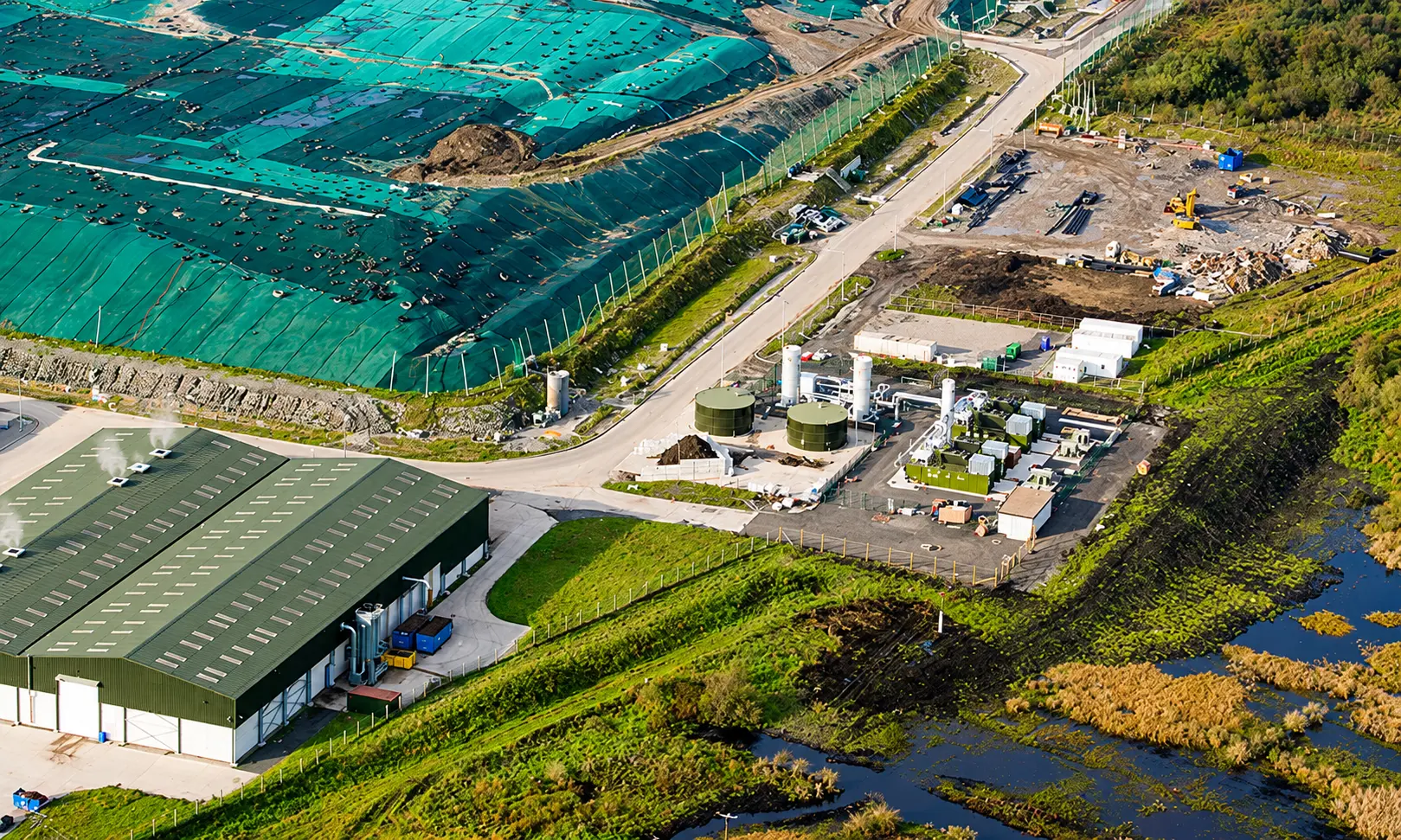
Most of the world’s old waste sits in sites that were never engineered to control gas. ISWA estimates that dumpsites receive roughly 40% of the world’s waste and serve 3 to 4 billion people. Europe alone has at least 500,000 landfills, and about 90% of them predate the 1999 Landfill Directive.
More of these sites are now being excavated to recover land, recover materials or make way for infrastructure. At Modena in Italy, part of a landfill was dug out to route a high-speed rail line through it.
Excavation exposes waste that has been generating gas in place for years and releases what is trapped in it. The gas control on these projects has to be as temporary and mobile as the works themselves, and it still has to perform. This article covers what changes when waste is disturbed, the two main control approaches, and what a mobile enclosed flare needs for this duty.
What changes when the waste is disturbed
A closed or dormant site releases gas slowly through its surface. Once excavation starts, four things change.
Trapped gas and odour are released at the working face. At the Zeeasterweg landfill in the Netherlands, odour from excavating the old waste was the main permitting issue, with homes due to come within 500 m of the site. The Modena project aerated the waste specifically to limit uncontrolled gas migration into the excavation area.
Flow and quality become harder to predict. Gas arrives in surges as pockets are opened and falls away as the working face moves on. Extraction can also draw air into the waste and dilute the gas, so methane content drops.
Oxygen ingress raises the fire risk. UK regulators’ guidance warns that pulling air into the waste mass by over-extraction can start landfill fires. Extraction around an excavation has to be balanced against this.
Workers need gas monitoring. Trenches and voids can hold flammable or oxygen-deficient air. Typical site procedures ventilate below 19% oxygen, stop work below 18%, and ban hot work above 10% of the lower explosive limit.
Two ways to control gas during excavation
Remediation projects control gas either by extracting it and burning it, or by aerating the waste before it is dug. The two can be combined, and the choice turns on the project programme and on how much gas the waste still produces.
Aeration has a good record on odour. Researchers recommend it as a pre-treatment before landfill mining, and at Zeeasterweg it cut odour emissions from the excavated waste by about 83%. Where the waste still produces gas with usable methane content, extraction to an enclosed flare is quicker to set up and destroys the methane on site.
Why the flare should be enclosed, even for temporary work
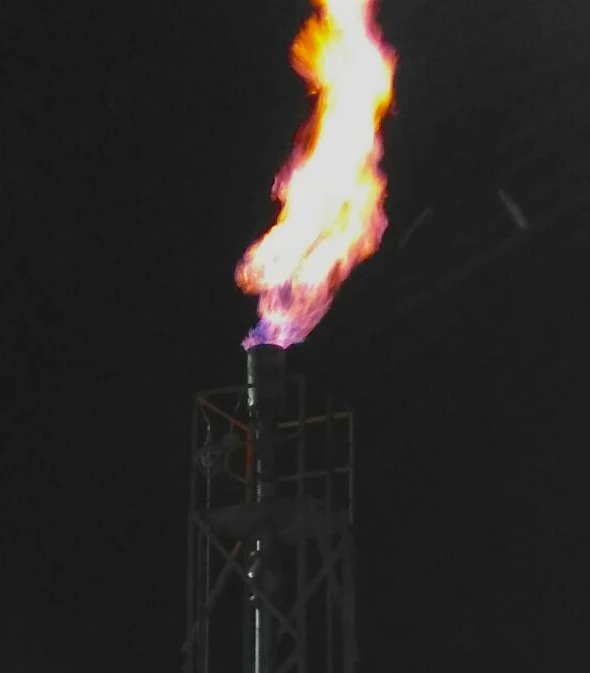
Regulators have been specific about temporary flaring. UK guidance says open flares should only be relocated for emergencies, and then only until they can be replaced with a temporary enclosed flare. The earlier UK flaring guidance allowed new open flares only for test and emergency use, for no longer than six months.
The reasons carry straight over to remediation sites:
Neighbours. Many old landfills sit in semi-urban areas. An enclosed flare hides the flame and keeps radiant heat and glare down at ground level.
Legacy chemistry. Old waste can contain halogenated compounds from aerosols and similar products. The cool, poorly mixed zones at the edge of an open flame are where dioxins and furans form.
Proof of performance. An enclosed flare can be sampled and tested, so the contractor can show the regulator or client that the gas is being destroyed. UK guidance states that open flare emissions cannot be sampled accurately or safely.
Carbon credits. If the project earns credits, the CDM flaring tool credits an open flare with a default 50% methane destruction and a monitored enclosed flare with 90%.
What a mobile enclosed flare needs for remediation duty
A remediation flare works in harder conditions than a flare on a stable, engineered landfill. It has to cope with changing flow and methane content, often runs unattended, and may sit on or beside waste. These are the features to specify.
Sources for the guidance points: EA/SEPA Guidance on Landfill Gas Flaring, LFTGN05 and CDM TOOL06.
Planning for redeployment
When a remediation contract ends, a flare designed for redeployment can move to the next cell or the next site. That calls for a road-transportable frame, quick-connect gas and cable connections, and controls that can be re-tuned for a different gas. For contractors with a pipeline of remediation work, one unit can then serve several contracts in turn.
Each move is also a recommissioning. UK guidance calls for a fuller round of monitoring when a flare is recommissioned after a change of location, covering combustion products, trace components such as HCl, HF and SO₂, and retention time. Keeping the manufacturer’s operating specification and the maintenance log with the unit makes this easier, and carbon methodologies such as TOOL06 rely on both.
How CRA Energy can help
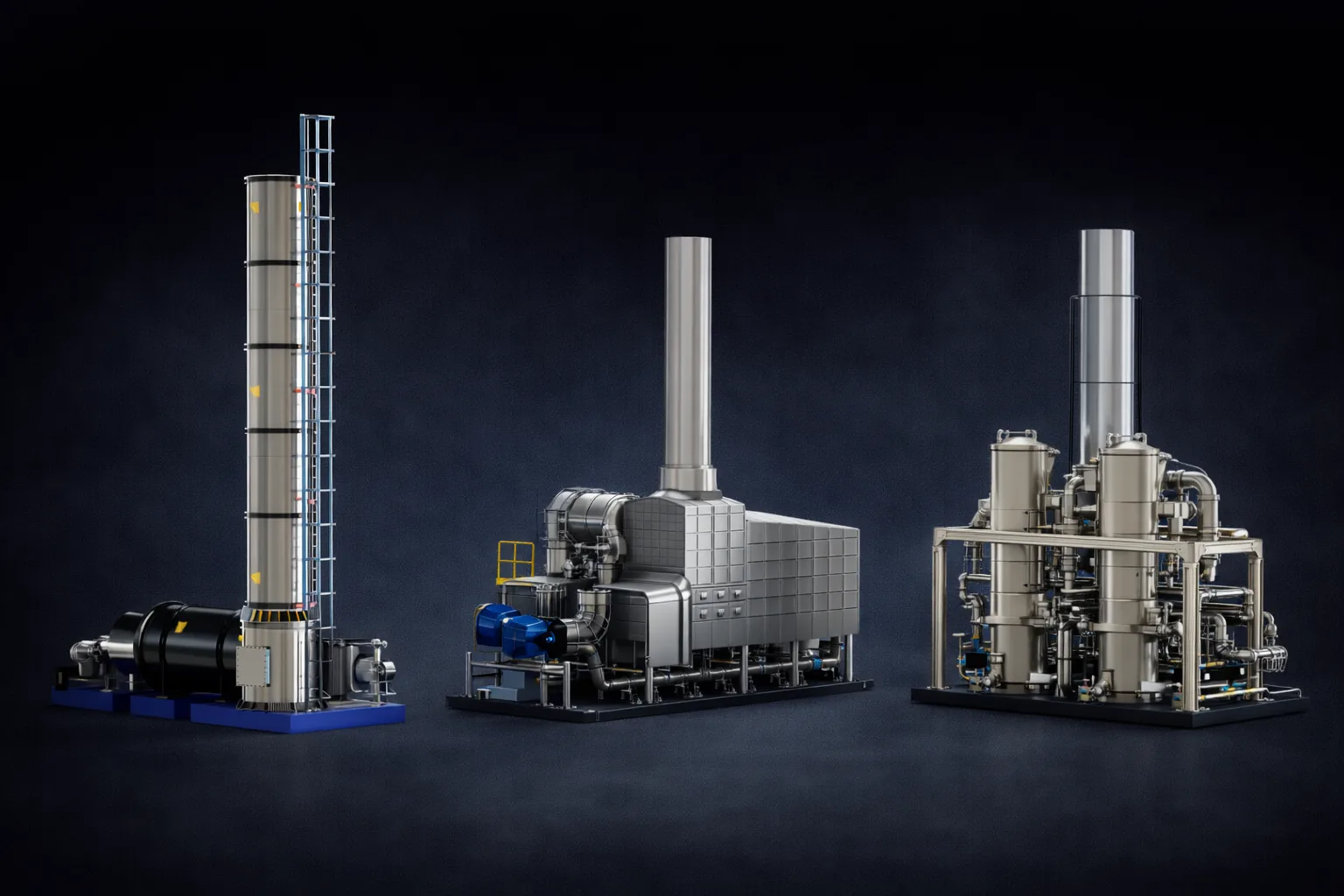
CRA Energy designs and manufactures trailer-mounted mobile flares and enclosed ground flares, and thermal oxidisers for gas too lean to flare. For a landfill mining or remediation project, send the data points in our landfill flare data sheet to our team to discuss the right configuration.
References
1. ISWA, “Dumpsites: a global waste emergency.”
2. KU Leuven, “First EU Horizon 2020 project on Enhanced Landfill Mining,” 2016.
3. World Economic Forum, “Landfill mining: is this the next big thing in recycling?,” 2017.
4. Raga et al., “Landfill aeration for emission control before and during landfill mining,” 2015.
5. Raga and Cossu, “Landfill in-situ aeration process and technology,” 2010.
6. Jacobs et al., “Odour reduction by aeration prior to excavation,” Zeeasterweg landfill.
7. Environment Agency and SEPA, “Guidance on Landfill Gas Flaring, v2.1,” 2002.
8. Environment Agency, “LFTGN05: Guidance for monitoring enclosed landfill gas flares,” 2010.
9. Hong Kong EPD, “Environmental monitoring and audit manual, Section 5: Landfill gas.”
10. UNFCCC, “CDM TOOL06: Project emissions from flaring, v3.0.”