
Steam-Assisted LPP Flare Tip Retrofit for Wide-Turndown Smokeless Flaring
Handles purge-only to full emergency relief at 358 t/h with minimised purge gas consumption.
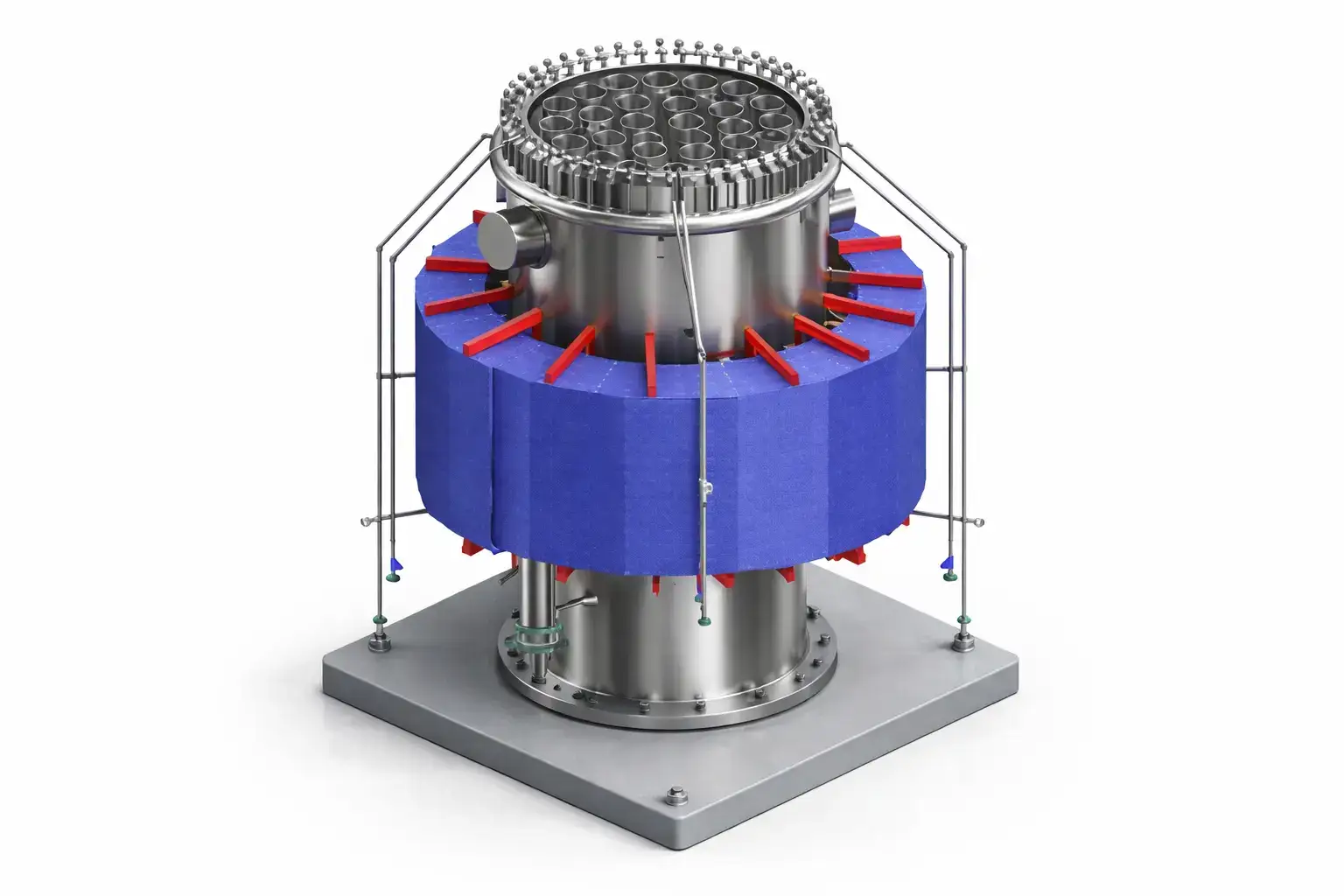
CRA engineered and supplied a retrofit steam-assisted Low Purge Pressure (LPP) flare tip for the flare system at IOCL’s Paradip Refinery, engineered to deliver safe, stable, and efficient flaring under low-flow, intermittent, and purge-only operating conditions. The solution minimises continuous purge gas consumption while effectively preventing air ingress into the flare stack, supporting combustion stability and operational safety. The system demonstrates CRA’s advanced flare combustion engineering capability for large-scale refinery environments, where consistent performance, safety, and operability must be maintained across wide turndown ratios.
Low-flow refinery off-gas flaring with wide turndown demands
Refinery flare systems operate under highly dynamic conditions ranging from near-zero purge flow during normal operation to sudden relief events during process upsets. The Paradip Refinery required a solution capable of addressing the following challenges:
- Prevention of air ingress during low or no-flow conditions
- Reduction of continuous purge gas losses without compromising safety
- Stable flame behaviour during intermittent and fluctuating gas release
- Compatibility with low-pressure flare operation
- Smokeless combustion with controlled thermal radiation
- High ignition reliability suitable for refinery-grade duty
- Retrofitting the upgraded flare tip to the original system, without extensive downtime.
Failure to manage these conditions could lead to flame instability, unsafe stack conditions, or excessive operational losses.
Steam-assisted LPP flare tip with molecular velocity seal
CRA engineered a Low Purge Pressure (LPP) flare tip for refinery off-gas service, engineered to reduce purge gas consumption while maintaining flame stability and operational safety, and fully compatible with IOCL’s existing flare infrastructure for reliable operation under low and intermittent flow conditions. The design incorporates an optimised molecular velocity seal that effectively prevents air ingress at substantially reduced purge gas flow rates.
Flare Tip Design & Engineering Features
- LPP Seal Design
Molecular velocity sealing prevents air ingress during low-flow and idle operation. - Low-Pressure Combustion Geometry
Geometry optimised for stable flame retention under fluctuating flow. - Pilot Ignition System
Reliable ignition using low-pressure fuel gas. - Smokeless Combustion
Controlled radiation with minimal smoke formation. - Mechanical Integrity
Refinery-grade design for continuous, high-temperature operation.
Aerodynamic sealing for purge reduction and air ingress prevention
The design philosophy focused on flare stack safety and combustion stability during extended low-flow and purge-only operating conditions while minimising continuous purge gas consumption. A low purge pressure approach was adopted in which aerodynamic sealing prevents air ingress at a reduced purge flow, enabling stable operation across wide turndown ratios. The flare tip geometry and ignition philosophy were engineered to support reliable flame retention, smooth transition during sudden flow variations, and controlled radiation, supporting compatibility with refinery operating practices and long-term reliability.
Engineering features of the LPP flare tip system
Specific engineering features of the steam-assisted LPP flare tip include:
- Low Purge Pressure Concept
Prevents air ingress through aerodynamic sealing at a reduced purge rate. - Wide Turndown Stability
Supports stable flame behaviour during low, intermittent, and sudden flow conditions. - Combustion Reliability
Supports smooth flame transition and retention under fluctuating operating regimes. - Radiation Control
Maintains acceptable thermal radiation levels for refinery safety. - Refinery Compatibility
Aligns with existing flare infrastructure and long-term operational requirements.
Manufacturing and quality assurance approach
Manufacturing was executed under controlled quality systems for mechanical integrity, dimensional accuracy, and compliance with refinery and oil & gas industry standards. All activities were supported by defined inspection and testing protocols, documentation control, and traceability for consistency, reliability, and readiness for integration within IOCL’s flare infrastructure.
- Controlled Fabrication
Manufacturing carried out under defined procedures and approved drawings. - Quality Assurance & Control
QA/QC processes implemented with inspection and test plans. - Material Traceability
Full traceability of critical materials and components maintained. - Dimensional & Visual Inspection
Verification of geometry, fit-up, and workmanship. - Documentation Package
Delivery of manufacturing records, QA/QC dossiers, and O&M manuals.
Design outcomes and technical significance
The integrated Low Purge Pressure (LPP) flare tip solution is designed for reliable refinery off-gas flaring under low and intermittent operating conditions while significantly reducing continuous purge gas consumption. The design holds stable flame behaviour across operating regimes, with effective air ingress prevention and controlled radiation, for overall flare system safety and operational efficiency at IOCL’s Paradip Refinery.
- Stable Operation
Reliable performance during low-flow, intermittent, and purge-only conditions. - Purge Optimisation
Reduced purge gas consumption without compromising stack safety. - Air Ingress Prevention
Effective aerodynamic sealing maintained during idle operation. - Combustion Performance
Smokeless flaring with controlled thermal radiation. - Engineering Validation
Reflects CRA’s capability in LPP flare design and refinery integration.
Related Case Studies
See how we turn hard problems into high-performance infrastructure.